Email: market2@cheersonic.com
15 10, 2026

What Is a Membrane Electrode Assembly?

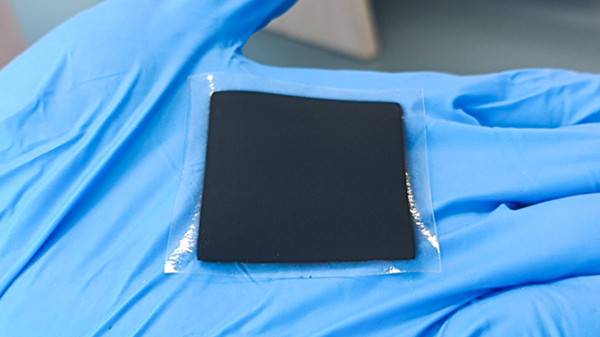
A membrane electrode assembly (MEA) is a layered electrochemical component built around an ion-conducting membrane and functional electrode layers. In proton-exchange-membrane fuel cells and electrolyzers, the MEA brings together the membrane, anode catalyst layer, and cathode catalyst layer; gas-diffusion or porous transport layers are often adjacent components in the assembled cell.
14 10, 2026

Implantable Membrane Coating: Balancing Coverage, Porosity, and Substrate Stability

Implantable Membrane Coating: Balancing Coverage, Porosity, and Substrate Stability A coating system for medical instrument development must preserve the properties that make a membrane useful. Adding a functional polymer layer can change wetting, permeability, flexibility, or handling. A coating that is uniform on the surface may partially block pores or alter transport through the structure. Implantable membrane coating therefore requires evaluation of both the deposited film and the [...]

14 10, 2026

What Is a Catalyst Coated Membrane?

A catalyst-coated membrane (CCM) is an ion-conducting membrane with catalyst layers deposited directly onto one or both sides. It is widely studied in proton-exchange-membrane fuel cells and water electrolyzers because the direct membrane–catalyst interface can support short ionic pathways and compact assembly. Its performance depends on membrane integrity, catalyst-layer structure, and the quality of each interface.

14 10, 2026

Study on coating process of nasal intestinal obstruction catheter

Study on coating process of nasal intestinal obstruction catheter Study on coating process of nasal intestinal obstruction catheter Nasal obstructive catheters are core minimally invasive devices for the clinical treatment of intestinal obstruction. With their advantages of non-invasive insertion, precise decompression, and assisted bowel movement, they are widely used for various simple and adhesive intestinal obstructions. The functional drug coating on the catheter surface is crucial to its [...]

13 10, 2026

Medical Diagnostic Device Coating: Uniform Reagent Layers and Reliable Rehydration

Medical Diagnostic Device Coating: Uniform Reagent Layers and Reliable Rehydration A coating system for medical instrument development must do more than distribute liquid evenly. Diagnostic devices often depend on the location, activity, and accessibility of deposited ingredients. A polymer matrix may help retain a reagent or control its interaction with liquid during use. The development task is to connect deposition conditions with functional response, while maintaining suitable coverage [...]

13 10, 2026

What Is a Catalyst Layer?

A catalyst layer is a thin, engineered region containing catalytic material and supporting components that enable electrochemical reactions. It is commonly integrated into fuel-cell electrodes, water-electrolysis electrodes, and other electrochemical devices. Its performance depends on more than catalyst chemistry: thickness, porosity, ionomer distribution, electrical contact, wetting, and adhesion also shape the accessible reaction area.

13 10, 2026

spraying positive electron beam photoresist

spraying positive electron beam photoresist spraying positive electron beam photoresist - Cheersonic In high-end fields such as micro-nano fabrication, advanced semiconductor packaging, and precision device manufacturing, electron beam resist, as a core consumable in electron beam lithography, directly determines the accuracy of pattern transfer and device performance. Positive electron beam resist, as a high-performance electron beam resist, has become the preferred product for mid-to-high-end electron beam lithography scenarios [...]

12 10, 2026

Catheter Coatings: Developing Uniform Films on Flexible Medical Substrates

Catheter Coatings: Developing Uniform Films on Flexible Medical Substrates A coating system for medical instrument production must accommodate the way the device moves and is handled. Catheters combine flexible substrates, long coating regions, transitions, and features that may need masking. A coating that looks acceptable while the part is straight may change after bending, hydration, or assembly. Development should connect deposition quality with the intended function and relevant [...]

12 10, 2026

What Is a Catalyst Ink?

A catalyst ink is a formulated suspension or dispersion containing catalytic material and a liquid medium, often with ion-conducting polymer, binder, or other additives. It is applied to a substrate to create a catalyst layer for electrochemical devices and research electrodes. Ink formulation strongly affects deposition, drying, microstructure, adhesion, and ultimately the measured electrode response.

12 10, 2026

Ultrasonic sprayed porous titanium gas diffusion layer PEM electrolyzer

sprayed porous titanium gas diffusion layer PEM electrolyzer sprayed porous titanium gas diffusion layer PEM electrolyzer I. Product Overview Ultrasonic spraying of porous titanium gas diffusion layers is a core functional component of proton exchange membrane (PEM) electrolyzers. Primarily applied to the anode side, it plays crucial roles in gas diffusion, mass transport, conductive connections, and structural support. In PEM water electrolysis for hydrogen production, the mass transfer [...]

Go to Top