Email: market2@cheersonic.com
18 10, 2026

Can a Heated Vacuum Chuck Reduce Deformation During PEM/AEM Spray Coating? From Membrane Hold-Down to Temperature Window Optimization

Can Heated Vacuum Chucks Reduce PEM Spray Deformation? Can a Heated Vacuum Chuck Reduce Deformation During PEM/AEM Spray Coating? From Membrane Hold-Down to Temperature Window Optimization In research and development involving proton exchange membrane (PEM) fuel cells, anion exchange membrane (AEM) water electrolysis, and other electrochemical devices, spraying catalyst ink directly onto an ion-exchange membrane is a common approach to fabricating functional layers. However, some thin membranes may [...]

17 10, 2026

Coating System for Medical Instrument Manufacturing: A Practical Development Guide

Coating System for Medical Instrument Manufacturing: A Practical Development Guide Selecting a coating system for medical instrument manufacturing starts with the finished surface, rather than the spray head. A functional polymer film may need controlled wetting, lubricity, adhesion, or another measurable property. The same formulation can behave differently on a flat coupon and a curved device. Development must connect liquid preparation, part presentation, deposition, drying, and inspection before [...]

17 10, 2026

PTFE Medical Coatings: Evaluating Dispersion, Film Formation, and Thermal Limits

PTFE Medical Coatings: Evaluating Dispersion, Film Formation, and Thermal Limits A coating system for medical instrument manufacturing must match the formulation's film-forming route. PTFE-containing coatings are not equivalent to ordinary dissolved-polymer coatings. Some are particle dispersions; others use binders or composite architectures. The selected formulation determines handling, deposition, and thermal requirements. Ultrasonic spraying may be evaluated as a deposition step, but it does not remove the need for [...]

17 10, 2026

Ceramic Separator Coatings: Balancing Coverage, Wetting and Open Pore Structure

Ceramic Separator Coatings: Balancing Coverage, Wetting and Open Pore Structure Ceramic separator coatings sit at the intersection of surface engineering and transport control. In Advanced Battery Research and Emerging Production, their value cannot be judged by coverage alone. A deposited ceramic-polymer layer must be evaluated alongside separator permeability, electrolyte wetting, mechanical handling and cell behavior. Ultrasonic spray coating offers a route worth investigating for selected thin surface layers, [...]

16 10, 2026

Antimicrobial Medical Device Coatings: Evaluating Coverage, Durability, and Function

Antimicrobial Medical Device Coatings: Evaluating Coverage, Durability, and Function A coating system for medical instrument manufacturing can apply a formulation, but it cannot establish an antimicrobial claim by itself. A medical polymer coating may contain an active constituent or present a surface designed for a specific interaction. Development must connect deposition quality with relevant functional testing and device requirements. Uniform appearance, retained active loading, and durable performance are [...]

16 10, 2026

Polyimide Dielectric Barrier Coatings for Advanced Battery Components

Polyimide Dielectric Barrier Coatings for Advanced Battery Components Polyimide dielectric barrier coatings are one development direction within Advanced Battery Research and Emerging Production. The objective is often electrical isolation on selected components, rather than the porous transport function expected of a separator. This distinction matters when defining thickness, continuity and curing requirements. A coating process that produces an attractive film must still demonstrate appropriate adhesion, electrical behavior and [...]

16 10, 2026

Advanced Battery Research and Emerging Production: Building a Functional Coating Process Window

Advanced Battery Research and Emerging Production: Building a Functional Coating Process Window Advanced Battery Research and Emerging Production requires more than a promising formulation. A functional layer must reach the intended location, maintain its structure during drying, and survive subsequent assembly. Lithium-ion, solid-state and sodium-ion programs may investigate similar deposition equipment, but their chemical compatibility and acceptance criteria differ. Ultrasonic coating should therefore be evaluated as a process-development [...]

16 10, 2026

What Is a Gas Diffusion Electrode?

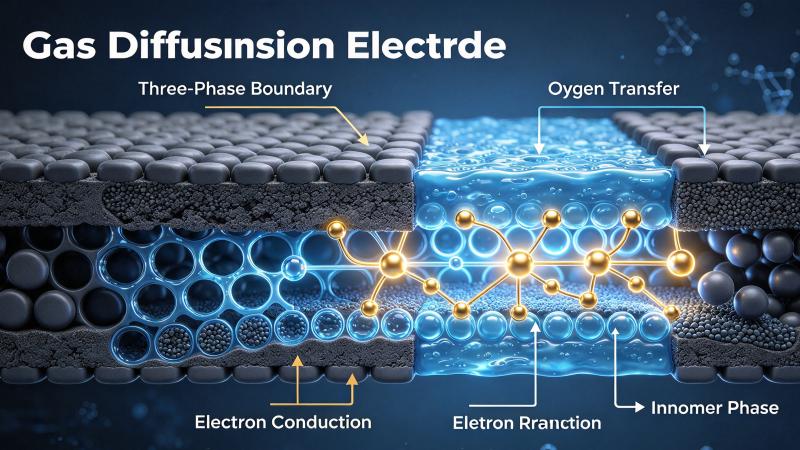
A gas diffusion electrode (GDE) is a porous electrode designed to deliver gaseous reactants to electrochemically active sites while conducting electrons and supporting ionic contact. GDEs are used in fuel cells, CO₂ electrolysis, and other gas-fed electrochemical systems where conventional liquid-phase transport may limit reactant delivery.

16 10, 2026

Ultrasonic Spray Coating Machine for Microfluidic Adhesive

Ultrasonic Spray Coating Machine for Microfluidic Adhesive Ultrasonic Spray Coating Machine for Microfluidic Adhesive In core fields such as microfluidic chip manufacturing, bio-microreactor fabrication, and MEMS device processing, microfluidic adhesives, with their excellent high aspect ratio, high temperature and chemical resistance, and outstanding molding precision, have become core consumables for the fabrication of high-end microfluidic devices. They are also key supports for realizing complex microchannel structures and high-precision [...]

15 10, 2026

Bioactive Thin Film Coatings: Linking Ultrasonic Deposition with Functional Testing

Bioactive Thin Film Coatings: Linking Ultrasonic Deposition with Functional Testing A coating system for medical instrument development must preserve the intended function of a bioactive layer. The term bioactive describes a purpose, not a single formulation. A film may contain a polymer carrier, active molecule, enzyme, or other functional constituent. Stable spraying and a continuous appearance are useful observations, but neither establishes retained activity or suitability for the [...]

Go to Top