
Knowledge-to-Application Path
What Is Electrochemistry?
Understand electrochemical reactions and the conversion between chemical and electrical energy.
- Electrochemical reactions
- Anode & cathode
- Electrolytes
- Electrochemical cells
Oxidation & Reduction
Learn the core redox processes governing batteries, fuel cells and electrolyzers.
- Oxidation
- Reduction
- Electron transfer
- Redox reactions
Oxidation & Reduction
Learn the core redox processes governing batteries, fuel cells and electrolyzers.
- Oxidation
- Reduction
- Electron transfer
- Redox reactions
Electrodes
- Anode
- Cathode
- Current collector
- Gas diffusion electrode
- Porous electrode
Catalysts
- Platinum
- Iridium
- Ruthenium
- Nickel / cobalt / iron
- Carbon-based catalysts
Catalyst Inks
- Ink formulation
- Dispersion
- Viscosity
- Stability
- Sprayability
Electrode Preparation
- Substrate preparation
- Catalyst ink preparation
- Coating
- Drying
- Heat treatment
Ultrasonic Spray Coating
- Fine atomization
- Uniform catalyst deposition
- Precise coating thickness
- Low overspray
- High material utilization
Coating Structures
- GDE coating
- MEA coating
- CCM coating
- Membrane coating
- Porous substrate coating
PEM Fuel Cells
MEA, CCM, GDL, Pt catalyst layers
PEM Water Electrolysis
Iridium, platinum, membrane
electrode assemblies
CO₂ Electrolysis
GDEs, catalyst inks, CO₂ reduction
electrodes
Batteries
Li-ion, Na-ion, solid-state electrode
coatings
Supercapacitors
Carbon materials and conductive
layers
Electrochemical Sensors
Biosensors, gas sensors, functional
electrodes
Hydrogen Production
Electrolyzer electrodes and catalyst
coatings
H₂O₂ Production
Electrode preparation and catalytic
layers
Electrochemical Performance
- Current density
- Voltage
- Overpotential
- Faradaic efficiency
- Tafel slope
Electrode Properties
- Electrochemical surface area
- Porosity
- Conductivity
- Ionic conductivity
- Mass transport
Coating Control
- Catalyst loading
- Coating thickness
- Ink viscosity
- Spray rate
- Drying conditions
Test Your Electrochemical Coating Process
Send us your substrate, catalyst ink or coating requirements for ultrasonic spray coating evaluation.
NEWS
How Are PEMFC Catalyst Layers Manufactured?
Explore PEMFC catalyst-layer manufacturing, including ink preparation, deposition, drying, membrane integration and laboratory quality control.
What Is a PEMFC MEA?
Learn what a PEMFC membrane electrode assembly contains, how its catalyst layers work and how researchers assess fabrication quality.
What Is a PEM Fuel Cell?
Understand PEM fuel cell operation, proton transport, electrode reactions, membrane assemblies and catalyst-layer manufacturing.
How to Reduce Catalyst Ink Waste
Reduce catalyst ink waste through smaller batches, accurate delivery, targeted deposition, line recovery and material-balance tracking.
How to Improve Catalyst Coating Uniformity
Improve catalyst coating uniformity by controlling ink stability, substrate wetting, deposition overlap, drying and measurement methods.
How to Control Catalyst Layer Thickness
Explore how to control catalyst layer thickness through ink concentration, wet-film deposition, drying and cross-sectional measurement.
How to Control Catalyst Loading
Learn to control catalyst loading through ink solids, deposition efficiency, area normalization, mass balance and repeatable laboratory testing.
Ultrasonic Spray Coating for Catalyst Inks
Learn how ultrasonic spray coating deposits catalyst inks, with guidance on atomization, dispersion, substrate wetting and coating validation.
Spray Coating vs Slot-Die Coating
Compare spray and slot-die coating for electrode research, including coating geometry, ink use, process control, scaling and substrate compatibility.
What Is an Ionomer in Catalyst Ink?
An ionomer is a polymer containing fixed ionic groups that enable transport of counter-ions. In catalyst inks for electrochemical devices, an ionomer can provide ionic connectivity within the catalyst layer and help bind particles to a substrate. Its chemistry, amount, distribution, and compatibility with the solvent and catalyst influence the resulting microstructure.
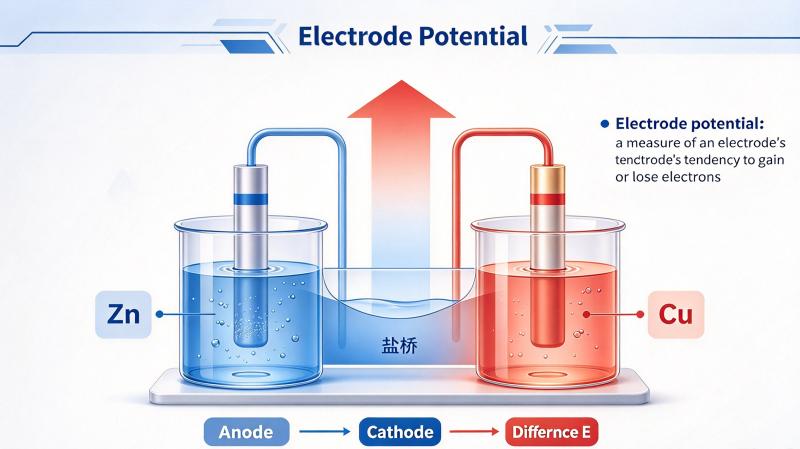
What Is Electrode Potential?
Electrode potential describes the tendency of an electrode interface to participate in oxidation or reduction under specified conditions. It reflects the energetics of charge transfer and depends on the electrode material, chemical species, activities, temperature, and interface state. Because an absolute single-electrode potential cannot be measured independently in a conventional experiment, practical values are measured relative to a reference electrode.

Oxidation vs Reduction
Oxidation and reduction are paired electron-transfer processes at the heart of electrochemistry. Oxidation means loss of electrons, while reduction means gain of electrons. In an electrochemical cell, the two processes occur at different electrode interfaces and are linked by electron flow through the external circuit and ion transport through the electrolyte.
