Email: market2@cheersonic.com
9 11, 2026

Ultrasonic Spray Coating of Ruthenium-Based Titanium Anodes for Chlor-Alkali Processes

2026-11-06T08:11:29+00:00

Ultrasonic Spray Coating of Ruthenium-Based Titanium Anodes for Chlor-Alkali Processes Ruthenium-based titanium anodes are widely associated with chlorine-evolution duties, including chlor-alkali electrolysis and other chloride-containing electrochemical processes. These dimensionally stable anodes typically use a titanium support with a catalytic coating containing ruthenium oxide and other oxides selected for the operating environment. The coating must be distributed consistently and remain attached during service. For manufacturers seeking better control over [...]

8 11, 2026

Ultrasonic Spray Coating of Iridium-Based Titanium Anodes for Oxygen Evolution

2026-11-06T08:11:25+00:00

Ultrasonic Spray Coating of Iridium-Based Titanium Anodes for Oxygen Evolution Iridium-based titanium anodes are important in electrochemical systems where a stable catalyst layer is required for oxygen evolution, including selected water-electrolysis and electroplating processes. In these electrodes, titanium provides a conductive and mechanically robust support, while the iridium-containing oxide coating supplies the active surface. Because iridium is a valuable material and coating quality influences electrode performance, manufacturers need [...]

6 11, 2026

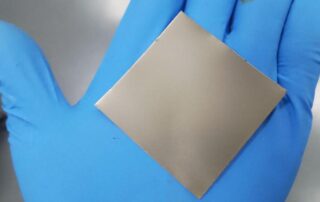
Large-Area Titanium Anode Plates: Advantages of Ultrasonic Spray Coating

2026-11-06T08:11:41+00:00

Large-Area Titanium Anode Plates: Advantages of Ultrasonic Spray Coating Titanium anode plates are widely used in electrochemical production because a titanium substrate combines mechanical strength, low weight and corrosion resistance in many operating environments. Their performance, however, depends not only on the substrate. The catalytic coating must provide the required composition, coverage, adhesion and electrochemical activity across the working surface. As electrode dimensions increase, maintaining these characteristics becomes [...]

1 11, 2026

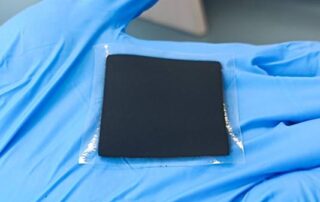
Ultrasonic Catalyst Deposition of Conductive Slurry Films on FTO, Porous Titanium Felt and Gas Diffusion Paper

2026-10-28T07:51:10+00:00

Ultrasonic Catalyst Deposition of Conductive Slurry Films on FTO, Porous Titanium Felt and Gas Diffusion Paper One Coating Platform, Three Very Different Substrates Conductive slurry deposition is relevant to electrode development, electrochemical catalysis, and functional thin-film research. Ultrasonic spray coating offers a way to meter a liquid dispersion and distribute it over a defined area. Researchers may wish to coat fluorine-doped tin oxide (FTO), porous titanium felt, and [...]

31 10, 2026

Catalyst Deposition for Carbon Nanotube Growth: The Role of Ultrasonic Spray Coating Systems

2026-10-28T08:04:22+00:00

Catalyst Deposition for Carbon Nanotube Growth Catalyst Deposition for Carbon Nanotube Growth: The Role of Ultrasonic Spray Coating Systems Where Ultrasonic Spraying Fits in Carbon Nanotube Manufacturing Carbon nanotubes (CNTs) are studied for electrical, thermal, mechanical, and interfacial applications. Many synthesis routes grow nanotubes from nanoscale catalytic sites under a controlled thermal and reactive atmosphere. Catalyst deposition is therefore an important upstream step: the location, amount, and distribution [...]

30 10, 2026

Iridium Oxide Catalyst Deposition by Ultrasonic Spray: Single-Sided CCM Coating at 2 mg/cm²

2026-10-28T08:30:09+00:00

Iridium Oxide Catalyst Deposition by Ultrasonic Spray: Single-Sided CCM Coating at 2 mg/cm² A Defined Single-Sided CCM Coating Task Proton exchange membrane water electrolysis uses catalyst-coated membrane (CCM) structures in which the oxygen-evolution side may incorporate iridium-based catalysts. Iridium oxide (IrO₂) is a material of interest for the anode catalyst layer because of its activity and stability considerations in acidic oxygen-evolution environments. In practice, electrode durability and performance [...]

29 10, 2026

Catalyst Deposition on Proton Exchange Membranes: Ultrasonic Spraying of Water–Isopropanol Inks

2026-10-29T05:14:36+00:00

Catalyst Deposition on Proton Exchange Membranes Catalyst Deposition on Proton Exchange Membranes: Ultrasonic Spraying of Water–Isopropanol Inks Understanding Water–Isopropanol Catalyst Deposition on PEMs Catalyst deposition onto a proton exchange membrane (PEM) is a central manufacturing step for many catalyst-coated membrane (CCM) architectures used in electrochemical devices. An ultrasonic spray coating system can deliver an ink formulated with water and isopropanol (IPA) onto a membrane held on a controlled [...]

16 10, 2026

What Is a Gas Diffusion Electrode?

2026-10-16T07:16:30+00:00

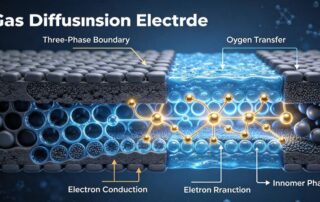
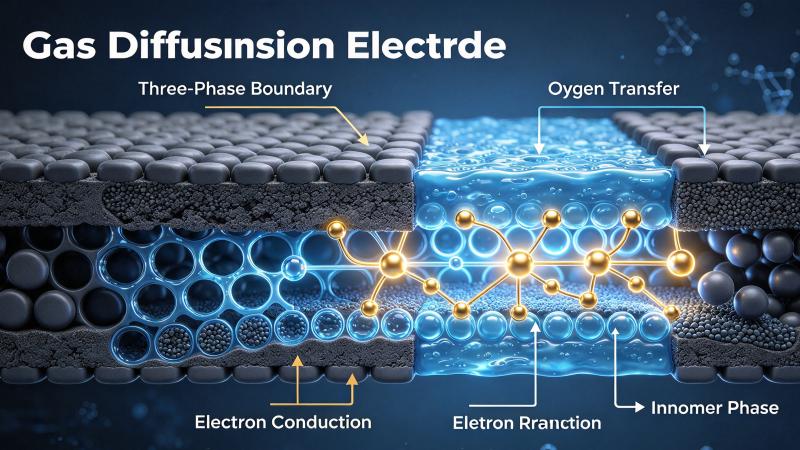
A gas diffusion electrode (GDE) is a porous electrode designed to deliver gaseous reactants to electrochemically active sites while conducting electrons and supporting ionic contact. GDEs are used in fuel cells, CO₂ electrolysis, and other gas-fed electrochemical systems where conventional liquid-phase transport may limit reactant delivery.

Go to Top