Article 1: Neural Stimulation and Recording Electrodes — How Polyimide Coatings on Platinum-Iridium Wires Support Precise Neural Signal Transmission
1. Why Do Neural Electrodes Require Ultra-Fine Platinum-Iridium Wires?
With advances in neuroscience, brain-computer interfaces, and neuromodulation technologies, medical devices increasingly require miniature electrodes with reliable electrical performance and precise dimensions.
Neural stimulation and recording electrodes serve as important interfaces between neural tissue and electronic systems. They can record weak electrical signals generated by neural activity or deliver controlled electrical stimulation to specific neural pathways.
Platinum-iridium (Pt-Ir) alloy wires are potential conductive materials for certain microelectrode designs.
Platinum-iridium alloys offer several important characteristics:
- Good electrical conductivity and electrochemical stability.
- Excellent corrosion resistance in many operating environments.
- Suitability for manufacturing miniature electrode structures.
- The ability to be processed into fine wires for specialized applications.
For example, platinum-iridium wires with a diameter of just 0.08 mm (80 μm) may be used in certain miniature neural electrodes or neural signal interconnection structures.
However, because platinum-iridium is electrically conductive, exposing the entire wire to surrounding tissue fluids may create unwanted current pathways, signal interference, or poorly defined electrode working areas.
Reliable electrical insulation is therefore essential for the non-active portions of the wire.
2. The Role of Polyimide Coatings in Neural Electrodes
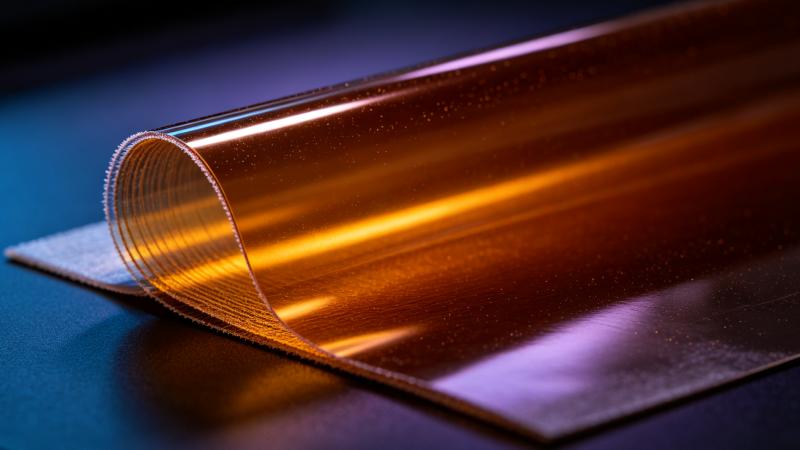
Polyimide (PI) is a class of high-performance polymers known for its thermal stability and dielectric properties.
In neural electrode applications, PI coatings can electrically isolate the conductive wire from its surroundings, helping ensure that electrical signals are transmitted through designated electrode regions.
The main functions of PI insulation include:
Electrical Insulation
PI coatings help minimize unintended current leakage and support spatially selective electrode operation.
Miniaturization
Thin PI insulation layers can reduce the overall diameter of an electrode assembly.
Surface Protection
The coating provides a protective insulating barrier over non-active conductive surfaces.
Electrode Patterning
Selected portions of the insulation can be removed through suitable processing methods to expose precisely defined electrode working areas.
However, the suitability of PI for long-term implantation depends on the specific polymer formulation, manufacturing process, device design, and biocompatibility validation.
3. Challenges of Coating 80 μm Platinum-Iridium Wires
Coating extremely thin metal wires requires careful control of insulation thickness and circumferential uniformity.
For an 80 μm platinum-iridium wire, applying a PI coating with a radial thickness of 5–10 μm results in a theoretical finished diameter of approximately 90–100 μm.
At this scale, manufacturers must address several challenges:
- Uneven coating thickness around the wire circumference.
- Pinholes and exposed metal areas.
- Insufficient adhesion between PI and the platinum-iridium substrate.
- Cracking during bending or subsequent assembly.
- Bubble formation and localized coating accumulation.
Achieving the target coating thickness alone is not sufficient. The insulation must also be continuous, uniform, and electrically reliable.
4. Ultrasonic Spray Coating of PI on 0.08 mm Platinum-Iridium Wires
Ultrasonic spray coating technology uses high-frequency mechanical vibrations to atomize liquid coating materials into fine droplets. Controlled carrier gas then directs these droplets toward the target substrate.
For platinum-iridium wires measuring 0.08 mm in diameter, a continuous wire-feeding ultrasonic spray coating system can be investigated to produce PI insulation layers with a radial thickness of approximately 5–10 μm.
A typical process may include:
- Continuous unwinding and surface cleaning of the platinum-iridium wire.
- Precision tension control to maintain stable wire movement.
- Ultrasonic atomization of a suitable PI coating solution.
- Multi-angle spraying to improve circumferential coverage.
- Multiple thin coating passes with intermediate drying.
- Thermal treatment and final curing according to the selected PI chemistry.
- Inspection of coating thickness, insulation continuity, and adhesion.
Because the wire diameter is extremely small, droplet capture efficiency, circumferential coverage, and coating shrinkage during curing must be carefully evaluated.
Once properly developed and validated, a continuous ultrasonic spray coating process may improve coating thickness control and manufacturing repeatability compared with manually operated coating methods.
5. Future Opportunities for Neural Electrode Manufacturing
The development of smaller electrodes, higher channel densities, and more precisely defined electrode interfaces continues to create demand for advanced insulation technologies.
PI insulation coatings on ultra-fine platinum-iridium wires may provide an additional manufacturing option for neural recording electrodes, stimulation electrodes, and miniature electrode assemblies.
However, final devices must undergo appropriate electrical, mechanical, biocompatibility, and long-term reliability testing.
Conclusion
In neural electrode manufacturing, platinum-iridium wires provide conductive pathways, while polyimide coatings electrically isolate non-active regions.
Ultrasonic spray coating offers a promising process development approach for applying precise PI insulation layers to platinum-iridium wires as thin as 80 μm, potentially supporting future advances in miniature neural electrode manufacturing.