
PEM Electrolyzer MEA Catalyst Coating Equipment
Technical Analysis of Ultrasonic Spraying Machines Adapted to PEM Electrolyzers and Fuel Cells (MEAs)
In the process of the new energy industry’s transformation towards cleaner and lower-carbon technologies, PEM electrolyzer hydrogen production and fuel cell technology have become core supports. Membrane electrode modules (MEAs), as the core components of both types of equipment, directly determine energy conversion efficiency, stability, and service life through their fabrication precision. Ultrasonic spraying machines, with their advantages of precise atomization and accurate deposition, have become key equipment for the efficient fabrication of MEAs, providing core process guarantees for the industrialization of new energy technologies.
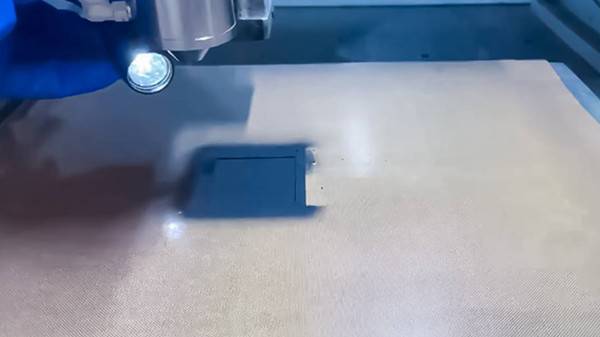
The core working principle of an ultrasonic spraying machine is to convert high-frequency sound waves into mechanical energy through a piezoelectric transducer, causing the catalyst slurry to form a uniform liquid film at the nozzle, which then breaks down into micron- or even nano-sized droplets. These droplets are precisely deposited on the surface of the proton exchange membrane or gas diffusion layer substrate under the guidance of a low-pressure airflow, forming a dense and uniform catalyst layer after drying and curing. Compared to traditional high-pressure spraying technology, its non-contact spraying characteristic avoids physical damage to fragile substrates, while the extremely low atomization pressure significantly reduces droplet splashing, fundamentally solving the pain points of uneven coating and material waste in traditional processes.
For the precision fabrication requirements of PEM electrolyzers and fuel cell MEAs, ultrasonic spraying machines possess several core advantages. Firstly, excellent coating uniformity. The narrow droplet size distribution formed by ultrasonic atomization allows for control of catalyst layer thickness deviation within ±5%, effectively avoiding streaks and pinhole defects common in traditional processes. This provides a uniform three-phase reaction interface for electrochemical reactions, significantly improving equipment power density. Secondly, high material utilization. The highly directional droplet transport enables material utilization rates exceeding 80%, far higher than the 30-50% of traditional spraying, making it particularly suitable for the precise coating of high-value materials such as precious metal catalysts, significantly reducing preparation costs. Thirdly, flexible parameter control. By adjusting parameters such as ultrasonic power, spraying speed, and slurry flow rate, coating thickness can be controlled within the range of 10nm-10μm, precisely matching the design requirements of different MEA structures and covering industry standard requirements for anode Ir loading of 0.5-2.0 mg/cm² and cathode Pt loading of 0.3-1.0 mg/cm².
Regarding application adaptability, the ultrasonic spraying machine has undergone multiple process optimizations specifically for the unique characteristics of MEA preparation. For PEM electrolytic cell MEAs, the equipment can precisely spray a highly stable catalyst layer that can withstand the harsh environment of high temperature and high humidity during electrolysis, while avoiding pore blockage in the coating and ensuring proton conduction and gas diffusion efficiency. For fuel cell MEAs, its non-clogging nozzle design can effectively handle catalyst slurries containing nanoparticles, avoiding spraying failures caused by solid particle precipitation, and significantly reducing maintenance frequency and downtime. The equipment can also be equipped with a micron-level microporous vacuum adsorption heating plate, suitable for uniform adsorption spraying of flexible substrates such as battery separators, and with a high-temperature hot stage of up to 500℃, it can meet the requirements of different curing processes.
To further improve the quality of MEA (Metal-on-Apartment) preparation, the ultrasonic spraying machine integrates a comprehensive process coordination system. During the substrate pretreatment stage, it can be linked with a plasma treatment unit to remove surface contaminants and increase surface energy to enhance coating adhesion. During spraying, a high-precision path control system via an XYZ three-axis servo motion system, combined with laser cursor alignment, ensures accurate positioning of the spraying starting point, avoiding issues like excessively thick coatings at the edges. The introduction of an inert gas atmosphere prevents catalyst oxidation and improves coating stability. These functions work together to ensure consistency in the spraying process, maintaining stable product quality for both small-batch R&D and large-scale production.
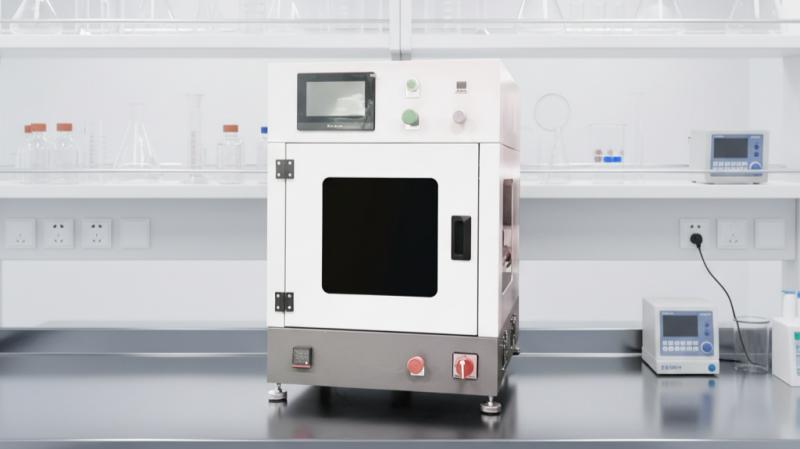
At the industry value level, the ultrasonic spraying machine not only drives the upgrade of MEA preparation processes but also contributes to cost optimization and performance breakthroughs in new energy technologies. By precisely controlling catalyst loading, the amount of precious metals used can be reduced while ensuring performance, alleviating the cost pressure of core materials. Its efficient material utilization characteristics reduce pollutant emissions, aligning with green manufacturing principles. Furthermore, the equipment is adaptable to the coating preparation of other new energy devices such as perovskite solar cells, possessing broad application scalability. With the large-scale application of PEM electrolyzers and fuel cell technologies, ultrasonic spraying machines will play an increasingly crucial supporting role in the new energy industry chain, promoting the continuous improvement of clean energy utilization efficiency.
About Cheersonic
Cheersonic is the leading developer and manufacturer of ultrasonic coating systems for applying precise, thin film coatings to protect, strengthen or smooth surfaces on parts and components for the microelectronics/electronics, alternative energy, medical and industrial markets, including specialized glass applications in construction and automotive.
Our coating solutions are environmentally-friendly, efficient and highly reliable, and enable dramatic reductions in overspray, savings in raw material, water and energy usage and provide improved process repeatability, transfer efficiency, high uniformity and reduced emissions.
If you have any technical questions, customization demands, or procurement inquiries about ultrasonic atomization nozzles, feel free to contact our professional sales and technical team for detailed parameters, customized solutions, and industry application support.
Email: market2@cheersonic.com
