Spray Coating vs Slot-Die Coating
Compare spray and slot-die coating for electrode research, including coating geometry, ink use, process control, scaling and substrate compatibility.

Compare spray and slot-die coating for electrode research, including coating geometry, ink use, process control, scaling and substrate compatibility.
An ionomer is a polymer containing fixed ionic groups that enable transport of counter-ions. In catalyst inks for electrochemical devices, an ionomer can provide ionic connectivity within the catalyst layer and help bind particles to a substrate. Its chemistry, amount, distribution, and compatibility with the solvent and catalyst influence the resulting microstructure.
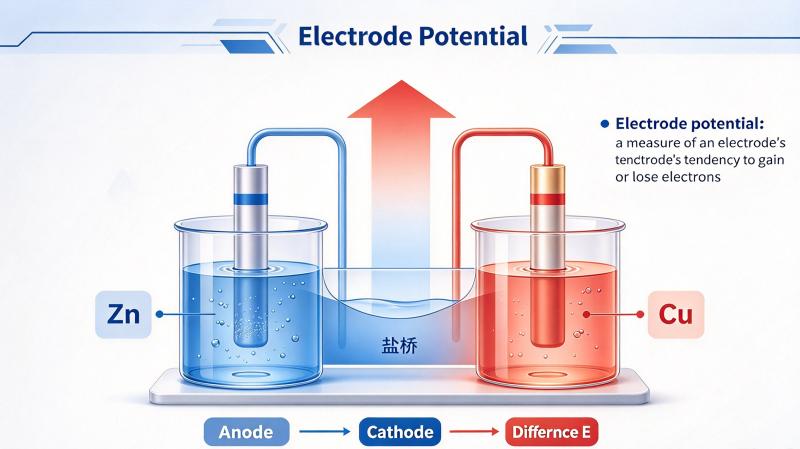
Electrode potential describes the tendency of an electrode interface to participate in oxidation or reduction under specified conditions. It reflects the energetics of charge transfer and depends on the electrode material, chemical species, activities, temperature, and interface state. Because an absolute single-electrode potential cannot be measured independently in a conventional experiment, practical values are measured relative to a reference electrode.
Oxidation and reduction are paired electron-transfer processes at the heart of electrochemistry. Oxidation means loss of electrons, while reduction means gain of electrons. In an electrochemical cell, the two processes occur at different electrode interfaces and are linked by electron flow through the external circuit and ion transport through the electrolyte.
Ultrasonic spraying machine for spraying nano silver Ultrasonic spraying machine for spraying nano silver - Cheersonic In diverse fields such as electronics manufacturing, biomedicine, textiles, and environmental catalysis, nano-silver, as a novel nanomaterial with a particle size of less than 100nm, has become a key material driving industrial technology upgrades due to its core advantages of low melting point, excellent conductivity, outstanding bactericidal efficacy, and large specific surface [...]
An electrolyte is a substance or medium that contains mobile ions and conducts ionic current. In electrochemical research, it completes the ionic pathway between electrodes and influences charge balance, reaction kinetics, selectivity, and stability. Electrolytes may be aqueous solutions, non-aqueous liquids, polymer gels, molten salts, or solid ion conductors.
Single-stage dilatation balloon drug coating processes Single-stage dilatation balloon drug coating processes - Cheersonic As a core device in interventional cardiovascular and peripheral vascular diagnosis and treatment, single-stage dilatation balloons have become the mainstream device for the pretreatment and precise treatment of vascular stenosis and occlusion lesions due to their advantages of simple structure, stable expansion, and wide adaptability. The drug coating on the balloon surface is a [...]
What is catalyst coating? Learn catalyst ink preparation, ultrasonic spray coating, electrode substrates, process variables and laboratory quality control.
Ultrasonic spraying machine for spraying touch screens Ultrasonic spraying machine for spraying touch screens-Cheersonic In diverse fields such as consumer electronics, industrial control, smart homes, and public services, touchscreens, as the core carrier of human-computer interaction, have become an essential component of various smart devices due to their core advantages of convenient operation and intuitive display. Touchscreens mainly consist of touch detection components, touchscreen controllers, and displays. Core [...]
Learn what an electrode is, how anodes and cathodes work, common electrode types and materials, and why surface preparation and coating quality matter in electrochemical research.

Address: No. 11-13, Chuangye Road, Changkou Town, Fuyang District, Hangzhou City, Zhejiang Province | Phone: +86-571-87910406 | Email: market2@cheersonic.com