Large-Area Titanium Anode Plates: Advantages of Ultrasonic Spray Coating
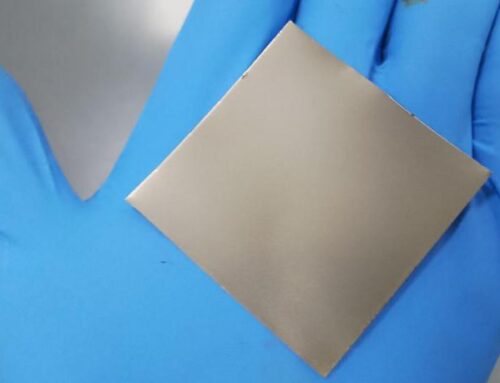
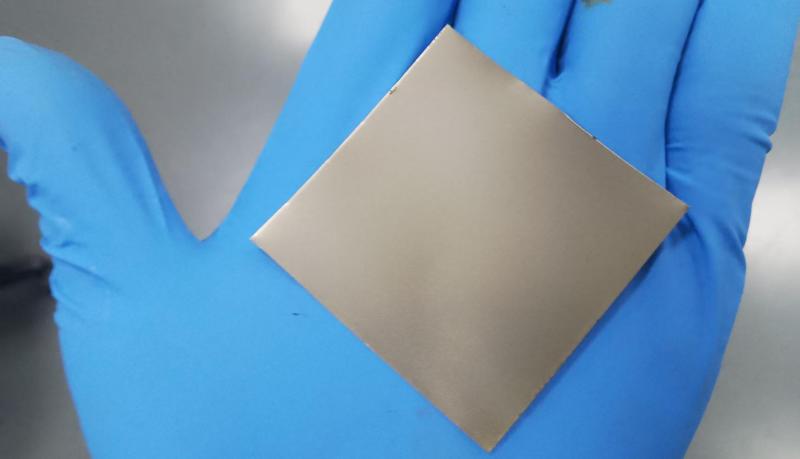
Titanium anode plates are widely used in electrochemical production because a titanium substrate combines mechanical strength, low weight and corrosion resistance in many operating environments. Their performance, however, depends not only on the substrate. The catalytic coating must provide the required composition, coverage, adhesion and electrochemical activity across the working surface. As electrode dimensions increase, maintaining these characteristics becomes more challenging. Ultrasonic spray coating offers manufacturers a controllable way to deposit functional layers on large titanium plates while managing precious-metal solution consumption and coating repeatability.
Why coating uniformity matters on large titanium anodes
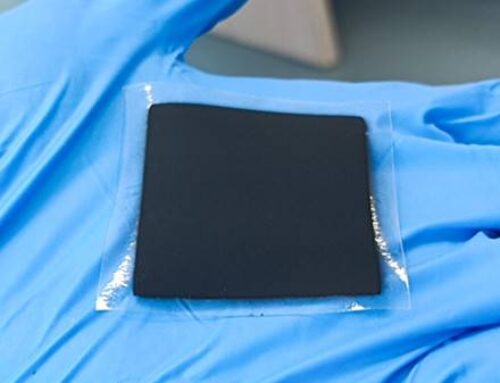
A titanium anode may use an iridium-based, ruthenium-based or mixed-metal-oxide coating, selected according to the electrolyte and target reaction. A local variation in precursor loading or thermal history can create differences in coating structure and electrochemical response. Thin or poorly covered areas may expose the substrate, while excessive local loading can waste valuable material and create avoidable stress during thermal processing. These risks become more difficult to manage on a plate with a large surface area, especially near edges, corners and fixture contact points.
Conventional brushing can be practical for small batches and simple geometries, but the result may depend strongly on operator technique, brush condition and the number of passes. Pneumatic spray can cover broad areas, yet droplet size, rebound and overspray may make material use and edge control difficult. A well-engineered ultrasonic process provides a different approach: it atomizes liquid through high-frequency vibration and produces a controlled spray that can be directed over a planned path.
How ultrasonic spray coating works
Controlled atomization and deposition
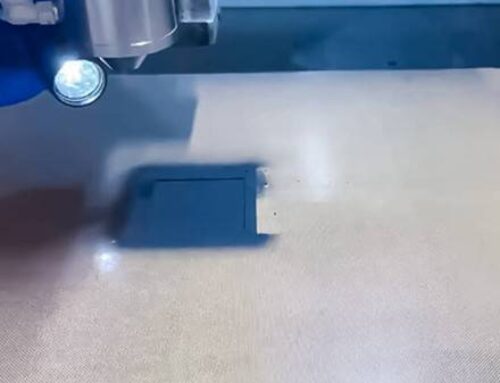
An ultrasonic nozzle converts electrical energy into mechanical vibration. The vibration breaks a liquid precursor into fine droplets without relying on the high liquid pressure used by many conventional spray systems. A carrier gas transports the atomized droplets toward the prepared titanium surface. Nozzle flow, atomization conditions, substrate temperature, traverse speed, stand-off distance and overlap are coordinated to build the desired wet film.
Layer-by-layer coating and thermal conversion
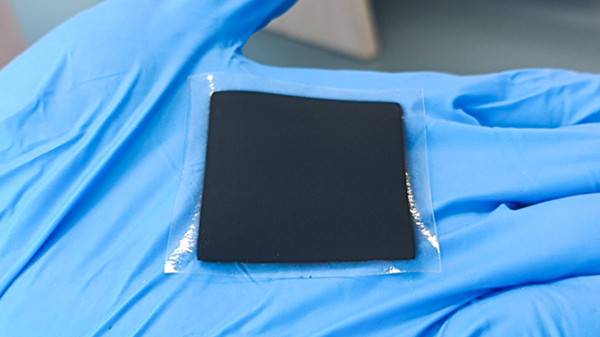
For metal-oxide anodes, the deposited precursor is commonly dried and thermally treated so that solvent and organic constituents are removed and the desired oxide phase can form. Manufacturers often use multiple thin deposition and heat-treatment cycles rather than attempting to create the full coating thickness in one pass. This approach allows the process team to tune loading, surface coverage and coating development while monitoring the effects of each thermal cycle. The exact formulation, temperature profile and number of layers must be validated for the specific titanium grade and catalytic chemistry.
Benefits for 1.5 × 2 m titanium plate formats
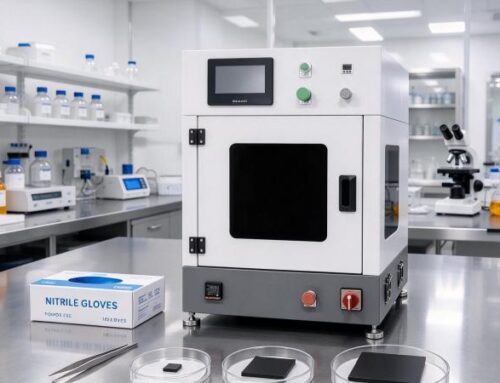
Cheersonic can provide ultrasonic spray coating solutions for large titanium plate anodes with dimensions up to 1.5 m × 2 m, subject to project review and equipment configuration. Large-area processing requires more than a wide spray head. It calls for a stable fixture, controlled motion, repeatable path planning, suitable nozzle arrangement and a process window that accounts for the full plate, including its perimeter. Multi-nozzle or programmed scanning concepts can be evaluated according to throughput, coating formulation and the required deposition rate.
- More controlled material delivery: fine atomization and metered liquid feed can help reduce overspray and improve precious-metal precursor utilization.
- Repeatable coverage: programmed motion, defined overlap and controlled process settings support consistency from one plate to another.
- Flexible coating development: flow, scan speed and pass count can be adjusted for different coating loads and plate designs.
- Non-contact deposition: the nozzle does not need to touch the active surface, reducing the risk of mechanical disturbance during coating.
- Production scalability: a process established during sample trials can be transferred toward automated or higher-throughput equipment after validation.
Process factors manufacturers should validate
Before production, the team should define titanium alloy and surface preparation, plate flatness, masking boundaries, target oxide chemistry, precious-metal loading, dry-film or coating mass target, thermal treatment and acceptance criteria. Uniformity should be assessed at multiple positions rather than only at the center. Useful checks may include coating mass distribution, visual inspection, microscopy, adhesion assessment and electrochemical testing under representative electrolyte conditions. Edge regions deserve specific attention because spray overlap and thermal gradients can differ from the central area.
Ultrasonic spraying is a deposition method, not a substitute for formulation development or electrode qualification. The final result depends on precursor chemistry, substrate preparation, thermal conversion and service conditions. A sample trial is therefore the most reliable way to establish whether a proposed process meets a manufacturer’s requirements.
Develop a large-area titanium anode coating process with Cheersonic
Cheersonic works with research and development teams and titanium anode manufacturers to evaluate coating formulations, deposition paths and equipment configurations. Our ultrasonic coating equipment portfolio supports development from laboratory trials through automated production concepts. Learn more about our ultrasonic coating equipment solutions.
If your project involves a titanium plate up to 1.5 m × 2 m, invite our engineering team to discuss the coating area, precursor chemistry, target loading and production goals. Contact market2@cheersonic.com to discuss your titanium anode coating project and arrange an ultrasonic spray sample test.