
High-Temperature Membrane Electrode Spraying
High-Temperature Membrane Electrode Spraying – Cheersonic
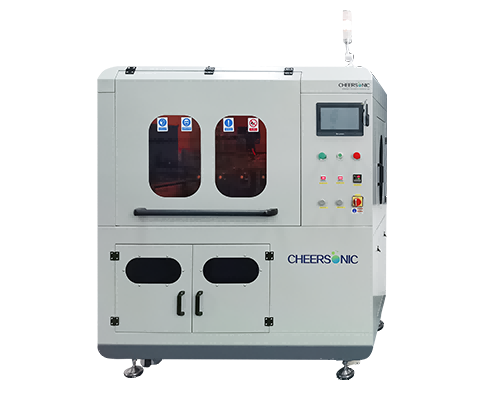
High-temperature membrane electrode ultrasonic spraying is an advanced precision coating technology widely used in high-temperature fuel cells, electrolyzers, gas sensors and other key components. By means of high-frequency ultrasonic vibration, the high-temperature resistant electrode slurry, such as platinum-based catalyst, ceramic electrode slurry and high-temperature polymer electrolyte, is atomized into uniform and controllable micro droplets, which are softly and evenly deposited on the surface of high-temperature membrane electrode substrate.
This non-contact coating method avoids the mechanical damage to the fragile high-temperature membrane and porous electrode structure, and can precisely control the thickness, compactness and surface uniformity of the electrode layer. Compared with traditional coating methods, ultrasonic spraying has higher material utilization rate, less slurry waste, and is suitable for continuous and stable mass production.
It can maintain the catalytic activity and structural integrity of the electrode material at high temperature, improve the conductivity, stability and service life of the membrane electrode, and provide reliable process support for the manufacturing of high-performance, high-temperature resistant electrochemical devices.
The high-temperature membrane electrode) is a core component of a high-temperature proton exchange membrane fuel cell . The following is a detailed explanation of the concept of the high-temperature MED:
1. Definition and Structure
The high-temperature MED is the core component in a fuel cell where electrochemical reactions occur. It is formed by hot-pressing a proton exchange membrane, a catalyst layer, and a gas diffusion layer under appropriate temperature and pressure. It is not only the site of multiple mass transport processes but also the center of electrochemical reactions.
2. Working Principle
In a high-temperature PEMFC, fuel (such as hydrogen) loses electrons at the anode side of the MED to form hydrogen ions (protons). These protons are transferred to the cathode side through the proton exchange membrane. Simultaneously, oxygen at the cathode side of the MED gains electrons under the action of the catalyst to form oxygen anions, which then combine with hydrogen ions transferred from the anode to form water. The catalyst layer provides the reaction site, while the proton exchange membrane transfers protons while separating the reactant gases, thereby maintaining a stable voltage output.
3. Features and Advantages
1). High-Temperature Operation: The high-temperature MED can operate over a high temperature range. This provides a higher electrochemical reaction rate, increasing the power density and efficiency of the fuel cell.
2). Anti-fouling: High-temperature membrane electrode assemblies (MEAs) are better resistant to soot clogging, thus extending the lifespan of fuel cells.
3). Proton conductivity: Although proton exchange membranes (PEMs) are prone to moisture loss at high temperatures, reducing proton conductivity, researchers have addressed this issue to some extent by adding water-retaining materials.
4. Challenges and Solutions
1). Reduced proton conductivity: To address the reduced proton conductivity at high temperatures, researchers have added water-retaining materials to the PEM to improve proton conductivity.
2). Mechanical strength and stability: Under high temperature and low humidity conditions, the mechanical strength and dimensional stability of PEMs may be affected. Crosslinking and other methods can enhance the membrane’s antioxidant capacity, acid retention, degradation resistance, mechanical strength, and dimensional stability. However, this requires balancing the degree of crosslinking with conductivity to avoid excessive crosslinking leading to increased membrane brittleness and manufacturing difficulties.
In summary, high-temperature MEAs are one of the core components of high-temperature proton exchange membrane fuel cells, featuring high-temperature operation, anti-fouling properties, and high efficiency. However, challenges remain, including reduced proton conductivity and compromised mechanical strength and stability. Through continuous research and innovation, these problems are expected to be effectively solved, thereby promoting the further development and application of high-temperature proton exchange membrane fuel cell technology.
About Cheersonic
Cheersonic is the leading developer and manufacturer of ultrasonic coating systems for applying precise, thin film coatings to protect, strengthen or smooth surfaces on parts and components for the microelectronics/electronics, alternative energy, medical and industrial markets, including specialized glass applications in construction and automotive.
Our coating solutions are environmentally-friendly, efficient and highly reliable, and enable dramatic reductions in overspray, savings in raw material, water and energy usage and provide improved process repeatability, transfer efficiency, high uniformity and reduced emissions.
Chinese Website: Cheersonic Provides Professional Coating Solutions