
Basic Knowledge of Wafer Surface Cleaning
Basic Knowledge of Wafer Surface Cleaning – Cheersonic
It is crucial to thoroughly clean the surface of silicon wafers before they enter the CMOS manufacturing process, removing adhesive particles, organic/inorganic impurities, and natural oxide layers. As chip design continues to shrink, the role of cleaning technology in ensuring product yield is becoming increasingly prominent. In modern semiconductor manufacturing, the cleaning step can account for 30% to 40% of the entire process, and its development history is profound. The relevant technical foundation can refer to classic research literature in this field.
Surface pollutants on wafers come in various forms, including adsorbed ions, elements, thin films, discrete particles, particle clusters, and adsorbed gases.

Particle pollution
Particle pollution sources are widespread, such as environmental dust, equipment wear and tear, process chemicals, gas pipelines, wafer handling, vapor deposition, and personnel activities. Even nanoscale particles can cause “fatal” defects: or obstruct the formation of key graphic structures (leading to graphic, feature defects, or injection issues), or create local electrical weaknesses in the insulation layer. Usually, fatal defects may occur when the particle size is much smaller than the characteristic size.
The particle cleaning plan includes:
- Strong acid oxidation cleaning: suitable for total particle pollution containing organic matter, it converts pollutants into soluble substances through strong oxidation to remove them.
- Ammonia hydrogen mixture cleaning: especially for small particles with strong adhesion. The solution oxidizes the surface of the wafer to form a thin oxide layer and dissolves, while carrying away the adsorbed particles. Its uniqueness lies in inducing the same zeta potential (an indicator of electrostatic repulsion) between particles and wafer surfaces, effectively preventing particle re adsorption.
- Post treatment of oxygen-containing cleaning solution: All cleaning solutions containing hydrogen peroxide (such as the above mixture and other variants) will leave a thin oxide layer on the silicon surface, which needs to be removed through the final step of dilute hydrofluoric acid (HF). The combination of dissolved ozone water (DIO ∝) and HF is also an effective alternative solution. Megasonic cleaning wafer technology utilizes high-frequency sound waves to effectively loosen and remove submicron and nanometer particles, especially suitable for high-precision applications.
Metal pollution
Metal pollutants pose a great threat to semiconductor devices. They have high mobility in the silicon lattice and are easily diffused from the surface to the inside of the wafer. At subsequent process temperatures, the metal rapidly diffuses and is captured by crystal defects, resulting in performance degradation such as increased leakage current and decreased breakdown voltage of the device.
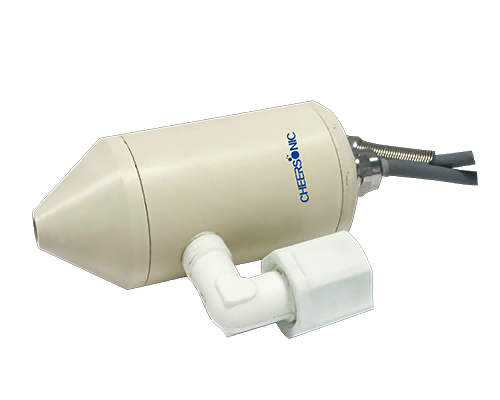
The removal of metal pollution mainly relies on acidic cleaning agents, such as hydrochloric acid hydrogen peroxide mixture, strong acid oxidizing solution, dilute hydrofluoric acid (HF), dilute hydrochloric acid, and their combinations. These solutions react with metals to form soluble ionic salts, which are discharged with rinsing. It is worth noting that the cleaning of ammonia hydrogen peroxide mixture itself may introduce metal contamination, so subsequent steps of hydrochloric acid hydrogen peroxide mixture cleaning are often required. The process of cleaning wafers with Megasonic reduces the amount of chemical solution and corrosiveness, which helps to reduce the risk of metal contamination and improve surface quality.
Chemical pollution
Chemical pollution is mainly divided into three categories:
1. Adsorption of organic compounds:
*Source: Volatile organic compounds in clean room air, photoresist (PR) residue, and gas release from building materials.
*Harm: Severe pollution (such as PR residue) forms carbon residue at high temperatures, affecting yield; Carbon residue can become particle nuclei; Residual surfaces may trap metals; Volatile organic compounds hinder the removal of natural oxide layers by HF, leading to a decrease in the quality of the gate oxygen interface and seriously affecting the integrity of the gate oxygen; Affects the initial rates of thermal oxidation and CVD, resulting in uneven film thickness.
*Cleaning:
- Strong acid oxidation cleaning: effectively removes PR carbon residue.
- Ammonia hydrogen peroxide mixture: removes volatile organic compounds through oxidation and solvation. This process will slowly remove the natural oxide layer while oxidizing to generate a new oxide layer.
- Dissolved Ozone Water (DIO ∝): As a more environmentally friendly and safe alternative, it is increasingly used to replace strong acid oxidizing solutions and ammonia hydrogen peroxide mixtures for removing organic matter. Depending on the nature of the pollutants, strong acid oxidizing solution combined with ozone (SPOM) or sulfur ozone mixture (SOM) can also be used. The allowable loss of materials and surface roughness are key parameters in the selection method.
2. Adsorption of inorganic compounds:
- Source: Compounds containing boron, phosphorus and other doping elements (such as flame retardants, tool residue degassing), volatile acids/bases (amines, ammonia, sulfur oxides SOx).
- Harm: Doping element migration changes substrate resistivity; Acid/alkali affects the chemical properties of photoresist, leading to pattern defects and delamination issues; Highly reactive inorganic substances are prone to form chemical salt particles or haze.
- Cleaning: The combination of ammonia hydrogen peroxide mixture and hydrochloric acid hydrogen peroxide mixture can effectively remove adsorbed acidic and alkaline inorganic substances.
3. Natural oxide layer:
- Property: A thin layer of about 1-2nm formed by the reaction of silicon with air, with a complex chemical composition (containing Si-O-Si, Si-H, Si-OH, etc.).
- Harm: Increasing the difficulty of ultra-thin gate oxygen growth; If it exists during the formation of gate oxygen, it leads to the deterioration of the electrical performance of the insulator; Increase the contact hole resistance.
- Removal: Deionized water, dilute hydrofluoric acid (HF), and ammonium fluoride buffer (BOE) can be used to completely remove it, leaving a hydrogen passivated surface. The standard front-end (FEOL) wet cleaning process originated decades ago, with the core being the removal of various pollutants through a combination of chemical steps (such as ammonia hydrogen peroxide mixture, hydrochloric acid hydrogen peroxide mixture), and often including HF or BOE steps to specifically remove natural or chemical oxide layers. This basic method has undergone many developments and improvements, and is still the mainstream in the industry today. In modern technology, megasonic cleaning wafer technology has also been integrated and applied to the oxide layer removal process, improving chemical cleaning efficiency through physical assistance.
About Cheersonic
Cheersonic is the leading developer and manufacturer of ultrasonic coating systems for applying precise, thin film coatings to protect, strengthen or smooth surfaces on parts and components for the microelectronics/electronics, alternative energy, medical and industrial markets, including specialized glass applications in construction and automotive.
Our coating solutions are environmentally-friendly, efficient and highly reliable, and enable dramatic reductions in overspray, savings in raw material, water and energy usage and provide improved process repeatability, transfer efficiency, high uniformity and reduced emissions.
Chinese Website: Cheersonic Provides Professional Coating Solutions
