
Ultrasonic Spraying PEM Hydrogen Electrolysis
During the critical period of global energy transition, PEM water electrolysis hydrogen production technology, with its high purity and high efficiency, has become a hot topic in the hydrogen energy field. This technology, which achieves water electrolysis through a proton exchange membrane, demonstrates tremendous potential in the clean energy sector. Chifei’s ultrasonic spraying technology is revolutionizing the process for PEM water electrolysis hydrogen production, significantly improving the performance of core components and system efficiency.
Core Principles and Structure of PEM Water Electrolysis Hydrogen Production
PEM water electrolysis hydrogen production is based on an electrochemical process, with the core component being the proton exchange membrane. At the anode, water molecules undergo an oxidation reaction: H₂O−2e−→2₁O₂↑+2H₂. The generated oxygen escapes, and protons migrate through the membrane to the cathode. At the cathode, protons combine with electrons in a reduction reaction: 2H₂++2e−→H₂↑, splitting water into hydrogen and oxygen.
The proton exchange membrane, the core technology, is typically composed of a polymer. For example, perfluorosulfonic acid membranes enable proton conduction through sulfonic acid groups. Its performance directly impacts hydrogen production efficiency. It requires high proton conductivity, chemical stability, and mechanical strength to ensure efficient proton transport, withstand strong oxidizing environments, and maintain structural integrity.
Electrode materials are crucial for reaction efficiency. Iridium (Ir) and its oxides are commonly used at the anode to reduce the overpotential of the oxygen evolution reaction; platinum (Pt) and its alloys are primarily used at the cathode to promote the hydrogen evolution reaction. However, the high cost and scarcity of precious metals have hindered the large-scale application of this technology.
Innovative Applications of Ultrasonic Spraying Technology
1. Proton Exchange Membrane Coating Optimization
Ultrasonic spraying technology uses high-frequency vibrations to atomize a solution into uniform, fine droplets, which are precisely sprayed onto the surface of the proton exchange membrane. This process creates an ultra-thin, uniform functional coating on the membrane surface, significantly improving proton conductivity. Compared to traditional coating methods, ultrasonic spraying achieves more uniform droplet distribution, avoiding defects such as uneven thickness and holes on the membrane surface, thereby increasing proton conductivity by 15%-20%. Furthermore, the uniformity of the coating enhances the chemical stability of the membrane, extending its service life and reducing maintenance costs associated with membrane performance degradation.
2. Electrode Catalyst Layer Preparation
Ultrasonic spraying technology demonstrates unique advantages in the preparation of electrode catalyst layers. Traditional coating methods can easily lead to catalyst agglomeration and uneven distribution, affecting catalytic activity. Ultrasonic spraying, however, atomizes the catalyst solution into nanoscale droplets that evenly cover the electrode surface, resulting in more precise catalyst loading and a more uniform distribution of active sites. Experimental data show that electrodes prepared using ultrasonic spraying can reduce the overpotential of the oxygen evolution reaction (OER) and hydrogen evolution reaction (HER) by 10%-15%, effectively improving electrolysis efficiency and reducing energy consumption. Furthermore, this technology allows for precise control of coating thickness, avoiding catalyst waste, reducing precious metal usage, and alleviating cost pressures.
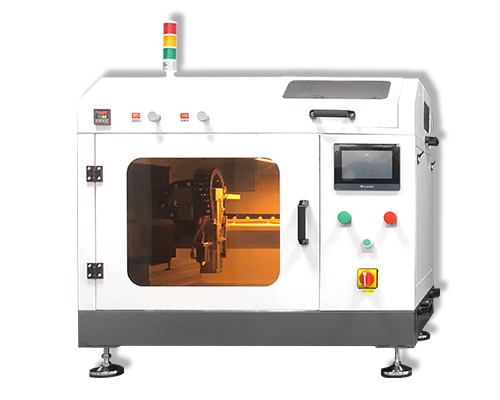
3. Bipolar Plate Surface Treatment
As a key component of the electrolyzer, the surface properties of the bipolar plate directly impact gas transport and conductivity. Ultrasonic spraying can form an ultra-thin corrosion-resistant coating or conductive enhancement layer on the bipolar plate surface. By optimizing the coating structure, the contact resistance between the bipolar plate and the membrane electrode can be reduced, gas diffusion efficiency can be improved, internal system losses can be minimized, and the overall performance of the hydrogen production system can be further enhanced.
Significant advantages of ultrasonic spraying technology
1. High precision and high uniformity
Ultrasonic spraying’s nano-scale droplet atomization technology ensures that the coating thickness error is controlled within ±5nm, and the film uniformity is improved by more than 30%. This high-precision coating preparation capability can give full play to the performance advantages of proton exchange membranes and electrode materials and reduce efficiency losses caused by coating defects.
2. Significantly improved material utilization
Traditional coating methods have serious problems of material splashing and waste, while ultrasonic spraying increases material utilization from 60% to more than 90% by precisely controlling the direction and flow of droplet injection. Especially when using precious metal catalysts, this technology can significantly reduce material costs and alleviate the high cost pressure of PEM water electrolysis hydrogen production systems.
3. Strong process flexibility
Ultrasonic spraying technology can be adapted to a variety of material systems, whether it is polymer solution, metal oxide slurry or precious metal catalyst, and can achieve high-quality coating. Furthermore, this technology is adaptable to components of varying sizes and shapes, meeting the diverse needs of both laboratory R&D and large-scale industrial production, providing strong support for rapid technology iteration and industrial expansion.
Current Status and Outlook of PEM Water Electrolysis for Hydrogen Production
Although PEM water electrolysis for hydrogen production offers significant advantages such as high hydrogen purity and rapid response, high costs and stringent water quality requirements remain major bottlenecks. The introduction of ultrasonic spraying technology offers a new path to overcome these challenges. By optimizing the performance of core components and reducing material loss, this technology can effectively improve system efficiency and reduce operating costs, driving PEM water electrolysis for hydrogen production toward large-scale commercialization.
In the future, with the deep integration of ultrasonic spraying technology with PEM water electrolysis for hydrogen production, as well as breakthroughs in the development of low-cost alternative materials, this technology is expected to play an even greater role in renewable energy storage, fuel cell vehicles, and other fields, becoming a key supporting technology for the global energy transition and contributing to the goal of carbon neutrality.
About Cheersonic
Cheersonic is the leading developer and manufacturer of ultrasonic coating systems for applying precise, thin film coatings to protect, strengthen or smooth surfaces on parts and components for the microelectronics/electronics, alternative energy, medical and industrial markets, including specialized glass applications in construction and automotive.
Our coating solutions are environmentally-friendly, efficient and highly reliable, and enable dramatic reductions in overspray, savings in raw material, water and energy usage and provide improved process repeatability, transfer efficiency, high uniformity and reduced emissions.
Chinese Website: Cheersonic Provides Professional Coating Solutions
