
Ultrasonic Spraying Anode and Cathode Catalyst Materials
Ultrasonic Spraying Anode and Cathode Catalyst Materials – Catalyst Coating – Cheersonic
In the fields of modern industrial production and new material research and development, the application of precision coating technology is becoming increasingly widespread. Among them, the material deposition system based on the high-frequency vibration principle of ultrasonic spraying has become one of the key equipment for achieving high-performance thin film preparation. This type of system is particularly suitable for application scenarios that have strict requirements for coating uniformity, material utilization, and process controllability, such as the coating and molding of key functional layers, including catalytic materials for anodes and cathodes, in the manufacturing process of energy conversion and storage devices.
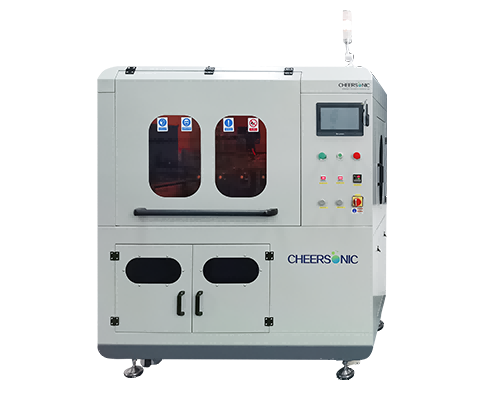
Specifically, this type of system utilizes high-frequency mechanical vibration to break down liquid or slurry like working media into micron or even nanometer sized atomized particles, which are then transported and deposited on the substrate surface through precisely controlled airflow. Compared to traditional coating methods, this technology has several outstanding advantages: firstly, it can significantly improve the uniformity and consistency of the coating, reducing the accumulation or loss of materials in local areas; Secondly, due to the small and concentrated distribution of atomized particles, it can significantly reduce excessive splashing and waste of coatings during spraying, and improve the efficiency of raw material use; Thirdly, the system usually has good parameter adjustability, such as frequency, flow rate, and moving speed, which facilitates flexible adaptation to different properties of slurry and coating thickness requirements.
In specific application cases, the system is used to separately coat the catalytic functional materials on the anode and cathode sides that make up the core part of the device. The key catalytic substance used on the anode side is a rare earth metal oxide, which has good chemical stability and can effectively promote the target reaction in specific working environments, playing an important role in improving the overall efficiency and durability of the device. The oxide material usually needs to be prepared and sprayed in the form of a nano slurry to ensure that it forms a microstructure with high specific surface area and sufficient active sites on the substrate.
On the cathode side, composite catalytic materials with precious metals as the main active component are applied, and the precious metal particles are loaded on a conductive carbon carrier in a highly dispersed form. This combination fully utilizes the excellent intrinsic catalytic activity of precious metals and the excellent conductivity and stability of carbon materials, jointly ensuring the efficient and stable progress of cathodic reactions. Using a high-frequency atomization deposition system to coat the composite slurry can achieve high dispersion and uniform distribution of precious metal particles on the electrode surface, which is crucial for maximizing the utilization efficiency of the catalyst, reducing the amount of precious metal used, and controlling costs.
The implementation of the entire coating process relies on the collaborative optimization of multiple key parameters. Firstly, it is necessary to finely adjust the core parameters of the system based on the physical and chemical properties of the slurry, such as viscosity, surface tension, solid content, etc. Secondly, the type of substrate, surface energy, and environmental conditions such as temperature and humidity can also have a significant impact on the quality of coating formation and adhesion. In addition, the movement trajectory of the nozzle, the distance between the nozzle and the substrate, and the stability of the feeding rate are all essential control factors to ensure that the final coating achieves the predetermined thickness and uniformity indicators.
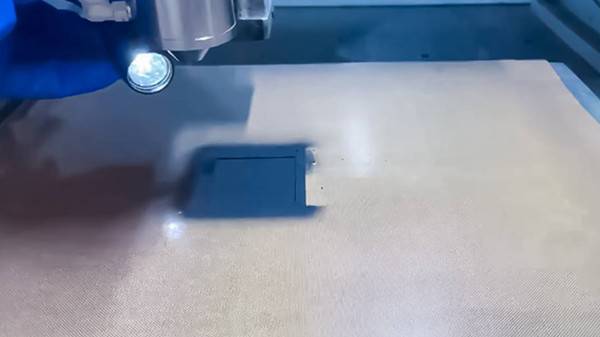
In summary, the material deposition system based on ultrasonic spraying principle has shown great technical potential and application value in the preparation of functional coatings, especially in precision coating involving special catalytic materials. It not only meets the increasing requirements of modern industry for coating quality, but also provides an effective technical path for further improving the performance of related devices and optimizing manufacturing costs due to its advantages in material conservation and process controllability. With the continuous emergence of new material systems and the diversification of application demands, this type of precision coating technology is expected to play a key role in a wider range of fields.
About Cheersonic
Cheersonic is the leading developer and manufacturer of ultrasonic coating systems for applying precise, thin film coatings to protect, strengthen or smooth surfaces on parts and components for the microelectronics/electronics, alternative energy, medical and industrial markets, including specialized glass applications in construction and automotive.
Our coating solutions are environmentally-friendly, efficient and highly reliable, and enable dramatic reductions in overspray, savings in raw material, water and energy usage and provide improved process repeatability, transfer efficiency, high uniformity and reduced emissions.
Chinese Website: Cheersonic Provides Professional Coating Solutions