
Ultrasonic Spray Deposition Technology
Ultrasonic Spray Deposition Technology: Principles, Processes, and Application Prospects
Ultrasonic spraying technology is an efficient material preparation method that has emerged in recent years. Its core utilizes high-frequency sound wave energy to convert liquids into uniform and fine droplets, which are then sprayed onto the substrate surface using a gas carrier to achieve precise and controllable deposition of functional materials. This technology is widely used in the preparation of high-performance catalytic materials, thin film devices, and functional coatings due to its advantages of uniform film formation, high material utilization, mild process conditions, environmental friendliness, and suitability for a variety of complex substrates. Especially in fields that require high consistency in material structure and composition, ultrasonic spraying demonstrates significant technical flexibility, achieving uniform coverage of nanoscale materials at low temperatures, avoiding the use of binders, and effectively improving the conductivity and structural stability of materials.
Basic principles and process mechanism
Principle of Ultrasonic Spray Deposition
The system usually consists of an ultrasonic generator, transducer, atomization device, and deposition substrate. By using piezoelectric transducers to convert high-frequency electrical signals into mechanical vibrations, the precursor solution forms micrometer sized droplets at the nozzle, which are transported by a carrier gas and deposited on a preheated or functionalized substrate. The target material film or nanostructure is formed through solvent evaporation or subsequent heat treatment.
Key parameter regulation
- Ultrasonic frequency: usually between 20-120 kHz, high frequency helps to generate finer droplets, suitable for ultra-thin nanofilm preparation;
- Precursor solution: including the type, concentration, solvent properties, and selection of additives of metal salts, which directly affect the quality of film formation and material composition;
- Deposition time and number of layers: Short term single spraying can form nanoscale films, and multiple repetitions can construct three-dimensional porous or layered composite structures.
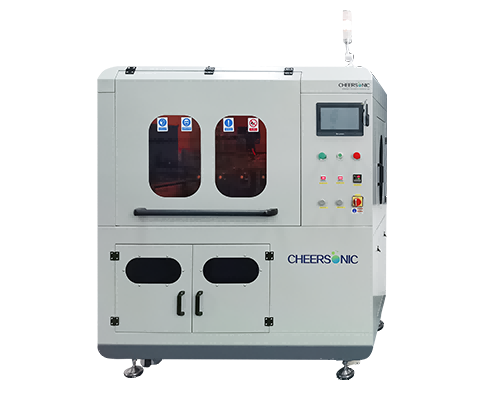
The main methods of spray deposition
Continuous spraying mode
- Maintain stable ultrasound frequency and liquid flow velocity to achieve continuous and uniform droplet output and deposition;
- Advantages: Uniform film formation, stable process, suitable for large-area preparation;
- Disadvantage: High consumption of precursors.
Intermittent spraying
- By controlling the start stop time of spraying through a program, the design of multi-layer heterostructures or component gradient materials can be achieved;
- For example, setting the spraying/intermittent ratio to 1:1 can achieve interlayer drying, avoid mixing, and facilitate the construction of complex interface structures.
Scanning spray coating
- The nozzle and substrate undergo relative motion, and the material is deposited in a localized and quantitative manner through path programming;
- Especially suitable for the preparation of patterned thin films, microelectrodes, and heterojunction devices.
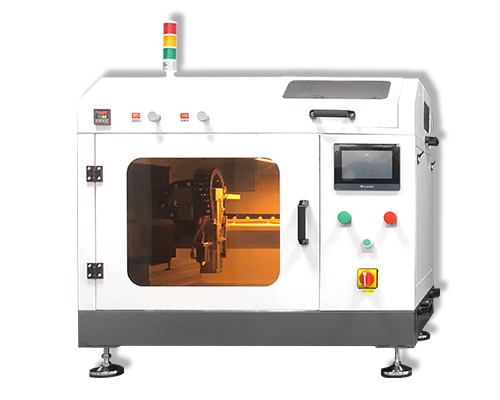
Coordinated design of precursor solution and process parameters
In precursor design, the choice of solvent directly affects droplet formation and deposition efficiency. Water solution has become a commonly used solvent due to its safety and economy, but its surface tension and volatility limit the preparation of certain high-performance materials, such as high entropy alloys and metal oxide composite films. Organic solvents (such as ethanol, isopropanol) or mixed solvents can adjust surface tension and drying behavior, thereby achieving more ideal spreading and film-forming properties.
In addition, the following process parameters also have a significant impact on the sedimentation effect:
Precursor concentration: Low concentrations (such as 0.01-0.05 mol/L) can easily form fine nanoparticle films, while high concentrations can lead to uneven film thickness and even cracking;
– Base temperature: Proper heating (50-80 ℃) can promote solvent evaporation, reduce coffee ring effect, and improve film quality;
– Carrier gas flow rate and spraying distance: affect droplet distribution and impact velocity, thereby regulating film morphology and adhesion strength;
– Environmental humidity and atmosphere: Operating in an inert atmosphere can avoid oxidation of metal materials and improve the purity of thin films.
By optimizing the above parameters through the system, high-precision preparation of catalysts, electrode materials, and even functional coatings can be achieved, significantly improving the performance of materials in fields such as energy conversion and storage.
Base selection and structural design
To achieve efficient deposition and maximize performance of materials, the properties and structural design of the substrate are particularly critical. Common rigid substrates include silicon wafers, glass, metal foils, etc; Flexible substrates such as polyimide (PI) and polyethylene (PET) are also widely used in flexible electronic devices. In order to improve the specific surface area and interface adhesion, substrates with micro nano structures are often used, such as foam nickel, carbon cloth, anodized aluminum oxide (AAO), etc.
The template assisted strategy further expands the application potential of ultrasonic spraying. For example, functional materials with porous network or hollow sphere structures can be successfully prepared by pre setting polymer microspheres or zinc oxide nanoarrays as templates on the substrate surface, followed by spray deposition and subsequent template removal, greatly increasing the number of active sites and improving mass transfer efficiency.

Application Cases and Technical Advantages
Ultrasonic spray deposition technology has been successfully used to prepare various high-performance materials, such as metal oxide films, perovskite layers, fuel cell catalysts, lithium electrodes, etc. Compared to traditional sputtering, spin coating, or electrodeposition methods, this technology has the following outstanding advantages: non vacuum environment operation, simple equipment, and low maintenance costs; Compatible with thermal sensitive substrates; The material composition and structure are easy to control, suitable for large-scale preparation of multi-component composite materials.
Although pure metal or single component thin films can achieve good crystallinity and uniformity by adjusting the process, their intrinsic properties still have bottlenecks. Therefore, researchers are gradually focusing on the design of multi-component composite materials, utilizing the excellent component control ability of ultrasonic spraying to achieve the synergistic construction of multiphase interfaces such as metal/alloy, oxide, and carbon materials, thereby significantly improving the electrocatalytic activity of materials and the comprehensive performance of devices.
About Cheersonic
Cheersonic is the leading developer and manufacturer of ultrasonic coating systems for applying precise, thin film coatings to protect, strengthen or smooth surfaces on parts and components for the microelectronics/electronics, alternative energy, medical and industrial markets, including specialized glass applications in construction and automotive.
Our coating solutions are environmentally-friendly, efficient and highly reliable, and enable dramatic reductions in overspray, savings in raw material, water and energy usage and provide improved process repeatability, transfer efficiency, high uniformity and reduced emissions.
Chinese Website: Cheersonic Provides Professional Coating Solutions
