
Ultrasonic Coating of Sn CuO Catalyst
Ultrasonic Coating of Sn CuO Catalyst – Catalyst Deposition – Cheersonic
Under the guidance of the “dual carbon” goal, the electrocatalytic conversion of CO ₂ into high value-added methanol has become one of the core pathways for carbon recycling. This process requires breaking through the kinetic bottleneck of electron transfer, and the structural control and coating process of the catalyst directly determine the conversion efficiency and product selectivity. The synergistic application of ultrasonic spraying technology and Sn CuO composite catalyst provides an innovative solution to the problem of “precise” conversion of CO ₂ to methanol, achieving a dual breakthrough in catalytic activity and product selectivity.
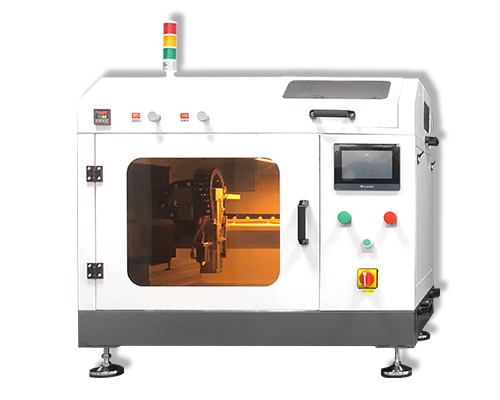
The core advantages of ultrasonic spraying technology lie in “precise shape control” and “mild deposition”, which lay the structural foundation for the performance of Sn CuO catalyst. Traditional coating processes such as scraping and pressure spraying can easily cause catalyst aggregation or substrate damage, while ultrasonic energy can atomize Sn CuO slurry into micrometer sized uniform droplets that settle on the electrode surface in a non-contact manner. This method can accurately control the thickness of the catalytic layer (with errors controllable at the nanometer level) while preserving the porous structure of the catalyst, increasing the contact area between CO ₂ molecules and active sites by more than 40%. Experiments have shown that the double-layer capacitance of the catalytic layer coated with ultrasonic waves is three times higher than that of the scratch coating process, significantly enhancing the charge transfer efficiency.
The synergistic effect of Sn CuO catalyst components is the key to achieving high selectivity for methanol. The atomically dispersed Sn sites form unique Lewis acid-base pairs with the defective CuO support, where Sn atoms regulate the d-band center of Cu through electron transfer, reducing the CO ₂ adsorption energy to -0.9 eV, while the oxygen vacancies on the CuO surface provide exclusive sites for CO ₂ activation. Density functional theory calculations confirm that this synergistic effect can reduce the energy barrier for the dissociation of * COOH into * CO from 1.02eV to 0.59eV, while the directional adsorption of * CO intermediates on the surface of Cu species avoids further decomposition into CO or CH. When the atomic ratio of Sn to Cu is optimized to 3:1, the selectivity of the catalyst for methanol reaches its peak.
The compatibility between ultrasonic coating process and Sn CuO catalyst further amplifies its catalytic advantages. This process can accurately replicate the micro active structure of Sn CuO, avoiding damage to oxygen vacancies caused by high temperature or high pressure, and maintaining the optimal concentration of oxygen vacancies on the catalyst surface within the range of 15% to 20%. At the same time, the uniform catalytic layer constructs a continuous electron conduction network, reducing the charge transfer resistance to below 2 Ω and ensuring efficient 6-electron transfer reactions. At a potential of -0.8V (vs RHE), the Sn CuO catalyst coated with ultrasonic waves achieved a methanol Faraday efficiency of 88.6%, while the current density reached 67.0mA/cm ², which is nearly twice as high as the traditional coating process.
The precise control of process parameters is the guarantee for achieving “precise conversion”. By optimizing the ultrasound frequency (20-40kHz), slurry supply rate (0.1-0.5mL/min), and substrate temperature (120-180 ℃), the “coffee ring” effect can be effectively suppressed, stabilizing the porosity of the catalytic layer at 35% -45% while balancing mass transfer efficiency and structural stability. Long term stability testing shows that the catalyst exhibits a methanol selectivity decay of less than 5% during continuous 72 hour operation, far superior to traditional coated Sn CuO catalysts.
The technological breakthrough of ultrasonic coating Sn CuO catalyst provides the possibility for the industrial application of CO ₂ electrocatalysis to produce methanol. Its core value lies in strengthening the structural advantages of the catalyst through process precision, achieving full chain regulation of “efficient adsorption of reactants, directional conversion of intermediates, and precise generation of products”. In the future, by combining with microfluidic reactors, mass transfer efficiency can be further improved, and it is expected to increase the methanol production rate to over 500mg/h/gcat, promoting carbon cycling technology from the laboratory to the industry.
About Cheersonic
Cheersonic is the leading developer and manufacturer of ultrasonic coating systems for applying precise, thin film coatings to protect, strengthen or smooth surfaces on parts and components for the microelectronics/electronics, alternative energy, medical and industrial markets, including specialized glass applications in construction and automotive.
Our coating solutions are environmentally-friendly, efficient and highly reliable, and enable dramatic reductions in overspray, savings in raw material, water and energy usage and provide improved process repeatability, transfer efficiency, high uniformity and reduced emissions.
Chinese Website: Cheersonic Provides Professional Coating Solutions