
Ultrasonic Coating of Silicon Carbide Electronic Components
Ultrasonic Coating of Silicon Carbide Electronic Components
With the accelerated localization of the third-generation semiconductor industry and the upgrading of high-end electronic devices towards high power and miniaturization, silicon carbide (SiC) electronic components, with their core advantages of high voltage resistance, high frequency resistance, high thermal conductivity, and excellent high-temperature stability, have become a core support for new energy vehicles, AI computing equipment, photovoltaic energy storage, 5G communications, and other fields. These components encompass various types, including silicon carbide power modules, SiC MOSFETs, silicon carbide interposers, and heat dissipation substrates. Unlike single silicon carbide chips, silicon carbide electronic components are diverse in type and structure, ranging from precision chip devices to heat dissipation and packaging components. Their performance stability, lifespan, and reliability directly depend on the spraying quality of the passivation layer, insulating protective layer, conductive layer, and heat dissipation coating. Chifei ultrasonic spray coating machines, with their core advantages of high precision, low damage, and high adaptability, perfectly meet the precision spraying needs of various silicon carbide electronic components, overcoming the pain points of traditional processes, providing core equipment support for the large-scale, high-quality mass production of components, and helping my country’s third-generation semiconductor component industry break through technological bottlenecks.
The diverse categories, demanding application scenarios, and precision structures of silicon carbide electronic components place far higher standards on the coating process than on traditional components. As a core device of wide-bandgap semiconductors, silicon carbide electronic components can withstand temperatures above 1900℃, have a thermal conductivity of 500W/mK (more than three times that of silicon), and a breakdown electric field strength more than ten times that of silicon-based components. The core coating process encompasses passivation layer coating, insulating protective layer coating, electrode conductive layer coating, and heat dissipation coating finishing. The coating thickness must be precisely controlled between 0.05-1.2μm. The core coating requirements focus on three main aspects: First, high uniformity coating, requiring precise control of coating thickness and distribution with a deviation ≤ ±0.02μm and uniformity exceeding 99%. Defects such as pinholes, bubbles, and particle agglomeration must be avoided to ensure a dense, gap-free coating that matches its core characteristics of high voltage, high frequency, and high thermal conductivity, preventing high-voltage breakdown, signal crosstalk, and uneven heat dissipation. The coating process must meet stringent standards for automotive-grade and industrial-grade components. Secondly, it must be heat-resistant and adaptable, perfectly matching the high-temperature processes in silicon carbide component manufacturing to ensure the coating remains stable under high temperatures, preventing peeling and cracking. It must also withstand subsequent high-temperature annealing and encapsulation processes, balancing coating adhesion with component structural integrity, and adapting to components fabricated on substrates of various sizes, such as 6-inch and 8-inch. Thirdly, it must be highly clean and compatible, meeting Class 100 cleanroom standards to eliminate micro-dust contamination and avoid interfering with the electrical performance and heat dissipation of components. It must also be compatible with various passivation pastes, conductive pastes, and heat dissipation coating materials, achieving seamless coating of different structures such as trench structures, micro-electrode gaps, and large-area heat dissipation substrates, meeting the diverse needs of new energy, AI, 5G, and other fields.
Currently, in the field of silicon carbide electronic component coating, traditional coating processes (high-pressure gas atomization spraying, plasma spraying, spin coating) have many shortcomings, making it difficult to adapt to the diverse categories, precision structures, and large-scale mass production requirements, becoming a bottleneck restricting the industry’s quality and efficiency improvement. High-pressure gas atomization spraying is prone to problems such as uneven droplet size and large coating thickness deviations. High-pressure airflow can easily damage component surfaces and introduce impurities, resulting in a material utilization rate of only 25%-35%. This makes it difficult to meet the low-defect requirements of automotive-grade components, especially the uniform coating needs of heat dissipation components such as silicon carbide interposers. Plasma spraying equipment is costly and complex; the high-temperature flame can easily damage the crystal structure of silicon carbide components, leading to performance degradation. Furthermore, it is difficult to precisely control coating thickness, resulting in poor adaptability and incompatibility with the coating needs of small precision components and large-area heat dissipation substrates. Spin coating has a material utilization rate of less than 30%, wasting a large amount of expensive coating material. High-speed rotation can generate stress, leading to lattice defects in components, affecting their high-temperature and high-pressure resistance, and making it unsuitable for coating complex structures without dead angles.
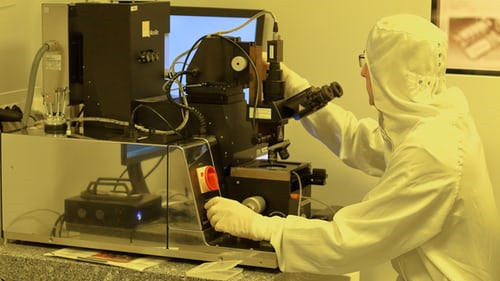
Chifei ultrasonic spraying machines, addressing the characteristics, diverse product requirements, and pain points of traditional spraying methods for silicon carbide electronic components, rely on high-frequency ultrasonic atomization core technology and combine it with key points of third-generation semiconductor manufacturing processes to create customized solutions, completely breaking through the bottlenecks of traditional processes. The equipment converts industrial frequency electricity into a 40-150kHz high-frequency electrical signal via an ultrasonic generator. This signal is then converted into high-frequency mechanical vibration by a piezoelectric ceramic transducer. Utilizing the ultrasonic cavitation effect, various spray coatings are atomized into fine droplets of 0.01-2 microns, effectively deagglomerating particle clusters in the coating and precisely controlling the solvent evaporation rate. This ensures a uniform, fine, dense, and void-free coating, perfectly meeting the core requirements of silicon carbide electronic components for high temperature resistance, high thermal conductivity, and high pressure resistance. This helps improve the electrical performance, heat dissipation, and lifespan of the components. The atomization process is conducted under low pressure and temperature control throughout. The droplets are gently deposited on the surface and tiny gaps of the components, guided only by a small amount of carrier gas. There is no mechanical contact or high-pressure impact, which does not damage the component’s structure or crystal lattice integrity. Spraying parameters can be flexibly adjusted to adapt to various silicon carbide electronic components and are compatible with automated large-scale production lines, meeting the mass production needs of companies such as G-Power and Yangjie Technology.
For the coating needs of silicon carbide electronic components, Chifei ultrasonic spraying machines demonstrate four core advantages, helping companies achieve large-scale, high-quality mass production. Firstly, ultra-precise and uniform coating achieves a coating uniformity of over 99% and a thickness deviation of ≤±1%, effectively ensuring coating density and heat dissipation uniformity, avoiding problems such as high-voltage breakdown and poor heat dissipation, and meeting the stringent requirements of automotive-grade and industrial-grade silicon carbide components.
Secondly, strong high-temperature adaptability: precise temperature control technology perfectly matches the high-temperature processes in silicon carbide component manufacturing, ensuring stable high-temperature coating performance, balancing adhesion and component integrity, and improving product yield.
Thirdly, high material utilization rate, reaching over 95%, significantly reduces waste of expensive spray coating slurry, lowers the manufacturing cost of silicon carbide electronic components, meets the economic needs of large-scale industrial production, and helps solve the industry problem of high component costs.
Fourthly, excellent mass production adaptability: supports automated continuous spraying and cleanroom adaptation, seamlessly integrating into large-scale silicon carbide electronic component production lines, adapting to the coating of different types and structures of components without dead angles, solving the problems of low efficiency, high loss, and poor consistency of traditional processes.
Currently, Chifei ultrasonic spraying machines are widely used in various silicon carbide electronic component spraying scenarios, covering core products such as automotive-grade SiC power modules, silicon carbide interposers, heat dissipation substrates, and SiC SBDs. They are compatible with core areas such as 800V high-voltage platforms for new energy vehicles, heat dissipation for AI computing equipment, photovoltaic energy storage, and 5G communication. This helps companies solve problems such as component damage, low yield, and material waste caused by traditional spraying processes, achieving breakthroughs in high-quality manufacturing and large-scale mass production of silicon carbide electronic components. As a leading company in the field of ultrasonic electronic equipment, Chifei Ultrasonic has been deeply involved in the spraying of third-generation semiconductor components for many years, closely following the trend of components developing towards larger sizes, higher power, lower losses, and higher heat dissipation. It can provide customized spraying solutions, covering the entire process from equipment selection and process parameter optimization to slurry adaptation. In the future, Chifei Ultrasonic will continue to optimize equipment performance, further improve atomization accuracy and adaptability to diverse product categories, helping my country’s silicon carbide electronic component industry break through international technological monopolies and injecting strong momentum into the high-quality development of third-generation semiconductors, new energy, AI, and other fields.
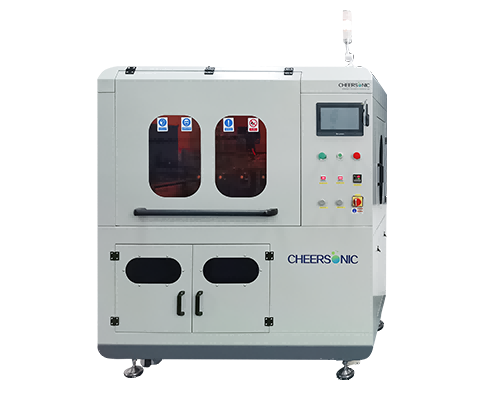
About Cheersonic
Cheersonic is the leading developer and manufacturer of ultrasonic coating systems for applying precise, thin film coatings to protect, strengthen or smooth surfaces on parts and components for the microelectronics/electronics, alternative energy, medical and industrial markets, including specialized glass applications in construction and automotive.
Our coating solutions are environmentally-friendly, efficient and highly reliable, and enable dramatic reductions in overspray, savings in raw material, water and energy usage and provide improved process repeatability, transfer efficiency, high uniformity and reduced emissions.
Chinese Website: Cheersonic Provides Professional Coating Solutions