
Review of Research Progress on CCM for Water Electrolysis
Review of Research Progress on Catalyst-Coated Membrane (CCM) for Water Electrolysis
1 Background and Research Motivation
Global climate warming and the increasing frequency of extreme weather events are driving the transformation of the global energy system toward low-carbon and sustainable pathways. Hydrogen, as a zero‑carbon secondary energy carrier, offers advantages such as high energy density and flexible application scenarios, making it a key solution to carbon‑emission challenges in industry, transportation, and other sectors. Water electrolysis (WE) technology, which can directly utilize renewable electricity from wind and photovoltaic sources to produce “green hydrogen,” is regarded as a core supporting technology for the future hydrogen energy industry. Consequently, innovative research on related materials and processes has become a hot topic in the energy field.
2 Water Electrolysis Technology Systems and Core Component Architecture
2.1 Classification of Water Electrolysis Technologies
Water electrolysis drives the redox reaction of water molecules via electrical energy to generate hydrogen and oxygen. Based on differences in electrolyte type and charge‑carrier ion, the mainstream technological routes can be classified into four categories: alkaline water electrolysis (AWE), proton exchange membrane water electrolysis (PEMWE), anion exchange membrane water electrolysis (AEMWE), and solid oxide electrolysis (SOE). Among these, AWE is the most mature but suffers from large equipment footprint and slow response; PEMWE and AEMWE, with their high current density and compact design, are better suited to the fluctuating nature of renewable energy; SOE is particularly efficient when coupled with high‑temperature industrial waste heat, offering outstanding energy utilization efficiency.
2.2 Core Components of Electrolyzers
Taking PEMWE and AEMWE—which have broad application prospects—as examples, their fundamental reaction units are built around the membrane electrode assembly (MEA), and the MEA fabrication process directly determines electrolyzer performance. Currently, two mainstream fabrication routes exist: catalyst‑coated membrane (CCM), where the catalyst is directly deposited onto the ion‑exchange membrane surface, and catalyst‑coated substrate (CCS), where the catalyst is first deposited on a porous substrate. Compared with the CCS route, CCM technology shows greater potential in interface optimization and mass‑transfer enhancement. This review focuses on systematic discussion of research progress in CCM technology.
3 Core Research on Catalyst‑Coated Membrane (CCM) Technology
As the core functional unit of the MEA in water electrolysis, the CCM directly determines the energy conversion efficiency, stability, and service life of the electrolyzer. Research in this area has developed into a comprehensive framework covering preparation processes, structural design, performance regulation, and failure mechanisms. This review comprehensively surveys the application research achievements of CCM in water electrolysis from the perspectives of material innovation, process optimization, and system integration.
3.1 Preparation Process Systems and Influencing Factors
The standardized fabrication procedure for CCM comprises five major steps: substrate pretreatment, catalyst ink formulation, coating deposition, drying/curing, and performance characterization. Among these, the dispersion stability of the catalyst ink (involving solvent system, binder ratio, and dispersion technique) and precise control of the coating method are core technical challenges. Current mainstream preparation methods each have distinct characteristics: inkjet printing enables digitally controlled precise catalyst deposition, suitable for small‑scale laboratory customization; screen printing offers good reproducibility and is more adaptable to pilot‑scale production; roll‑coating and blade‑coating methods achieve high throughput but face greater difficulty in controlling coating uniformity. These different fabrication routes significantly affect final CCM performance by influencing catalyst loading, particle size distribution, and the interfacial bonding state between the membrane and catalyst.
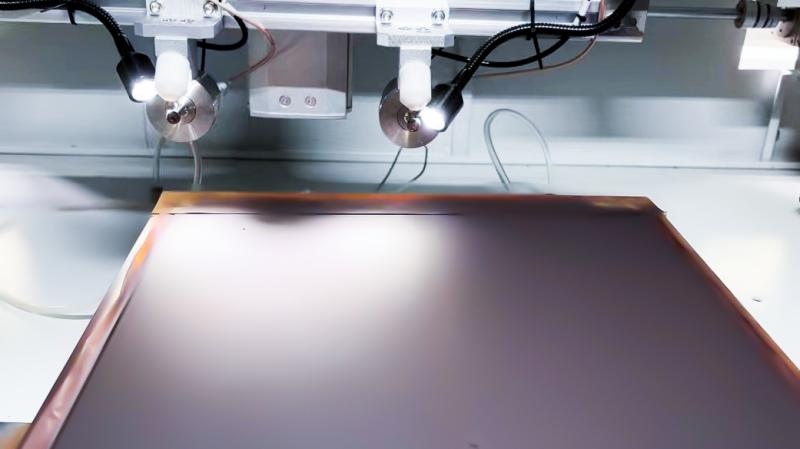
Ultrasonic spraying is an efficient and innovative technique for CCM fabrication. It atomizes the catalyst ink into uniform droplets of 10–50 μm via high‑frequency vibration (20–120 kHz) and deposits them precisely onto the membrane surface using a carrier gas. This technique has clear requirements for ink viscosity (≤30 cps) and solid content (20–30%), with prior filtration and degassing necessary. It achieves coating uniformity exceeding 95%, controllable thickness from 20 nm to 100 μm, and material utilization over 90%. The mild process conditions avoid membrane damage. Applicable to both PEMWE and AEMWE, it enhances catalyst dispersion and membrane‑catalyst interfacial bonding, reduces contact resistance, and is compatible with non‑precious metal catalysts, supporting large‑scale CCM production.
3.2 Analysis of Physical Structure and Interfacial Characteristics
The core advantage of CCM lies in the direct integration of the catalyst layer with the ion‑exchange membrane, which significantly improves catalyst dispersion uniformity and reduces interfacial contact resistance, thereby enhancing charge‑transfer efficiency in the MEA. Current mainstream characterization tools include scanning electron microscopy (SEM) and transmission electron microscopy (TEM) for observing catalyst particle morphology and distribution; atomic force microscopy (AFM) for analyzing membrane surface roughness and coating adhesion; and X‑ray diffraction (XRD) together with X‑ray photoelectron spectroscopy (XPS) for determining catalyst crystal structure and elemental valence states, providing a theoretical basis for structural optimization.
3.3 Electrochemical Performance Evaluation Methods
Electrochemical performance evaluation of CCM follows a standardized testing system oriented toward core functional metrics: polarization curve tests provide cell voltage at various current densities, directly reflecting energy conversion efficiency; electrochemical impedance spectroscopy (EIS) deconvolutes the contributions of ohmic resistance, charge‑transfer resistance, and mass‑transfer impedance to identify performance bottlenecks; chronoamperometry and chronopotentiometry assess long‑term operational stability, providing data support for durability optimization.
4 MEA Fabrication Practice Based on CCM Processing
Existing research has established CCM‑based MEA fabrication technology systems for both AEMWE and PEMWE platforms, with case studies focusing on material compatibility and process adaptability. In the PEMWE system, CCM preparation must address the interfacial compatibility between perfluorinated proton‑exchange membranes and noble‑metal catalysts, often by introducing proton‑conductive binders to enhance interface stability. In the AEMWE system, challenges include catalyst agglomeration and membrane degradation under alkaline conditions, and studies frequently center on the synergistic design of non‑precious metal catalysts (e.g., transition metal oxides) with anion‑exchange membranes. The combination of different catalyst types (noble/non‑noble), membrane material properties, and coating process parameters yields diverse MEA fabrication schemes, providing technical support for specific application scenarios.
5 Electrolyzer Performance Regulation: Key Influencing Factors and Optimization Strategies
5.1 Core Performance‑Influencing Factors
The overall performance of an electrolyzer is determined by the synergistic interaction of multiple factors: the intrinsic activity and stability of the catalyst directly affect reaction kinetics; the ionic conductivity, mechanical strength, and chemical durability of the ion‑exchange membrane are fundamental supports; the interfacial bonding state between the CCM and the diffusion layer dictates charge and mass transport efficiency; system hydrothermal management and gas‑removal design influence mass‑transfer processes and operational safety; and the electrolyzer structural design and system integration level ultimately determine the potential for large‑scale deployment.
5.2 Technical Strategies for Performance Enhancement
Targeting the above key factors, current optimization strategies have formed a full‑chain “material–process–system” framework: at the catalyst level, nanostructure engineering and alloying design enhance activity and reduce noble‑metal loading; in membrane materials, research focuses on ion‑conduction channel optimization and anti‑degradation modification; in CCM fabrication, interfacial functional layers are introduced to strengthen membrane/catalyst bonding; at the engineering level, flow‑field innovation and intelligent hydrothermal management systems improve mass transfer; and during operation, parameter optimization enables efficient and stable performance under varying operating conditions.
6 Core Challenges Facing CCM Technology
Although significant progress has been made in CCM technology, two major issues remain in practical applications—degradation of polarization behavior and poor performance reproducibility—whose underlying mechanisms and control strategies require in‑depth investigation.
6.1 Mechanisms of Polarization Behavior Degradation
The increase in polarization loss during long‑term CCM operation arises from four main causes: first, catalyst dissolution, agglomeration, or phase transformation under strong oxidizing/reducing environments, reducing the electrochemically active surface area; second, chemical degradation of the ion‑exchange membrane under high temperature and high potential (e.g., hydroxyl‑radical attack in PEMWE membranes), leading to thinning and pinhole defects that cause gas crossover and increased resistance; third, delamination at the membrane–catalyst interface due to thermal stress or chemical attack, increasing charge‑transfer resistance and creating local hot spots from uneven current distribution, which exacerbates performance decay; and fourth, pore clogging in the gas diffusion layer or imbalanced water management that impedes gas removal, inducing mass‑transport limitations and further worsening polarization characteristics. Among these, diffusion‑layer structure optimization and dynamic hydrothermal management system design are key breakthroughs for addressing this issue.
6.2 Key Triggers of Poor Performance Reproducibility
Inconsistency in CCM performance mainly stems from parameter fluctuations throughout the entire fabrication and operation chain: during manufacturing, minor deviations in catalyst loading, non‑uniform coating thickness, and batch‑to‑batch variations in membrane substrates can cause baseline performance scatter; during operation, non‑uniform catalyst degradation and impurity adsorption amplify performance differences; at the material level, insufficient batch‑to‑batch stability in ion‑exchange capacity and mechanical strength of the membrane further increase performance dispersion. Notably, the stability of interfacial interactions between the membrane and the catalyst layer is the core factor determining long‑term performance consistency of the CCM, and precise control requires material compatibility design and standardization of fabrication processes.
7 Conclusions and Future Perspectives
This review systematically summarizes research progress on catalyst‑coated membranes (CCM) for water electrolysis, affirming their strategic position as a core technology for green hydrogen production. The study shows that CCM performance optimization requires a multi‑dimensional integration of fabrication process innovation, synergistic material development, and system‑level integration. By precisely regulating catalyst layer structure, membrane/catalyst interfacial properties, and mass‑transport pathways, simultaneous improvements in energy efficiency and durability of the electrolyzer can be achieved.
Future development of CCM technology should focus on four major directions: first, developing high‑efficiency non‑precious metal catalysts and anti‑degradation membrane materials to overcome resource dependence and cost bottlenecks; second, exploring advanced manufacturing techniques such as atomic layer deposition and three‑dimensional printing to achieve precise nanostructure control and scalable CCM fabrication; third, establishing full‑lifecycle performance monitoring systems coupled with in situ characterization to reveal degradation mechanisms and develop adaptive operational control strategies; and fourth, promoting deep integration of CCM‑based electrolyzers with renewable energy systems to build intelligent control systems that can handle power fluctuations. With breakthroughs in these key technologies, CCM technology is expected to accelerate its transition from laboratory research to industrial application, providing essential support for the hydrogen economy and contributing to the global goal of low‑carbon energy transformation.
Ultrasonic Coating Technologies for Electrolyzers
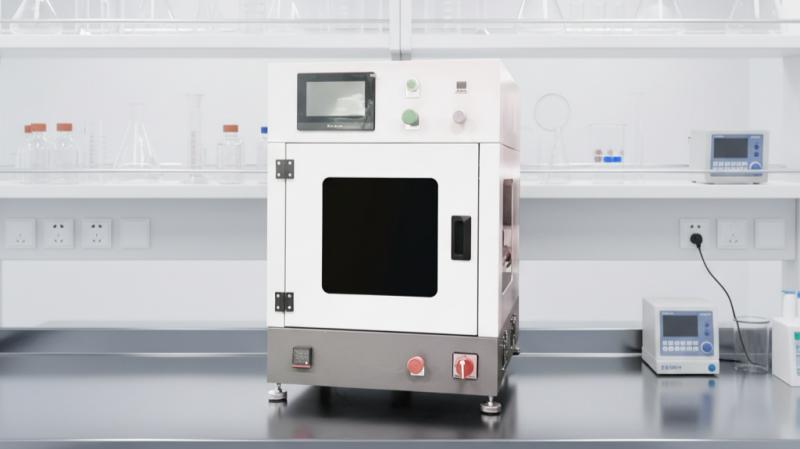
Ultrasonic spray platforms deliver high-quality catalyst coatings and thin film layers for advanced electrolyzer manufacturing. Our ultrasonic coating systems apply controlled coating solutions onto electrolyzer substrates including electrodes, proton exchange membranes, gas diffusion layers (GDL), and other MEA-related components. With precise nozzle control and programmable flow rate, ultrasonic spray enables repeatable catalyst deposition using a catalyst deposition machine designed for material science-driven electrochemical performance in both bench top development and high-volume PEM electrolyzer production.
About Cheersonic
Cheersonic is the leading developer and manufacturer of ultrasonic coating systems for applying precise, thin film coatings to protect, strengthen or smooth surfaces on parts and components for the microelectronics/electronics, alternative energy, medical and industrial markets, including specialized glass applications in construction and automotive.
Our coating solutions are environmentally-friendly, efficient and highly reliable, and enable dramatic reductions in overspray, savings in raw material, water and energy usage and provide improved process repeatability, transfer efficiency, high uniformity and reduced emissions.
Chinese Website: Cheersonic Provides Professional Coating Solutions
