
Ultrasonic Coating of Carbon Nanotubes
Ultrasonic Coating of Carbon Nanotubes – Catalyst Deposition – Cheersonic
As an efficient and clean energy conversion device, the core performance of fuel cells depends on the conductivity efficiency and stability of the electrodes. The pursuit of high power density in proton exchange membrane fuel cells (PEMFC) and the demand for alkaline resistant electrodes in alkaline anion exchange membrane fuel cells (AEMFC) both point to technical bottlenecks in electrode material modification. Carbon nanotubes have become ideal fillers due to their excellent conductivity and structural properties, and the application of ultrasonic coating technology provides key support for the efficient dispersion and performance of carbon nanotubes in electrodes.
Traditional coating techniques can easily lead to the aggregation of carbon nanotubes, forming conductive blind spots and significantly reducing electrode conductivity. Ultrasonic coating technology fundamentally solves this problem by utilizing the cavitation effect and mechanical vibration of ultrasonic waves. During the coating process, ultrasonic waves act on the carbon nanotube dispersion, generating countless tiny bubbles that instantly burst, releasing strong impact force and effectively dispersing the carbon nanotube aggregates into single or small bundles for uniform dispersion. At the same time, the vibration effect of ultrasound can promote the tight bonding between carbon nanotubes and electrode substrates, forming a continuous and stable conductive network, providing a smooth path for charge transfer.
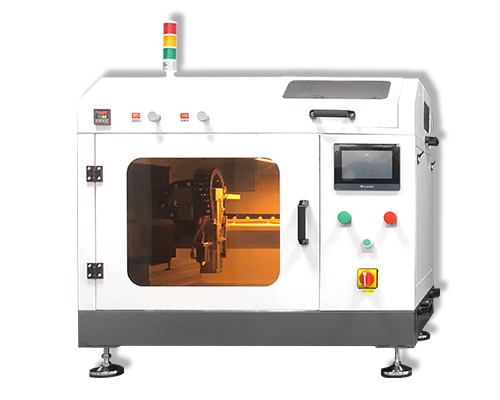
For high power density electrodes of PEMFC, the advantages of ultrasonic coating of carbon nanotubes are particularly prominent. High power output requires electrodes to have extremely low ohmic impedance. The uniform conductive network formed by ultrasonic coating can reduce electrode surface resistance by more than 30%. In addition, this technology can accurately control the thickness and distribution of carbon nanotube coatings, improving conductivity without affecting the porous structure of the electrode, ensuring efficient transmission of reaction gases and electrolytes. In the simulated working condition test, the PEMFC electrode coated with ultrasonic carbon nanotubes showed a 25% increase in peak power density compared to traditional electrodes, and after long-term continuous operation, the performance degradation rate decreased to below 5%, demonstrating excellent stability.
Ultrasonic coating technology also plays an important role in the preparation of alkali resistant electrodes for AEMFC. In alkaline environments, electrode materials are prone to corrosion and structural damage, while the alkali resistance and mechanical strength of carbon nanotubes can effectively improve electrode life. Ultrasonic coating technology can ensure that carbon nanotubes are uniformly dispersed in alkali resistant binders, forming a dense protective coating that prevents the electrolyte from corroding the electrode substrate. Meanwhile, uniformly distributed carbon nanotubes can maintain the conductivity stability of the electrode under alkaline conditions, avoiding the decrease in conductivity caused by material corrosion. Experiments have shown that the conductivity of AEMFC electrodes treated with ultrasonic coated carbon nanotubes remains at 85% of their initial value after soaking in alkaline electrolyte for 1000 hours, which is much higher than the 50% of traditional electrodes.
The ultrasonic coating technology of carbon nanotubes not only improves the core performance of fuel cell electrodes, but also has industrial application potential. This technology is easy to operate, has high coating efficiency, can achieve continuous batch production, and the coating process is green and environmentally friendly, without the need for additional dispersants, reducing production costs. With the continuous optimization of this technology, its coating accuracy and stability will be further improved, and it is expected to be promoted in the preparation of more types of fuel cell electrodes.
In the context of energy transition, breakthroughs in fuel cell technology are crucial. The ultrasonic coating of carbon nanotubes technology provides an effective solution for improving the performance of high power density PEMFC and alkali resistant AEMFC electrodes by solving the problem of carbon nanotube dispersion. In the future, with the deep integration of this technology and electrode material research and development, it will undoubtedly promote the widespread application of fuel cells in transportation, distributed power generation and other fields, laying a solid foundation for achieving clean and efficient energy utilization.
About Cheersonic
Cheersonic is the leading developer and manufacturer of ultrasonic coating systems for applying precise, thin film coatings to protect, strengthen or smooth surfaces on parts and components for the microelectronics/electronics, alternative energy, medical and industrial markets, including specialized glass applications in construction and automotive.
Our coating solutions are environmentally-friendly, efficient and highly reliable, and enable dramatic reductions in overspray, savings in raw material, water and energy usage and provide improved process repeatability, transfer efficiency, high uniformity and reduced emissions.
Chinese Website: Cheersonic Provides Professional Coating Solutions
