
Ultrasonic Coating for Pt-Ti Diffusion Layer and Ir-Based Catalyst
In proton exchange membrane water electrolysis (PEMWE) technology, ultrasonic coating is one of the commonly used processes for the preparation of traditional membrane electrode assemblies (MEAs), mainly used to form platinum coatings or iridium based catalyst layers on the surface of titanium based porous transport layers (PTLs). Its core principle is to mix the metal (platinum/iridium) catalyst with ionomer and solvent to make a uniform slurry, which is atomized and accurately coated on the substrate surface through an ultrasonic spray to form a functional coating. The following provides a detailed analysis of the application scenarios of “platinum coated titanium diffusion layer” and “iridium based catalyst”, combined with process characteristics, performance limitations, and improvement directions.
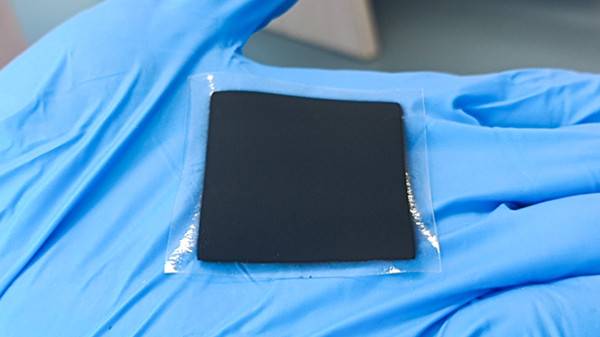
Application of Ultrasonic Coating in Platinum Coated Titanium Diffusion Layer
The titanium diffusion layer (PTL) is a key component of PEMWE anode, which requires a platinum coating to solve the problems of “high contact resistance of titanium substrate” and “oxidation passivation under high potential”. Ultrasonic coating in the preparation of platinum coatings belongs to the wet coating process, and its application logic and performance characteristics are as follows:
1. Process application logic
-Slurry preparation: Platinum nanoparticles (or precursors) are mixed with perfluorosulfonic acid (PFSA) ionomers and solvents (such as alcohols) to form a stable platinum slurry – the role of the ionomers is to “bond platinum particles” and “maintain coating integrity”, while assisting proton transport.
-Coating process: the platinum slurry is atomized into tiny droplets through an ultrasonic spray, evenly sprayed on the surface of titanium PTL, and then dried to form a continuous platinum coating (thickness is usually nanometer to micron).
-Core objective: To reduce the contact resistance between titanium PTL and catalyst layer through platinum coating, while isolating the titanium substrate from high potential and strong acidic environment, and avoiding the formation of high resistance TiO ₂ passivation film by titanium oxidation.
2. Key performance limitations
There are two core issues with ultrasonic coating of platinum, which directly affect the stability of the titanium diffusion layer and the lifespan of the electrolytic cell, and are highly correlated with the risk of “platinum dissolution degradation” of PEMWE anodes:
-Slurry invasion and uneven coating: Titanium PTL has a porous structure (pore size is usually in the micrometer range). During ultrasonic coating, the liquid slurry easily penetrates into the internal pores of PTL instead of just staying on the surface, resulting in “thinning of the surface platinum coating+accumulation of platinum particles in the pores” – a thin surface coating can accelerate the electrochemical dissolution of platinum (exposing the titanium substrate), while pore accumulation may block oxygen/water transport channels and increase mass transfer resistance.
-Indirect risks caused by ionomer dependence: In order to maintain the adhesion and proton conduction of platinum coatings, ionomers must be added, but they can change the electrochemical environment of the coating surface. On the one hand, the interface interaction between ionomers and platinum particles may locally increase the potential (over 2.0 V vs. RHE), accelerating the dissolution of platinum (reaction from Pt → Pt ² ⁺+2e ⁻); On the other hand, after aging, the ionomer may swell or detach, leading to cracking of the platinum coating, further exacerbating the exposure of the titanium substrate and platinum dissolution.
3. Comparison with alternative processes
Compared with dry processes such as physical vapor deposition (PVD), the disadvantages of ultrasonic coating of platinum are significant: PVD process can directly evaporate and deposit platinum target material on the surface of titanium PTL without the need for ionomers, and the coating only adheres to the surface of PTL (without pore invasion), maintaining uniformity under low platinum load of 0.03-0.1 mg/cm ², reducing contact resistance by 30% -50% compared to ultrasonic coating, while avoiding the risk of dissolution caused by ionomers (refer to the preparation logic of non ionomer PTE in Abstract 1).
Application of Ultrasonic Coating in Iridium based Catalysts
Iridium based catalysts are the only practical material for PEMWE anodic oxygen evolution reaction (OER). Ultrasonic coating is the mainstream preparation process for traditional iridium based catalyst layers (used for porous diffusion electrode PTE or catalyst coating film CCM), but their performance is limited by “ionomer dependence” and “structural defects”, as follows:
1. Process application and traditional positioning
In the traditional preparation of PEMWE, the process of ultrasonic coating of iridium based catalyst is similar to that of platinum coating and is the core process in the early stage of industrialization:
-Slurry formula: Iridium oxide (IrO ₓ) nanoparticles, PFSA ionomer, and solvent are mixed to produce a catalyst slurry with a solid content of 5% -10% – the ionomer needs to simultaneously undertake the three functions of “bonding IrO ₓ particles”, “proton transport”, and “fixing the catalyst layer on the PTL surface”.
-Coating objects and targets: mainly used for preparing iridium based PTE on titanium PTL surface, or directly preparing CCM on proton exchange membrane surface; The core goal is to form a continuous OER active layer, ensuring current density and catalytic efficiency.
2. Core performance shortcomings (based on experimental data support)
The comparative experiment of Abstract 1 clearly shows that the iridium based PTE coated with ultrasonic waves lags significantly behind the non ionomer process in terms of performance and stability, with the core issues focusing on “negative effects of ionomers” and “uneven structure”:
-OER kinetic inhibition induced by ionomers: ionomers will adhere to the surface of iridium based catalysts, forming a “toxic layer” – experimental data shows that compared with non ionomer PTEs, ultrasound coated ionomer type PTEs have an overpotential increase of about 50-80 mV at a current density of 3 A/cm ², and the Tafel slope increases from 35-40 mV/dec to 55-60 mV/dec (Abstract 1, Figures 3a and 3c). The reason is that ionomers block the active sites of iridium based catalysts and increase oxygen transport resistance (bubble aggregation under high current leads to local dehydration and insufficient water supply).
-Slurry invasion and waste of active sites: The porous structure of titanium PTL causes the iridium based slurry coated by ultrasound to penetrate deep into the pores, with about 30% -40% of iridium particles encapsulated inside the PTL and unable to participate in the OER reaction (Abstract 1 mentions that “direct ink coating on PTL to prepare PTE often encounters slurry invasion and low performance”); The non polymer PTE (PVD process) only forms an iridium layer on the surface of PTL, and the utilization rate of active sites at low loads of 0.085 mgIr/cm ² is more than twice that of ultrasonic coating.
-Lack of stability: The presence of ionomers accelerates the dissolution and aggregation of iridium – over long-term operation, the swelling of ionomers can cause iridium particles to detach, and the interface reaction between ionomers and IrO ₓ may promote the oxidation of IrO ₂ to soluble IrO ₄² ⁻, accelerating the loss of active substances; Comparative experiments show that after 1000 hours of accelerated stress testing (AST), the voltage decay rate of iridium based PTE coated with ultrasound is 2.5-3 times that of non polymer PTE (logical derivation in Figure 5 of Abstract 1).
3. Differences from new processes (improvement directions for non ultrasonic coating)
Note that the “ultrasound assisted” and “ultrasound coating” mentioned in abstracts 2 and 3 are fundamentally different – the former is “ultrasound assisted catalyst synthesis” (such as using ultrasound to regulate CeOx carrier growth and Ir nucleation rate in RIE strategy to achieve Ir particle embedding into the carrier), while the latter is “ultrasound assisted coating preparation”, and the two cannot be confused. There are currently two main types of iridium based catalyst preparation processes that surpass ultrasonic coating:
-Non polymer PVD process: Iridium target material is directly deposited on the surface of PTL through PVD, eliminating the two-step process of “catalyst synthesis” and “slurry preparation” (Abstract 1). There is no problem of polymer poisoning, and uniformity can still be maintained under ultra-low load of 0.033 mgIr/cm ². The OER overpotential is reduced by 40-60 mV compared to ultrasonic coating.
-Laser ablation+PVD composite process: Firstly, the surface of titanium PTL is treated by laser ablation, melting titanium and eliminating small pores to improve surface roughness (Abstract 1, Figures 4e and 4f). Then, an iridium layer is deposited by PVD – this process increases the electrochemical specific surface area of iridium by more than 50%. At a current density of 4 A/cm ², the voltage is reduced by 56 mV compared to ultrasonic coated PTE, and the stability is improved by 1.8 times.
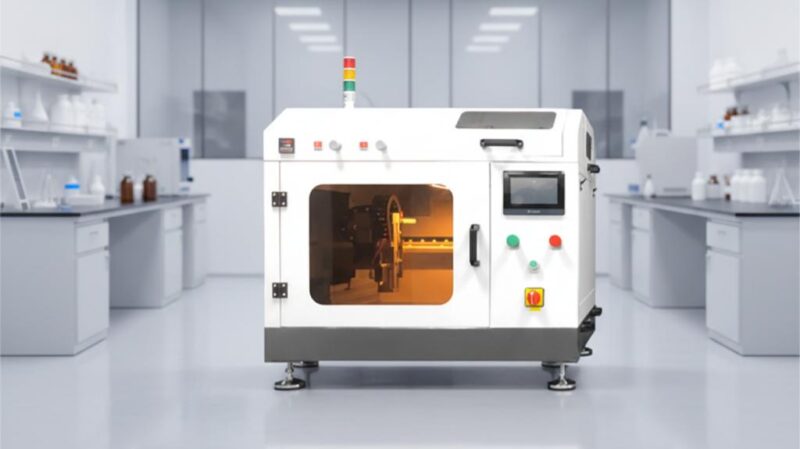
Improvement direction of ultrasonic coating process
Core improvement direction
-Non polymer coating: Using dry processes such as PVD and sputtering instead of ultrasonic coating to eliminate the negative effects of polymers on catalytic activity and stability (such as the non polymer PTE in Abstract 1), while reducing the loading of platinum/iridium (lowering costs).
-Substrate surface pretreatment: Laser ablation or sandblasting treatment is performed on titanium PTL to improve surface roughness, reduce slurry intrusion (or optimize PVD coating adhesion), and enhance catalyst utilization (validated effective in Abstract 1).
-Process combination innovation: Combining ultrasonic coating with “ionomer modification” (such as using new ionomers with low fluorine content and high stability), while retaining the advantage of scale, reduces the risk of OER poisoning – but this direction is still in the laboratory exploration stage and has not yet surpassed the no ionomer process.
In summary, ultrasonic coating provided a feasible path for the preparation of platinum coatings and iridium based catalysts in the early research and development of PEMWE. However, with the increasing demand for “low precious metal loading and long life”, its shortcomings of “ionomer dependence” and “structural defects” have become increasingly prominent, gradually replaced by new processes such as PVD and laser assisted, becoming a key technological iteration direction to promote the cost reduction and life improvement of PEMWE.
About Cheersonic
Cheersonic is the leading developer and manufacturer of ultrasonic coating systems for applying precise, thin film coatings to protect, strengthen or smooth surfaces on parts and components for the microelectronics/electronics, alternative energy, medical and industrial markets, including specialized glass applications in construction and automotive.
Our coating solutions are environmentally-friendly, efficient and highly reliable, and enable dramatic reductions in overspray, savings in raw material, water and energy usage and provide improved process repeatability, transfer efficiency, high uniformity and reduced emissions.
Chinese Website: Cheersonic Provides Professional Coating Solutions