
Technical Route for Hydrogen Production via Water Electrolysis
Electrolyzer Technology Analysis: Water Electrolysis Hydrogen Production Pathways from Lab to Large-Scale Commercialization
The global hydrogen energy industry is experiencing rapid expansion, driving continuous growth in the installed capacity of water electrolysis electrolyzers. As the core equipment for green hydrogen production, electrolyzer technology directly determines the production efficiency, cost, and scalable potential of hydrogen energy. Currently, three mainstream water electrolysis technologies dominate the market: Alkaline Electrolyzer (ALK), Proton Exchange Membrane (PEM), and Solid Oxide Electrolysis Cell (SOEC).
These three electrolyzer technical routes differ significantly in working principles, operational parameters, application scenarios, and commercial maturity. The technical competition among ALK, PEM, and SOEC is reshaping the global green hydrogen energy pattern. This article systematically analyzes the core principles, key performance parameters, commercialization progress, and future innovation trends of the three mainstream water electrolysis technologies, providing professional references for industry practitioners, investors, and technical researchers.
1. Core Technical Principles & Performance Parameters of Mainstream Electrolyzer Technologies
Each water electrolysis hydrogen production technology has unique technical characteristics and performance boundaries, adapting to diverse industrial and energy scenarios. The detailed technical analysis of ALK, PEM, and SOEC electrolyzers is as follows:
1.1 Alkaline Electrolyzer (ALK): Mature Technology with Continuous Iteration
ALK alkaline water electrolysis is the most conventional and commercially mature green hydrogen production technology, relying on alkaline electrolyte to complete water decomposition reaction, which has long occupied a dominant position in the global electrolyzer market.
Core Reaction Mechanism: Water undergoes redox decomposition in a specific alkaline electrolyte environment to generate high-purity hydrogen and oxygen, with stable and controllable overall reaction process.
Key Performance Parameters: The working temperature ranges from 60°C to 90°C, with a conventional current density of 0.2-0.4 A/cm² and a comprehensive energy consumption of 4.3-5.0 kWh per cubic meter of hydrogen produced.
Latest Technical Progress: The ALK technology route focuses on iterative upgrades of core materials and structural optimization. The industry is committed to increasing unit current density, reducing overall energy consumption, and improving long-term operational stability, further consolidating its cost advantages in large-scale applications.

1.2 Proton Exchange Membrane Electrolyzer (PEM): High-Performance Technology for Fluctuating Energy Scenarios
PEM water electrolysis technology uses solid polymer electrolyte, overcoming the defects of traditional alkaline electrolysis, and features fast response and high efficiency, making it the fastest-growing electrolyzer technology in the new energy market in recent years.
Core Composition: The core components include high-performance solid polymer electrolyte membranes and precious metal-based catalysts (mainly iridium-based anodic catalysts), which determine the efficiency and service life of PEM electrolyzers.
Key Performance Parameters: It achieves ultra-high current density of 1.5-3.0 A/cm², with a system energy efficiency of 65%-80%. Its core advantage lies in the ultra-fast response speed of less than 1 second, adapting to unstable power supply conditions.
Latest Technical Progress: The primary development direction of PEM technology is cost reduction and efficiency improvement. Advanced processes such as ultrasonic spraying are widely applied to prepare high-activity and low-load catalyst layers, effectively reducing the dosage of precious metals while enhancing catalyst utilization and overall electrolysis performance.
1.3 Solid Oxide Electrolysis Cell (SOEC): High-Temperature High-Efficiency Cutting-Edge Technology
As a next-generation high-efficiency electrolysis technology, SOEC relies on high-temperature reaction conditions to optimize the energy conversion structure, breaking the efficiency ceiling of traditional water electrolysis technology.
Core Working Mechanism: Under high-temperature environments of 600°C to 1000°C, industrial waste heat or external thermal energy is fully utilized to replace part of electric energy required for water electrolysis, greatly reducing electrical energy consumption.
Key Performance Parameters: Supported by combined heat and power systems, the comprehensive energy efficiency of SOEC can reach 85%-95%, with extremely low operational attenuation rate and outstanding long-term stable operation performance.
Latest Technical Progress: The industry is actively exploring the coupling application of SOEC technology with industrial waste heat, nuclear energy, and other stable high-temperature heat sources, aiming to further reduce comprehensive hydrogen production costs and expand commercial application boundaries.
2. Commercialization Status: Cost Advantages & Scenario Adaptability Analysis
In commercial promotion, the three electrolyzer technologies show obvious differentiation in investment cost and application scenarios, forming a complementary market pattern applicable to different green hydrogen production projects.
2.1 Investment Cost Ranking
ALK alkaline electrolyzers have the lowest initial investment cost and the most mature supply chain, with significant cost advantages in large-scale centralized projects. PEM electrolyzers have moderate investment costs, with higher comprehensive input than ALK due to precious metal materials and precision components. SOEC electrolyzers currently have the highest upfront investment cost, but the comprehensive operating cost can be greatly reduced by utilizing industrial waste heat for auxiliary electrolysis.
2.2 Core Application Scenarios
ALK Electrolyzer: Ideal for large-scale, long-term continuous operation green hydrogen projects, suitable for supporting large energy base construction and stable industrial hydrogen production scenarios.
PEM Electrolyzer: Highly adaptable to fluctuating new energy power supplies such as wind power and photovoltaic power generation. Its fast response capability effectively solves the problem of unstable power output, making it the preferred technology for distributed green hydrogen projects.
SOEC Electrolyzer: Mainly applied in industrial scenarios with stable high-temperature waste heat sources such as chemical industry and metallurgy. It realizes waste heat recycling and efficient energy conversion, with prominent energy-saving benefits.
3. Key Technical Innovation Directions of Electrolyzers
Driven by market demand and technological iteration, the three mainstream electrolyzer routes are continuously optimizing and upgrading. Meanwhile, emerging electrolysis technologies are gradually breaking through, promoting the overall progress of the water electrolysis hydrogen production industry.
3.1 ALK Technology Optimization
The core innovation directions focus on material performance upgrading, including the development of high-strength and high-conductivity composite diaphragms and high-activity non-precious metal electrode materials. These innovations aim to further improve electrolysis efficiency, extend equipment service life, and maintain the cost advantage of ALK technology in large-scale projects.
3.2 PEM Cost Reduction & Efficiency Enhancement
Reducing precious metal consumption is the core of PEM technology iteration. The industry is vigorously developing low-iridium and iridium-free catalyst materials. Ultrasonic spraying technology plays a key role in the uniform and ultra-thin deposition of catalyst layers, which significantly improves catalyst activity and utilization. In addition, optimizing the membrane electrode assembly (MEA) structure and improving equipment durability and service life are also key research directions.
Restricted by high-temperature operating conditions, SOEC technology focuses on the development of high-stability electrode materials and high-temperature cycle-resistant metal supports to solve the problems of material aging and performance attenuation under long-term high-temperature operation, improving the reliability and practicability of the system.
3.4 Emerging Electrolysis Technology Exploration
In addition to the three mainstream technologies, Anion Exchange Membrane (AEM) electrolysis technology and direct seawater electrolysis technology are in continuous research and pilot testing. These emerging technologies are expected to break the limitations of traditional electrolysis methods, reduce raw material and equipment costs, and expand the application scope of green hydrogen production.
4. Future Development Trend & Market Outlook
With the global acceleration of carbon neutrality goals, the green hydrogen market will maintain sustained high growth. ALK, PEM, and SOEC electrolyzer technologies will form a diversified and symbiotic industrial pattern based on their respective advantages.
Market Pattern Trend: ALK electrolyzers will continue to occupy the dominant position in large-scale centralized green hydrogen base projects relying on maturity and cost advantages. PEM electrolyzers will achieve rapid market growth in distributed scenarios and new energy matching projects due to their flexible response capability. SOEC electrolyzers will gradually expand market share in high-temperature industrial waste heat utilization scenarios with their ultra-high energy efficiency advantages.
Cost Reduction Potential: All three technical routes have huge room for cost reduction. Among them, PEM and SOEC technologies have more prominent cost reduction potential through material innovation, process optimization, and large-scale mass production. In the future, the comprehensive hydrogen production cost of water electrolysis will be greatly reduced, boosting the large-scale popularization of green hydrogen.
Core Industry Drivers: Advanced manufacturing processes represented by ultrasonic spraying, continuous material innovation, large-scale industrial production, and in-depth expansion of application scenarios will jointly drive the iterative upgrade of electrolyzer technology. In the future, a diversified, high-efficiency, and low-cost green hydrogen electrolysis technology ecosystem will be fully formed.
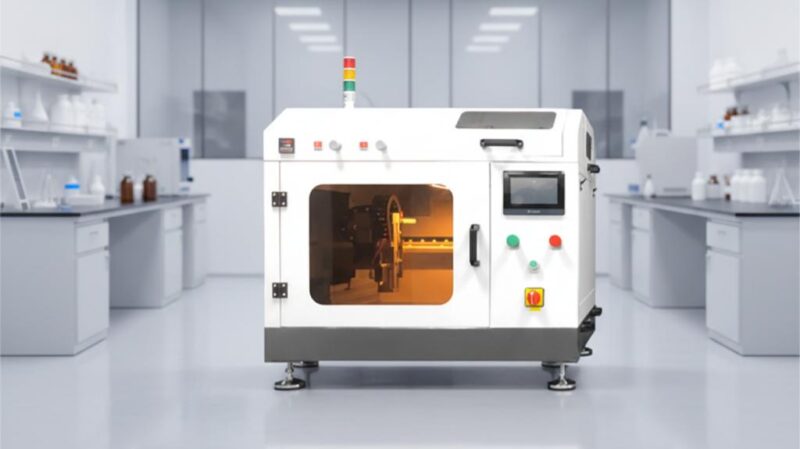
Ultrasonic Coating Technologies for Electrolyzers
Cheersonic ultrasonic spray platforms deliver high-quality catalyst coatings and thin film layers for advanced electrolyzer manufacturing. Our ultrasonic coating systems apply controlled coating solutions onto electrolyzer substrates including electrodes, proton exchange membranes, gas diffusion layers (GDL), and other MEA-related components. With precise nozzle control and programmable flow rate, ultrasonic spray enables repeatable catalyst deposition using a catalyst deposition machine designed for material science-driven electrochemical performance in both bench top development and high-volume PEM electrolyzer production.
About Cheersonic
Cheersonic is the leading developer and manufacturer of ultrasonic coating systems for applying precise, thin film coatings to protect, strengthen or smooth surfaces on parts and components for the microelectronics/electronics, alternative energy, medical and industrial markets, including specialized glass applications in construction and automotive.
Our coating solutions are environmentally-friendly, efficient and highly reliable, and enable dramatic reductions in overspray, savings in raw material, water and energy usage and provide improved process repeatability, transfer efficiency, high uniformity and reduced emissions.
Chinese Website: Cheersonic Provides Professional Coating Solutions
