
Status quo of Hydrogen Production by Electrolysis of Water
Status quo of Hydrogen Production by Electrolysis of Water – Cheersonic
The current mainstream technology for hydrogen production from renewable energy is to use electrolysis of water to produce hydrogen, that is, the electricity generated by abandoned wind and solar energy is connected to an electrolyzer to produce hydrogen, and stored in hydrogen storage tanks and other equipment for subsequent hydrogen fuel cell power generation.
Among them, electrolyzers can be mainly divided into three types: alkaline electrolyzers, proton exchange membrane electrolyzers, and solid oxide electrolyzers according to different electrolytes.
Alkaline electrolyzer technology is relatively mature and can be applied to large-scale hydrogen production. The process is simple and the cost is low. However, it is difficult to quickly start and adapt to load changes, and cannot quickly adjust the hydrogen production rate. It is less compatible with renewable energy power generation. Difference.
The proton exchange membrane electrolyzer has a wide load range and more flexible operation. It is more suitable for stabilizing the fluctuation of renewable energy grid connection, and its cold start time is more than twice as fast as that of alkaline electrolyzed water hydrogen production technology. It is suitable for transportation and aviation. However, the current technology has not yet achieved a major breakthrough, and it is difficult to achieve large-scale commercial hydrogen production.
Compared with the former, the application of solid oxide electrolytic hydrogen production technology is much less, and the application of large-scale hydrogen production still needs further research on related materials and catalyst technology, but its advantages of low energy consumption and high energy conversion efficiency will make it become the mainstream in the future Large-scale hydrogen production technology from renewable energy.
Cheersonic ultrasonic coating systems are used in a number of electrolysis coating applications. The high uniformity of catalyst layers and even dispersion of suspended particles results in very high efficiency electrolyzer coatings, either single or double sided.
In hydrogen fuel cell production, PEM electrolyzer coating systems are ideal for spraying carbon-based catalyst inks onto electrolyte membranes. These systems are fully automated, capable of dual side coating, and enable different catalyst formulations to be applied to each side of the membrane. Durability and repeatability of the coating are proven superior to other coating methods, often providing higher efficiencies with extended lifetimes of the coated PEM.
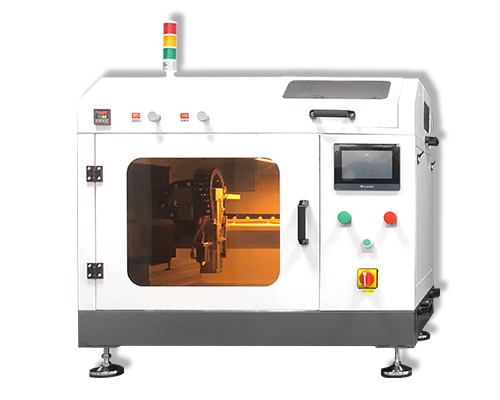
Our coating solutions are environmentally-friendly, efficient and highly reliable, and enable dramatic reductions in overspray, savings in raw material, water and energy usage and provide improved process repeatability, transfer efficiency, high uniformity and reduced emissions.
