
Spraying Monochrome Sensitive Photoresist
Spraying Monochrome Sensitive Photoresist – Cheersonic
In micro-nano fabrication, semiconductor R&D, photolithography, and scientific research, the photosensitivity of photoresist directly determines the precision and efficiency of the photolithography process. Single-color sensitive photoresist, with its precise response to specific wavelengths of light, has become the preferred material for high-precision photolithography applications. Single-color sensitive photoresist only reacts to exposure light of a specific wavelength, offering advantages such as high photosensitivity, clear pattern edges, and strong process controllability. It is widely used in precision circuit manufacturing, MEMS device fabrication, and university photolithography experiments. The effectiveness of its photolithography depends not only on the precise control of exposure parameters but also on the precise coating process of the photoresist. Cheersonic ultrasonic spray coating machines, with their core advantages of precise atomization, low damage, and high uniformity, are perfectly suited for the spraying requirements of single-color sensitive photoresist. Combined with exposure time calculation formulas, they help precise control of the photolithography process in research and production scenarios, improving photolithography quality and efficiency.
The exposure time of photoresist is one of the core parameters determining the precision of photolithography. The formulas for calculating the exposure time differ significantly depending on the photoresist type. For monochromatic photoresists, the formula is: Exposure Time = Exposure Dosage / Exposure Intensity @ Exposure Wavelength. This formula clearly shows that, at a fixed exposure wavelength, the exposure time of monochromatic photoresists is directly proportional to the exposure dosage and inversely proportional to the exposure intensity. Precise control of the exposure dosage and intensity allows for accurate adjustment of the exposure time. For broadband photoresists, the formula is: Exposure Time = Exposure Dosage / (Exposure Intensity @ Exposure Wavelength * k). For lithography machines using mercury lamp light sources, the k value is typically 2.5. This is because broadband photoresists respond to light of multiple wavelengths, and the k value is used to correct for the photosensitivity contribution of different wavelengths, ensuring the accuracy of the exposure time calculation. The exposure characteristics of both types of photoresists place stringent requirements on the coating process—coating uniformity directly affects the uniform distribution of the exposure dosage, thus affecting the consistency of the exposure time and the precision of the photolithographic pattern.
The characteristics of monochromatic sensitive photoresists dictate extremely high requirements for their coating processes. Because they are sensitive only to specific wavelengths of light, the uniformity and density of the photoresist coating thickness must be strictly controlled. Defects such as thickness deviations, bubbles, and pinholes can lead to uneven exposure dosage in certain areas, resulting in exposure time deviations and problems such as lithographic pattern distortion and blurred edges. Furthermore, monochromatic sensitive photoresists are often used in high-precision lithography applications, requiring extremely high edge precision. Issues such as edge overflow and accumulation must be eliminated to avoid affecting pattern transfer accuracy. In addition, mercury lamps are commonly used in lithography, and when used with monochromatic sensitive photoresists, the coated photoresist must be adapted to the characteristics of the light source to ensure the stability of the photosensitivity response and further improve the controllability of the lithography process.
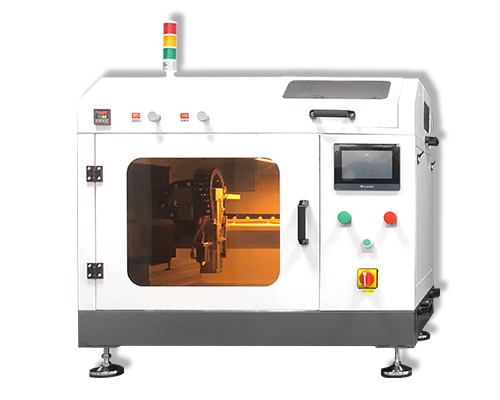
Traditional monochromatic sensitive photoresist coating processes (spin coating, drop coating, air spraying) have many shortcomings and are difficult to adapt to the high-precision lithography requirements. While spin coating can achieve a certain degree of uniformity, it lacks flexibility in thickness control and is prone to edge beading, leading to uneven exposure dosage and affecting exposure time consistency. Drop coating is inefficient, resulting in extremely poor coating uniformity and prone to localized buildup and missed coatings, failing to meet the coating requirements of high-precision photolithography. Air spraying suffers from uneven droplet size, and high-pressure airflow can easily generate defects such as bubbles and pinholes. Furthermore, high-pressure impacts may damage the substrate, and material utilization is low, leading to photoresist waste, which is detrimental to research cost control and small-batch production, and cannot accurately adapt to the needs of mercury lamp lighting.
Cheersonic ultrasonic spray coating machine, specifically optimized for the characteristics and spraying pain points of monochrome sensitive photoresists, utilizes high-frequency atomization technology to perfectly adapt to their spraying requirements and exposure parameter control requirements. The equipment converts industrial frequency electricity into a 40-120kHz high-frequency electrical signal via an ultrasonic generator. This signal is then converted into high-frequency mechanical vibration by a piezoelectric ceramic transducer. This vibration causes the monochromatic photoresist to form uniform droplets of 0.1-10 micrometers, which are gently deposited onto the substrate surface under low-pressure carrier gas guidance. The entire process is conducted without high-pressure impact, avoiding damage to the substrate and the photoresist’s photosensitivity. It also effectively eliminates defects such as bubbles, pinholes, and edge overflow, forming a dense, uniform, high-quality coating. This ensures even distribution of exposure dosage and facilitates accurate calculation of exposure time.
For the spraying needs of monochromatic sensitive photoresist, Cheersonic ultrasonic spraying machines exhibit four core advantages, facilitating the efficient advancement of photolithography processes. Firstly, it boasts high coating precision, with a coating thickness deviation of ≤±2% and excellent uniformity, ensuring even distribution of exposure dosage. It is compatible with the exposure time calculation formula for monochromatic sensitive photoresists, improving exposure consistency. Secondly, it features low-damage coating; low-pressure atomization technology preserves the photoresist’s photosensitivity, making it compatible with mercury lamp lithography machines and ensuring stable photosensitivity, facilitating precise control of exposure parameters after k-value correction. Thirdly, it offers controllable edge precision, with no accumulation or overflow, ensuring clear edges of the lithographic pattern and meeting the high-precision application requirements of monochromatic sensitive photoresists. Fourthly, it has high material utilization, reaching over 95%, significantly reducing photoresist consumption and lowering costs for research and small-batch production. It also supports both automated and manual operation modes, adapting to the coating needs of different scenarios.
Currently, Cheersonic ultrasonic spraying machines are widely used in the spraying of monochrome sensitive photoresists, covering core fields such as university research, MEMS device development, precision circuit manufacturing, and photolithography experiments. They are perfectly compatible with mercury lamp lithography machines, helping users accurately apply exposure time calculation formulas, control lithography parameters, and improve lithography precision and efficiency. As a leading company in the field of ultrasonic precision spraying, Chifei Ultrasonic has been deeply involved in photoresist spraying for many years, providing customized spraying solutions covering the entire process from equipment selection and process parameter optimization to photoresist adaptation, helping customers fully leverage the technological advantages of monochrome sensitive photoresists. In the future, Chifei Ultrasonic will continue to optimize equipment performance to meet the upgrading needs of monochrome sensitive photoresists towards higher precision and higher photosensitivity, injecting strong momentum into scientific research innovation and the high-quality development of the micro-nano processing industry.
About Cheersonic
Cheersonic is the leading developer and manufacturer of ultrasonic coating systems for applying precise, thin film coatings to protect, strengthen or smooth surfaces on parts and components for the microelectronics/electronics, alternative energy, medical and industrial markets, including specialized glass applications in construction and automotive.
Our coating solutions are environmentally-friendly, efficient and highly reliable, and enable dramatic reductions in overspray, savings in raw material, water and energy usage and provide improved process repeatability, transfer efficiency, high uniformity and reduced emissions.
Chinese Website: Cheersonic Provides Professional Coating Solutions
