
Spray Pyrolysis of Preceramic Polymers for Complex Ceramics
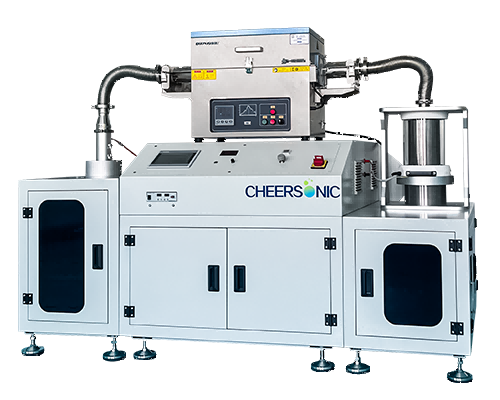
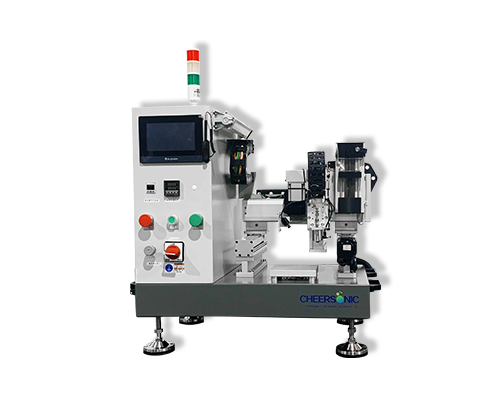
Benchtop Ultrasonic Spray Pyrolysis of Preceramic Polymers for Complex Ceramics – Cheersonic
Bench ultrasonic spray pyrolysis has become a multifunctional and scalable technology for preparing pre ceramic polymer based complex ceramics, which can precisely control the microstructure, composition and geometric morphology of materials. This method combines the ultrasonic atomization and thermal decomposition process of precursor solution to prepare performance customized ceramic materials, thus having ideal application prospects in the fields of energy, electronics, and advanced materials science. The following is a detailed analysis of its principles, research progress, and applications:
1. Technical principles and process optimization
Ultrasonic atomization and pyrolysis kinetics
- Ultrasonic atomization: Pre ceramic polymer solutions (such as polycarbosilane and polysilazane) are atomized into submicron droplets (1-10 μ m) using high-frequency ultrasonic transducers (20-100 kHz). This method ensures uniform droplet size distribution and minimal material waste (utilization rate ≥ 85%).
- Thermal decomposition: Droplets are transported to a heated substrate (300-1000 ° C) where the solvent rapidly evaporates, leaving behind polymer residue. Pyrolysis is carried out at high temperatures (800-1500 ° C), and through dehydrogenation, cross-linking, and densification processes, these residues are transformed into amorphous or crystalline ceramics (such as silicon carbide SiC, silicon oxide carbon SiOC).
- Key parameters:
– Ultrasonic frequency: Higher frequencies (such as 40 kHz) can produce finer droplets, which are crucial for the uniformity of the film.
– Precursor concentration: Dilute solution (0.01-1 wt%) can reduce agglomeration and ensure coating uniformity.
– Substrate temperature: affects the crystallinity and adhesion of the film. For example, copper chromite (CuCrO ₂) thin films deposited at 450 ° C exhibit optimal conductivity (10 ³ S/cm) and transparency (up to 52% in the visible light range).
Material System and Precursor Design
- Pre ceramic polymers: mainly including polycarbosilane (PCS, convertible to SiC), polysilazane (PSZ, convertible to Si-N ₄), and polyborosilazane (PBSZ, convertible to SiBNC). The mechanical or thermal properties of the material can be improved by doping with dopants such as zirconium diboride ZrB ₂ and hexagonal boron nitride.
- Composite formula: Ceramic nanoparticles (such as SiC fibers, ZrB ₂) are suspended in pre ceramic polymers to construct a hierarchical structure. For example, PCS based ink containing ZrB ₂ filler can be used to prepare ceramics with improved fracture toughness (3.5 MPa · m ¹/²).
2. Application in the preparation of complex ceramics
Functional Coating
- Transparent conductive oxides (TCO): desktop ultrasonic spray pyrolysis technology has been used to deposit p-type CuCrO ₂ films, whose conductivity (10 ³ S/cm) and transparency have reached record levels, solving the bottleneck problem in all oxide optoelectronic devices.
- Thermal barrier coatings (TBCs): nanostructured yttrium stabilized zirconia (YSZ) coatings prepared by desktop ultrasonic spray pyrolysis have lower thermal conductivity (1.2 W/m · K) and stronger thermal cycling resistance.
Additive Manufacturing (AM)
- Direct Ink Writing (DIW): Pre ceramic polymer ink loaded with ceramic fillers (such as 43.3 vol% hexagonal boron nitride) can achieve 3D printing of complex geometric shapes. After pyrolysis, although the material shrinkage rate is high (up to 60%), these structures can still maintain dimensional stability.
- 4D printing: Using a two-step folding assisted pyrolysis strategy, shape programmable ceramics (such as SiOC) have been prepared – the UV cured precursor undergoes predictable deformation during heat treatment.
Composite Material
- Nanocomposites: Carbonized polymer dots (CPDs) are dispersed in the copper matrix by desktop ultrasonic spray pyrolysis to form a “garnet like” structure, and the strength (470 MPa) and ductility (10.7% elongation) of the material are significantly improved. A 5 nm thick amorphous interface layer can alleviate stress concentration and achieve strain hardening behavior.
- Hierarchical porous structure: by adjusting pyrolysis conditions, tabletop ultrasonic spray pyrolysis can produce ceramics with adjustable porosity (such as 30 – 70%), which is suitable for catalysis and energy storage.
3. Challenges and Solutions
Process Challenge
- Cracking and shrinkage: During the pyrolysis process of pre ceramic polymers, there is a significant volume shrinkage (40-60%), which can easily lead to cracking. The solution strategy includes:
– Filler reinforcement: Adding rigid nanoparticles (such as ZrB ₂) to reduce shrinkage anisotropy.
– Two step pyrolysis: stepwise heating (such as crosslinking at 400 ° C, followed by ceramicization at 1000 ° C) to reduce thermal stress. - Defect control: Precursor agglomeration may lead to uneven porosity and deposition. Ultrasonic atomization combined with rapid solvent evaporation (such as using methanol based precursors) can ensure uniform particle distribution.
Material specificity limitations
- Ceramic yield: Some materials have low ceramic yields (such as SiOC yield of only 13.5 wt%), and the precursor formula needs to be optimized. The recent research on using UV cured precursors has improved the yield while maintaining a crack free structure.
- High temperature stability: Amorphous ceramics (such as SiOC) may crystallize above 1000 ° C, leading to changes in performance. Adding B or N can suppress crystallization and expand its temperature range of use.
4. Research progress and future directions
New Applications
- Energy storage field: SiOC based lithium ion battery cathode prepared by bench type ultrasonic spray pyrolysis exhibits high capacity (1200 mAh/g) and excellent cycle stability due to its amorphous structure and nano pore characteristics.
- Biomedical implants: Porous SiOC ceramics with adjustable pore size (50-200 μ m) and biological activity have been developed for bone tissue engineering, exhibiting bone conduction properties.
Process innovation
- Mixing technology: combining desktop ultrasonic spray pyrolysis with additive manufacturing (such as aerosol assisted 3D printing), complex ceramic structures with gradient composition can be prepared.
- In situ monitoring: Real time imaging of the pyrolysis process was performed using X-ray tomography, revealing the mechanism of crack propagation and providing guidance for the development of stress release strategies.
Sustainability
- Low carbon footprint: desktop ultrasonic spray pyrolysis operates under normal pressure and uses non-toxic solvents. Compared with vacuum based methods (such as chemical vapor deposition), it consumes less energy and has less environmental impact.
Conclusion
The desktop ultrasonic spray pyrolysis technology fills the gap between laboratory research and industrial production, and provides an economical, efficient and scalable platform for the preparation of pre ceramic polymer based complex ceramics. Its ability to regulate the microstructure, composition, and geometric morphology of materials at the nanoscale makes it a key technology for the development of next-generation materials in the fields of energy, electronics, and biomedical research. With the continuous progress of precursor design, process automation and hybrid manufacturing technology, desktop ultrasonic spray pyrolysis is expected to bring revolutionary changes to the preparation of high-performance ceramics.
About Cheersonic
Cheersonic is the leading developer and manufacturer of ultrasonic coating systems for applying precise, thin film coatings to protect, strengthen or smooth surfaces on parts and components for the microelectronics/electronics, alternative energy, medical and industrial markets, including specialized glass applications in construction and automotive.
Our coating solutions are environmentally-friendly, efficient and highly reliable, and enable dramatic reductions in overspray, savings in raw material, water and energy usage and provide improved process repeatability, transfer efficiency, high uniformity and reduced emissions.
Chinese Website: Cheersonic Provides Professional Coating Solutions
