
Spray Coating Process for Photoresist
Spray Coating Process for Photoresist: A Popular Science Summary
In daily use of photoresist, spin coating is the more common application method. This article, however, focuses on the spray coating process for photoresist, covering its core principles, advantages and disadvantages, conditions for atomized spray formation, key process steps, factors affecting film properties, and preparation of compatible resists, while also mentioning relevant research achievements on polyimide materials.
Basic Principles of Spray Coating
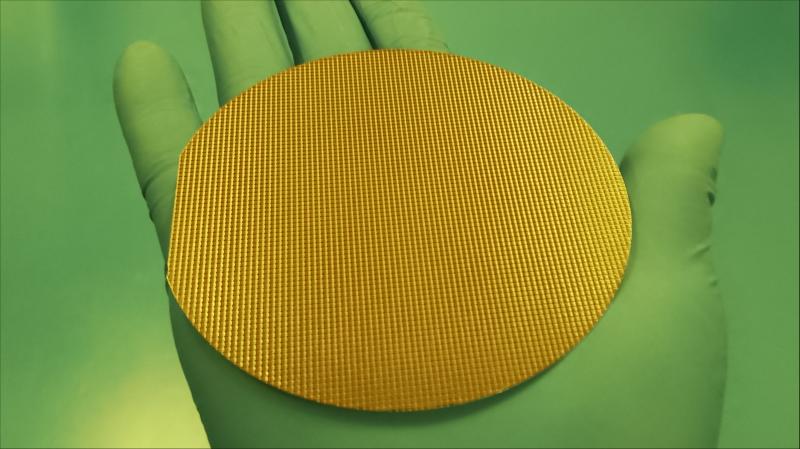
The spray coating process deposits photoresist onto a substrate surface through atomization, with droplet sizes typically on the micrometer scale. These droplets are generated in two main ways: one is via a nitrogen gas nozzle, and the other is through ultrasonic atomization. Subsequently, the droplets are carried by a carrier gas (such as air or nitrogen) to eventually deposit on the substrate surface, forming a continuous photoresist film.
Advantages and Disadvantages of Spray Coating
Advantages
1. High coating efficiency: Theoretically, the spray coating process offers very high photoresist application efficiency.
2. Suitability for special requirements: It addresses scenarios where spin coating falls short—for example, difficulty in obtaining uniform photoresist films on non-planar sample surfaces, or applications demanding high edge coverage. Taking non-planar substrates as an example, spray coating can theoretically produce resist films with uniform thickness on trenches, sidewalls, and edges of patterned substrates.
Disadvantages
1. Low material utilization: In practice, most photoresist droplets are exhausted into the exhaust pipe, with only a small fraction landing on the substrate surface. Photoresist utilization typically ranges between 5% and 15%, though this is still significantly higher than that of spin coating.
2. Non‑uniform film thickness: On patterned substrate surfaces, micro‑turbulence prevents uniform resist thickening; the top edges tend to be thinner, while grooves near sidewalls exhibit more pronounced thickening.
3. Difficulty in forming thin, dense films: Due to the statistical distribution of droplet landing positions, it is challenging to form photoresist films thinner than 1 µm with a dense structure. A minimum critical droplet density is required for droplets to coalesce into a compact film.
Conditions for Atomized Spray Formation
Equipment Requirements
There are two main types of atomization equipment: one is nozzle‑based atomizers similar to conventional spray guns. To avoid particle contamination of the photoresist or condensation of atmospheric moisture on the low‑pressure side of the nozzle, pure nitrogen is recommended. The other type is specialized equipment for ultrasonic spray coating of photoresist, which relies on high‑frequency mechanical vibration to atomize the photoresist. This atomization process is more stable and reduces particle generation. Nitrogen is then used as a carrier gas to precisely transport the atomized droplets to the substrate, making it suitable for applications with high uniformity requirements.
Photoresist Requirements
Regardless of the atomization method, the photoresist must have a relatively low viscosity, typically only a few centistokes (cSt). Different viscosities affect droplet generation rates and droplet size distributions. Additionally, when diluting photoresist with solvents, attention must be paid to solvent–photoresist compatibility, and highly diluted photoresist ages faster in its diluted state, making particle formation more likely. Ultrasonic spray processes, due to their finer atomization mechanism, demand higher stability in photoresist viscosity, requiring tight control over the viscosity range after dilution.
Key Atomization Process Steps
Solvent Evaporation
Droplets undergo solvent evaporation during flight from the nozzle to the substrate, and a certain proportion of solvent must remain upon arrival. This is critical for forming a dense film on patterned substrates. The increase in viscosity due to evaporation helps the photoresist settle on the substrate and contract around patterns, while the viscosity must also allow film smoothing at the micrometer scale. However, excessive solvent evaporation leads to an insufficiently dense film; in extreme cases, droplets may lose too much solvent, forming resin particles that cannot adhere to the substrate. The droplet evaporation rate depends on temperature, droplet velocity, saturated vapor pressure of air, solvent composition, and concentration. Surface concentration also depends on temperature and the diffusion constant of the solvent from the droplet body to its surface. In practice, two solvents with different vapor pressures (e.g., PGMEA with MEK or acetone) are often used to dilute the photoresist, allowing adjustment of the viscosity required for the process.
Droplet Transport
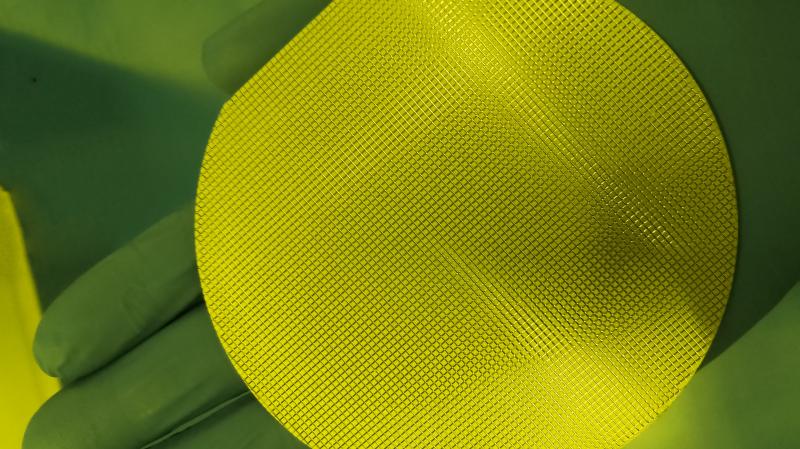
Micrometer‑sized droplets have an extremely low free‑fall velocity in air; the free‑fall speed of spherical photoresist droplets is far less than 1 mm/s. Therefore, a carrier gas (such as nitrogen for ultrasonic atomization) is needed to transport the droplets. Directly above the substrate being coated, there exists a laminar flow parallel to the surface and turbulent flow over patterned substrates, which increases the difficulty of uniformly coating edges and trenches. In ultrasonic spray processes, fine adjustments to the carrier gas flow rate and vibration frequency can reduce flow‑field interference with droplet transport, improving coating uniformity.
Key Properties of Photoresist Films
Wettability
Optimizing substrate pretreatment is key to improving the wettability of photoresist droplets on the substrate and is a prerequisite for forming a continuous resist film. Through optimized pretreatment, wettability or adhesion can be enhanced.
Trade‑off Between Edge Coverage and Smoothness
There is a trade‑off between edge coverage and surface roughness of the photoresist film: if viscosity is too low or residual solvent concentration is too high, the photoresist undergoes prolonged macroscopic flow, leading to poorer edge coverage but a smoother surface. Conversely, if droplets land on the substrate (or already‑formed film) with a high viscosity, flow is hindered, improving edge coverage, but the film surface becomes rougher; in extreme cases, small droplets may adhere to the substrate in their original shape.
Adjustment of Parameters Affecting Film Properties
To find the optimal balance between a smooth film and good edge coverage, the viscosity of the photoresist film and the time‑dependent behavior after droplet landing must be adjusted. This can be achieved through the following parameters:
1. Improving edge coverage (at the expense of surface smoothness): Reduce the content of high‑boiling‑point solvents (e.g., PGMEA) in the photoresist; decrease droplet diameter (e.g., by increasing initial solvent concentration or adjusting nozzle parameters); increase nozzle‑to‑substrate distance (prolonging droplet flight time); or accelerate evaporation from the newly formed film by heating the substrate to 40–60 °C and reducing coating rate (allowing more time for solvent evaporation).
2. Improving film smoothness: Take the opposite measures to those above, but this will sacrifice step or pattern edge coverage.
Preparation of Compatible Spray Coating Resists
In principle, any type of photoresist can be adapted for spray coating by controlling the appropriate solvent composition. Before preparation, one must evaluate the photoresist type (positive, negative, or image‑reversal), the application scenario after development, and the required resolution. The optimal combination of high‑ and low‑boiling‑point solvents depends, on one hand, on the priority given to surface smoothness versus step coverage, and on the other hand, on equipment parameters (such as atomization technology, spray speed, and nozzle‑to‑substrate distance).
Related Material Research Achievements
Researchers designed and prepared a series of model polyimides containing methyl‑substituted tricyclene segments via polycondensation of diamines with 6FDA. Both experimental and theoretical calculations indicate that, although the methyl‑substitution strategy sacrifices thermal resistance to some extent, increasing the number of methyl substituents not only significantly enhances the colorless transparency of the polyimides but also raises their glass‑transition temperature, CTE, and mechanical strengths (δmax and E). Conformational analysis reveals that polyimides with methyl substitution at the 2,2″,3,3″ positions exhibit higher steric hindrance, contributing to increased Tg. Among these, the colorless transparent polyimide 23HMTD‑6FDA demonstrated outstanding properties: optically, Tavg = 88% and YI = 1.66; thermally, Td5 = 502 °C, Tg = 413 °C, and CTE = 34 ppm K⁻¹; and mechanically, δmax = 158 MPa and E = 3.4 GPa. This methyl‑substitution strategy can also be applied to dianhydride monomer design to develop high‑temperature‑resistant transparent polyimides.
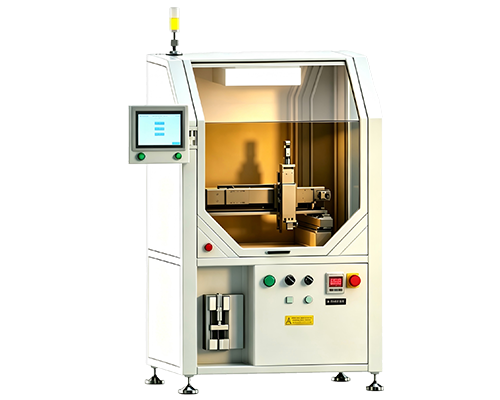
Direct spray photoresist coating onto MEMS wafers, silicon wafers, and other 3D microstructures has been performed for the past decade, with significant research regarding the advantages of Deep Topography Photoresist Deposition into deep well (high) topographies. Ultrasonic spray photoresist deposition is shown to have advantages over conventional spin coating in producing a more uniform coating, particularly along the top section of sidewalls in high aspect ratio trenches and V-groove structures. In these high aspect ratio features, centrifugal spin makes it difficult to achieve High Aspect Ratio Photoresist coverage along the sidewalls without excessive photoresist pooling at the bottom of cavities.
About Cheersonic
Cheersonic is the leading developer and manufacturer of ultrasonic coating systems for applying precise, thin film coatings to protect, strengthen or smooth surfaces on parts and components for the microelectronics/electronics, alternative energy, medical and industrial markets, including specialized glass applications in construction and automotive.
Our coating solutions are environmentally-friendly, efficient and highly reliable, and enable dramatic reductions in overspray, savings in raw material, water and energy usage and provide improved process repeatability, transfer efficiency, high uniformity and reduced emissions.
Chinese Website: Cheersonic Provides Professional Coating Solutions
