Spray-coated Alkaline Membrane Electrode
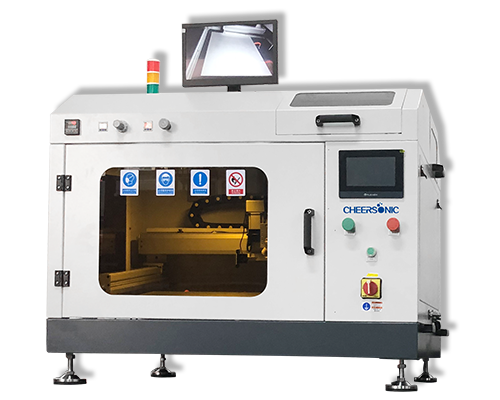
Ultrasonic spraying technology is a key advanced process for preparing high-performance alkaline membrane electrodes (AEMWE). Unlike traditional coating methods, this technology utilizes high-frequency sound waves to atomize catalyst slurry into micrometer sized, uniform, and fine droplets, which are precisely sprayed onto the surface of the anion/cation exchange membrane.
The core advantage of this process lies in its excellent uniformity and efficient material utilization. It can form an ultra-thin and highly consistent thickness catalytic layer, which greatly optimizes the three-phase interface structure of the electrode, promotes efficient transport of reactants, electrons, and ions, significantly reduces the overpotential of the electrolysis process, and improves the efficiency of hydrogen and oxygen evolution reactions. At the same time, the spraying process is non-contact and highly controllable, which can significantly reduce the waste of expensive catalysts (such as platinum, iridium, or non precious metal materials) and is suitable for the production of large-area, complex shaped substrates.
Spray-coated alkaline membrane electrodes (AMEs) are an advanced electrode fabrication technology that combines spraying technology with the characteristics of alkaline membrane electrodes, bringing new development opportunities to the field of electrochemistry. The following is a detailed overview of spray-coated alkaline membrane electrodes:
Definition and Principle
Spray-coated alkaline membrane electrodes utilize a specific spraying technique to evenly coat a catalyst or catalyst precursor onto an alkaline membrane, forming a catalytically active electrode layer. This technology utilizes precise control of the spraying equipment to evenly disperse catalyst particles or solutions in the form of tiny droplets on the surface of the alkaline membrane. After drying and curing, an electrode with highly efficient catalytic performance is formed.
Fabrication Process
- Alkaline Membrane Preparation: Select a suitable alkaline membrane material, such as polystyrene sulfonic acid membrane or polytetrafluoroethylene composite membrane. Clean and pretreat the alkaline membrane to remove surface impurities and oil contamination, thereby improving catalyst adhesion and uniformity.
- Catalyst Slurry Preparation: Mix the catalyst powder with an appropriate amount of solvent, dispersant, and other materials to create a uniform catalyst slurry. Parameters such as the concentration and viscosity of the catalyst slurry need to be adjusted according to the specific spraying equipment and process to ensure effective spraying.
- Spraying Process: The catalyst slurry is evenly sprayed onto the alkaline membrane using the spraying equipment. During the spraying process, parameters such as spray speed, spray distance, and number of sprays must be controlled to achieve the desired electrode layer thickness and uniformity.
- Drying and Curing: The sprayed alkaline membrane electrode is placed in a drying oven to dry and remove solvent and moisture. After drying, a curing treatment is performed to improve the bonding strength between the catalyst and the alkaline membrane and the stability of the electrode.
Technical Features and Advantages
1. Efficiency: Spraying technology enables a rapid and continuous electrode preparation process, improving production efficiency.
2. Uniformity: Precise control of spraying parameters ensures a uniform catalyst layer, enhancing the electrode’s catalytic performance and stability.
3. Flexibility: The catalyst type, concentration, and spraying parameters can be adjusted as needed to suit different application requirements.
4. Environmental friendliness: Compared to traditional preparation methods, spray coating technology can reduce waste generation and energy consumption, thus meeting environmental requirements.
Application Areas
1. Alkaline Fuel Cells: Spray-coated alkaline membrane electrodes have broad application prospects in alkaline fuel cells. By optimizing the catalyst spraying process and the performance of the alkaline membrane, the power density and durability of the fuel cell can be improved.
2. Hydrogen Production from Water Electrolysis: In the process of hydrogen production from water electrolysis, spray-coated alkaline membrane electrodes can improve electrolysis efficiency and hydrogen yield. By selecting appropriate catalysts and spray coating processes, high-performance electrodes for hydrogen production from water electrolysis can be produced.
3. Other Electrochemical Applications: Spray-coated alkaline membrane electrodes can also be used in other electrochemical fields requiring efficient and stable electrodes, such as electrochemical sensors and electrochemical capacitors.
Development Trends and Challenges
With the continuous advancement of science and technology and the increasing demand for efficient and environmentally friendly electrode preparation technologies, spray-coated alkaline membrane electrode technology will continue to improve and refine. In the future, this technology is expected to achieve a higher degree of automation and intelligent control, improving preparation efficiency and product quality. At the same time, attention must be paid to issues such as catalyst selectivity, stability, and cost to promote the widespread application and commercial development of this technology.
In summary, spray-coated alkaline membrane electrode technology offers advantages such as high efficiency, uniformity, flexibility, and environmental friendliness, and holds broad application prospects and development potential in the field of electrochemistry. The alkaline membrane electrode prepared by ultrasonic spraying has the characteristics of dense catalytic layer structure, good bonding strength, and stable performance, providing strong technical support for the manufacture of low-cost, high activity, and long-life alkaline membrane electrolysis cells, which is of great significance for promoting the development of green hydrogen energy industry.
About Cheersonic
Cheersonic is the leading developer and manufacturer of ultrasonic coating systems for applying precise, thin film coatings to protect, strengthen or smooth surfaces on parts and components for the microelectronics/electronics, alternative energy, medical and industrial markets, including specialized glass applications in construction and automotive.
Our coating solutions are environmentally-friendly, efficient and highly reliable, and enable dramatic reductions in overspray, savings in raw material, water and energy usage and provide improved process repeatability, transfer efficiency, high uniformity and reduced emissions.
Chinese Website: Cheersonic Provides Professional Coating Solutions
