
MEA Preparation Process and Key Quality Control Points
In proton exchange membrane (PEM) water electrolysis systems, when it comes to core components, membrane electrode assembly (MEA) is the only one. It integrates catalyst, proton exchange membrane, and gas diffusion layer, and as the only area where electrochemical reactions occur, it directly determines the comprehensive performance, service life, and manufacturing cost of the electrolytic cell.
The preparation of MEA is far from an ordinary “coating” process, but a precise technology that encompasses multidisciplinary knowledge. This article will systematically analyze the entire process of MEA manufacturing and explain the key quality control processes (QCP) one by one, aiming to provide detailed references for researchers committed to key technology development.

What is the difference between CCM and GDE in the sandwich structure of MEA?
The current mainstream MEA structures can be divided into two categories:
1. CCM (Catalyst Coated Membrane) type: Directly loading the catalyst on both sides of the proton exchange membrane is a commonly used technology route for high-performance PEM electrolysis cells.
- Advantages: The catalyst is tightly bound to the membrane, the proton transport path is short, the interface impedance is low, and the performance is more excellent.
- Disadvantages: The preparation process is complex, requiring extremely high requirements for membrane swelling control and catalyst layer uniformity.
2. GDE (Gas Diffusion Electrode) type: The catalyst is coated on a gas diffusion layer (GDL) and then combined with a proton exchange membrane through hot pressing.
- The advantage is that the process is relatively simple, which can avoid swelling or damage to the membrane during the coating process.
- Disadvantages: There may be defects at the contact interface between the catalyst layer and the membrane, resulting in an increase in interface impedance.
Analysis of the entire process of MEA preparation: five key steps
Step 1: Preparation of catalyst slurry (slurry formula)
As the starting point of the preparation process, the quality of the slurry directly determines the success or failure of subsequent processes. The goal is to obtain a stable, uniform, and suitable catalyst slurry for coating.
Main components:
- Electrocatalysts: IrO ₂ or Ir black is commonly used for anodic oxygen evolution reactions, while Pt/C or Pt black is used for cathodic hydrogen evolution reactions.
– Ionomer: Generally, a perfluorosulfonic acid resin solution that matches the proton exchange membrane material is used to construct proton transport channels.
– Solvent: It is usually a mixed system of water and organic solvents such as isopropanol and n-propanol, which plays a role in dispersing catalysts and ionomers. - Key process: Ultrasonic dispersion and ball milling treatment must ensure that the catalyst particles are evenly dispersed, without agglomeration, and thoroughly mixed with the ionomer to form a stable slurry system.
- Stability and rheological properties of slurry:
– Detection method: Observe the static stratification and measure the viscosity shear rate curve.
– Standard: The slurry should have good stability, no precipitation in a short period of time, and the viscosity should be suitable for the selected coating process.
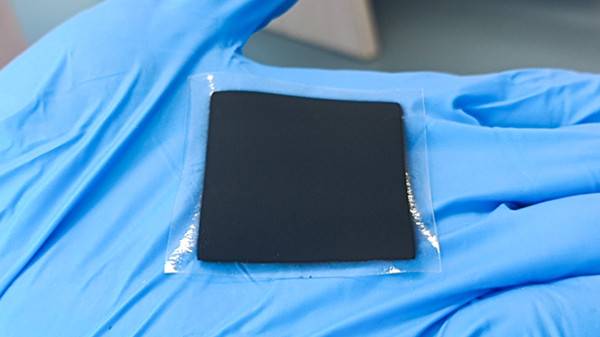
Step 2: Coating of catalytic layer (coating preparation)
Uniformly coating the slurry on both sides of the proton exchange membrane is the most technically challenging and critical step in MEA preparation.
- Common coating methods:
– Scrap coating method: simple equipment, high utilization rate of slurry, suitable for laboratory research; However, high requirements are placed on the flatness of the substrate, and uneven thickness is prone to occur during large-scale coating.
– Spray coating method: can achieve uniform coating and complex pattern design, with high catalyst utilization rate; The disadvantage is that the equipment cost is high and there is a significant loss of slurry during the spraying process.
– Ultrasonic spraying: It is widely used in laboratories and small and medium-sized production. By atomizing the slurry with ultrasonic waves, uniform spraying at the micrometer level can be achieved. - Low load and high uniformity of catalytic layer:
– Detection method: Calculate the catalyst loading (mg/cm ²) through high-precision weighing, and analyze the uniformity of coating thickness using laser microscopy or surface profilometer.
– Standard: The anode Ir loading is usually controlled at 0.5-2.0 mg/cm ², the cathode Pt loading is 0.3-1.0 mg/cm ², and the thickness fluctuation should be less than ± 5%.
Step 3: Drying and Heat Treatment (Curing and Forming)
After coating, the wet film needs to be cured through drying and heat treatment to form a structurally stable porous catalytic layer.
- Purpose:
– Remove the solvent to achieve solidification of the catalytic layer;
– Heat treatment at an appropriate temperature (usually below the glass transition temperature of the membrane, such as 130 ° C) to promote the rearrangement of ionomers and optimize the proton conduction network and pore structure. - Heat treatment temperature and time control:
– Standard: The temperature and time of the hot plate or oven must be precisely controlled. If the temperature is too high or the time is too long, it will cause degradation of the polymer or deformation of the film. If it is insufficient, it will affect the reconstruction effect of the polymer.
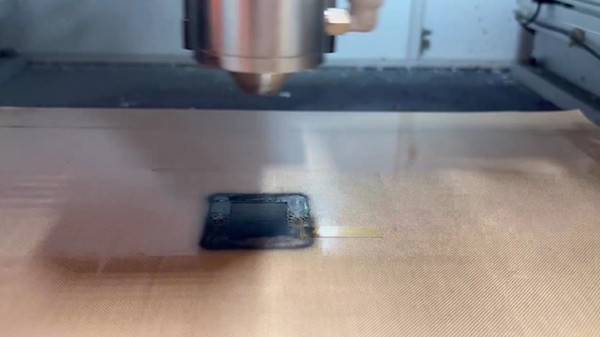
Step 4: Assembly with gas diffusion layer (hot pressing composite)
Align the catalytic layer membrane module (CCM) with the gas diffusion layer (such as titanium sintered felt) and complete the MEA assembly through hot pressing molding.
- Purpose: To ensure close contact between GDL and catalytic layer, reduce contact resistance, and establish a transport path for reaction gas and products.
- Key parameters: hot pressing temperature, pressure, and time.
- Hot pressing process window:
– Standard: The temperature is generally set below the previous heat treatment temperature (such as 120-130 ° C), and the pressure should avoid crushing the GDL structure while ensuring good contact. The optimal process combination must be determined through experiments.
Step 5: Activation and Performance Testing (Verification and Evaluation)
The molded MEA needs to undergo activation treatment to achieve the desired performance state.
- Activation purpose: To fully open the proton channel of the ionomer through hydration.
- Common method: Use deionized water as the medium in the electrolytic cell and run continuously at low current density until the voltage stabilizes.
- Comprehensive performance evaluation:
– Detection method: Collect polarization curves and electrochemical impedance spectroscopy (EIS) under standard testing conditions.
– Evaluation indicators:
–Polarization curve: Analyze the voltage performance at a specific current density (such as 2 A/cm ²);
–EIS: Fit the Ohmic impedance and charge transfer impedance to evaluate the interface condition and catalytic activity between the membrane and the contact;
–Gas cross testing: Ensure that the oxygen concentration in hydrogen is below the safety limit (usually<2%).
For researchers, the successful preparation of single high-performance MEAs may have some randomness, but to achieve consistent and stable performance in repeated preparation between batches, strict process control and system recording must be relied upon. The batch stability of the slurry, precise control of coating parameters, optimization of heat treatment and hot pressing processes, and comprehensive performance verification together constitute the core technical system for MEA preparation. A deep understanding and mastery of these links is equivalent to mastering the core manufacturing code in water electrolysis technology. We hope that this article can provide a clear technical path and rigorous methodological framework for related scientific research work, and help develop high-performance and highly consistent membrane electrode components.
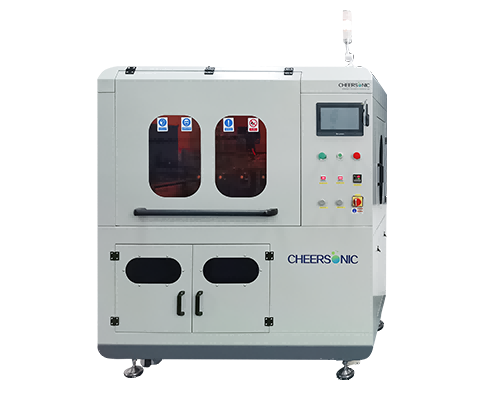
About Cheersonic
Cheersonic is the leading developer and manufacturer of ultrasonic coating systems for applying precise, thin film coatings to protect, strengthen or smooth surfaces on parts and components for the microelectronics/electronics, alternative energy, medical and industrial markets, including specialized glass applications in construction and automotive.
Our coating solutions are environmentally-friendly, efficient and highly reliable, and enable dramatic reductions in overspray, savings in raw material, water and energy usage and provide improved process repeatability, transfer efficiency, high uniformity and reduced emissions.
Chinese Website: Cheersonic Provides Professional Coating Solutions