
Make ZrO2 or Y2O3 Powder
Make ZrO2 or Y2O3 Powder – Ceramic Powder Preparation by Spray Pyrolysis – Cheersonic
Ultrasonic spray pyrolysis is an advanced material synthesis method, especially suitable for preparing inorganic ceramic powders with high purity and excellent uniformity. This technology atomizes the precursor solution into micrometer sized droplets and achieves instantaneous thermal decomposition and reaction in a high-temperature reaction environment, ultimately obtaining powder materials with specific composition and morphology. In the field of ceramic materials, this technology is widely used to prepare high-performance ceramic powders such as zirconia (ZrO ₂) and yttrium oxide (Y ₂ O3), which have important application value in structural ceramics, functional ceramics, and electronic ceramics.

Ultrasonic spray pyrolysis equipment is the core device of the process, which is usually composed of the following key parts: precursor solution supply system, ultrasonic atomization device, high-temperature reaction furnace, gas path control system and powder collection device. The workflow is as follows: Firstly, prepare a precursor solution of appropriate concentration from a soluble salt solution containing the target metal ion (such as zirconium salt or yttrium salt); Subsequently, the solution is broken into fine droplets using high-frequency ultrasonic vibration; These droplets are transported by a carrier gas to a high-temperature reactor, where they rapidly evaporate, pyrolyze, and undergo solid-phase reactions at temperatures ranging from hundreds to thousands of degrees Celsius, forming the required oxide powder; Finally, the generated powder is separated from the airflow using devices such as cyclone separators or electrostatic collectors.
This technology has many advantages over the traditional solid state reaction method, coprecipitation method or sol gel method. Firstly, due to the micrometer sized droplets and their rapid reaction at high temperatures, the prepared powder exhibits high chemical uniformity and phase purity. Secondly, by adjusting the composition, concentration, and process parameters of the precursor solution (such as atomization frequency, reaction temperature, residence time, etc.), the particle size, morphology, and crystal structure of the final product can be precisely controlled. For example, in the preparation of zirconia based ceramic powders, the doping amount of yttrium and heat treatment conditions can be controlled to obtain powder materials with specific phase compositions (such as tetragonal or cubic phases) and excellent mechanical properties.
In the preparation process of zirconia powder, zirconium salts (such as zirconium oxychloride or zirconium nitrate) are usually selected as the zirconium source. Nanometer to submicron zirconia powder can be directly obtained through ultrasonic spray pyrolysis technology. This powder has the characteristics of narrow particle distribution, low agglomeration degree, and high sintering activity, making it very suitable for preparing high-strength and high toughness structural ceramic components. Similarly, in the preparation of yttria powder, corresponding yttrium salt solutions can be used as precursors. By optimizing the pyrolysis temperature and atmosphere conditions, high-purity Y ₂ O3 powder can be obtained. Such materials have wide applications in fields such as fluorescent substrates, transparent ceramics, and high-temperature protective coatings.
In addition to single oxide system, ultrasonic spray pyrolysis technology is also applicable to the synthesis of multi-component composite ceramic powders. For example, by mixing zirconium salt and yttrium salt in a certain proportion to prepare a precursor solution, yttrium stabilized zirconia (YSZ) powder can be prepared in one step. This material is widely used in the electrolyte layer of solid oxide fuel cells due to its excellent thermal stability and ion conductivity. In addition, by introducing other metal ions such as aluminum, magnesium, calcium, etc., it can also be extended to more complex multicomponent oxide systems to meet the material performance requirements of different application scenarios.
It is worth noting that the process parameters of this technology have a decisive impact on the performance of the final product. For example, the atomization frequency directly affects the size distribution of droplets, which in turn affects the particle size of the powder; The reaction temperature is related to the degree of decomposition of the precursor, the formation of crystal phases, and the crystallinity of the particles; The flow rate of the carrier gas and the residence time of the reaction jointly determine the morphology and aggregation state of the particles. Therefore, in practical applications, it is necessary to optimize these parameters through systematic experiments to obtain ceramic powders with ideal properties.
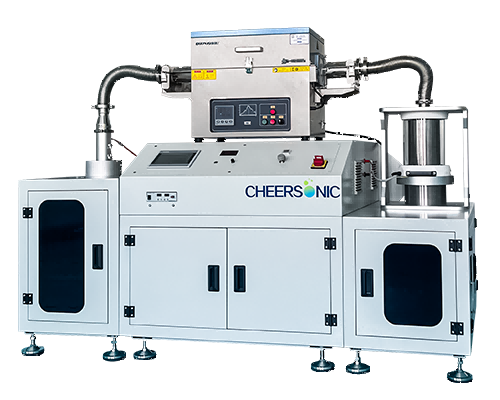
With the development of material science, ultrasonic spray pyrolysis technology is also improving and innovating. For example, by introducing a multi-stage heating system, more precise temperature control can be achieved, avoiding component segregation caused by temperature gradients; By combining electrostatic assisted deposition or interface engineering strategies, the morphology and surface properties of particles can be further controlled; The introduction of online monitoring and feedback control systems helps to improve the stability of the process and the reproducibility of the product.
In a word, ultrasonic spray pyrolysis technology, as an efficient and flexible material preparation method, has shown significant advantages in the synthesis of advanced ceramic powders. It is not only suitable for laboratory scale research, but also has the potential for industrial production. With the continuous improvement of material performance requirements and the continuous optimization of process technology, this technology is expected to play an important role in the development and preparation of more new functional ceramic materials.
About Cheersonic
Cheersonic is the leading developer and manufacturer of ultrasonic coating systems for applying precise, thin film coatings to protect, strengthen or smooth surfaces on parts and components for the microelectronics/electronics, alternative energy, medical and industrial markets, including specialized glass applications in construction and automotive.
Our coating solutions are environmentally-friendly, efficient and highly reliable, and enable dramatic reductions in overspray, savings in raw material, water and energy usage and provide improved process repeatability, transfer efficiency, high uniformity and reduced emissions.
Chinese Website: Cheersonic Provides Professional Coating Solutions