
List of Carbon Powder Types
In fuel cells (including proton exchange membrane fuel cells (PEMFC), anion exchange membrane fuel cells (AEMFC), etc.), conductive carbon powder is the core component of the electrode conductive network and also needs to be used as a carrier for catalysts (such as Pt, non precious metal single atom catalysts). The selection of its type directly affects the conductivity, specific surface area, catalyst dispersion, and electrochemical stability of the electrode. The following are commonly used carbon powder types in scientific research and industry, combined with structural characteristics, application scenarios, and adaptability to explain:
Traditional Carbon Black (CB)
1. Structure and characteristics
– Amorphous carbon generated by incomplete combustion or pyrolysis of hydrocarbon substances, with particle sizes mostly ranging from 10-100 nm, rich in oxygen-containing functional groups such as hydroxyl (- OH) and carboxyl (- COOH) on the surface, easily dispersed in solvents, and low cost with excellent conductivity (volume resistivity of 10 ⁻²~10 ⁻Ω· cm).
– Core advantages: high specific surface area (50~1500 m ²/g), good pore structure (mainly mesoporous, pore size 2~50 nm), providing sufficient loading sites for catalysts, while promoting electrolyte permeation and gas diffusion.
2. Typical application scenarios
– Widely used as cathode/anode conductive carriers for PEMFC and AEMFC, especially suitable for cost sensitive large-scale production.
– In scientific research, commonly used general-purpose carbon black (avoiding brand names, can be described as “high specific surface area commercial carbon black” or “low ash carbon black”) needs to be removed of impurities (such as metal oxides) through acid washing (such as HNO ∝, H ₂ SO ₄) to improve purity and reduce electrochemical corrosion.

3. Advantages and disadvantages
– Advantages: Good dispersibility, suitable for ultrasonic spraying process (uniform particle size after atomization, no agglomeration of coating), low cost, mature large-scale application.
– Disadvantages: It is prone to oxidation and corrosion (generating CO ₂) in strong acidic (PEMFC) or long-term high potential environments, leading to electrode structure collapse; The adjustable range of specific surface area and pore structure is limited, resulting in insufficient dispersion ability for highly active catalysts.
Activated Carbon (AC)
1. Structure and characteristics
– Activated from biomass (coconut shells, sawdust), coal, asphalt and other raw materials (physical activation: CO ₂, water vapor); Chemical activation: made from KOH and ZnCl ₂, it has a developed pore structure (micropores+mesopores, with pore size<2 nm for micropores and 2-50 nm for mesopores), a specific surface area of up to 1000-3000 m ²/g, and abundant surface functional groups (which can be controlled through activation processes).
– Core advantages: ultra-high specific surface area and pore volume, which can greatly improve catalyst dispersion (especially suitable for loading single atom catalysts and nanocluster catalysts); Surface functional groups can be modified (such as amination, oxidation) to enhance their interaction with catalysts.
2. Typical application scenarios
– Suitable for scenarios with high requirements for catalyst dispersion, such as the support of non precious metal catalysts (Fe-N-C, Co-N-C) in AEMFC, or the construction of conductive networks for low Pt loading electrodes in PEMFC.
– Due to the high proportion of micropores, moderate pore expansion treatment (such as secondary activation or template method) is required to balance the specific surface area and gas diffusion rate, and avoid electrolyte clogging of micropores.
3. Advantages and disadvantages
-Advantages: large specific surface area, strong catalyst loading capacity, and wide range of raw material sources (biomass based activated carbon also has environmental friendliness).
-Disadvantages: The conductivity is slightly lower than that of carbon black (volume resistivity of 10 ⁻¹~10 ⁰Ω· cm), and it needs to be used in combination with carbon black or carbon nanomaterials; During the activation process, disordered pore structures are prone to occur, and some micropores may lead to a decrease in catalyst utilization efficiency.
Carbon Nanomaterials
1. Carbon nanotubes (CNTs)
– Structure and characteristics: A one-dimensional nanostructure formed by curling graphite sheets, divided into single-walled carbon nanotubes (SWCNTs, diameter 0.4-2 nm) and multi walled carbon nanotubes (MWCNTs, diameter 2-50 nm), with an aspect ratio of up to 100-1000, excellent conductivity (SWCNTs volume resistivity of 10 ⁻⁴ -10 ⁻⁵ Ω· cm), and high mechanical strength (tensile strength>100 GPa).
– Core advantage: One dimensional structure can construct a continuous conductive network, reducing electronic transmission resistance; Smooth surface but functional groups can be introduced through acidification and plasma treatment to enhance catalyst dispersion and binding strength; Corrosion resistance is superior to carbon black, especially in acidic environments.
Application scenarios: High power density electrodes for PEMFC, alkali resistant electrodes for AEMFC (requiring surface modification to enhance hydrophilicity), often used in combination with carbon black (CNTs account for 10%~30%), balancing conductivity and pore structure.
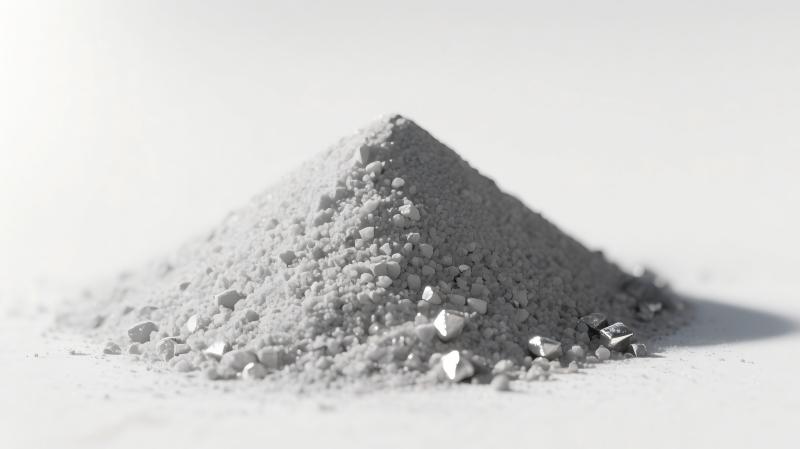
2. Graphene (GE)
– Structure and characteristics: A single-layer two-dimensional graphite sheet structure with a thickness of 0.34 nm, theoretical specific surface area of 2630 m ²/g, excellent conductivity (electron mobility 2 × 10 ⁴ cm ² · V ⁻¹· s ⁻¹) and thermal stability, and surface catalytic activity can be controlled by doping (N, P, S) or defect engineering.
– Core advantage: The two-dimensional layered structure can provide planar loading sites for catalysts and suppress catalyst particle aggregation; High conductivity can reduce the internal Ohmic loss of electrodes; Doped graphene (such as N-graphene) can serve as a non precious metal catalyst (oxygen reduction reaction ORR), achieving the integration of “conductive carrier catalyst”.
– Application scenarios: Low Pt loading PEMFC cathode, AEMFC non precious metal electrode, need to solve the dispersion problem (by ultrasonic stripping+dispersant assistance, avoiding layer stacking), suitable for ultrasonic spraying atomization process (dispersion concentration is usually 0.1~1 mg/mL).
3. Carbon nanofibers (CNFs)
– Structure and characteristics: A one-dimensional fibrous carbon material with a diameter of 50-200 nm and a length of several microns, made by carbonization of polymer fibers (such as polyacrylonitrile and asphalt fibers). The pore structure is mainly mesoporous, with a specific surface area of 500-1500 m ²/g and conductivity between carbon black and carbon nanotubes.
– Core advantage: The fibrous structure can form an interwoven three-dimensional network, enhancing the mechanical stability of the electrode; The high proportion of mesopores is conducive to electrolyte penetration and gas diffusion, especially suitable for alkaline electrolyte transport in AEMFC.
Application scenarios: Conductive skeleton reinforcement materials for fuel cell electrodes, or as catalyst carriers (especially suitable for loading bulk catalysts), can be further enhanced in conductivity and structural integrity when combined with graphene.
Modified Carbon Materials
1. Doped Carbon Materials
– Structure and characteristics: By high-temperature heat treatment or in-situ synthesis, heteroatoms (N, P, S, B, etc.) are introduced into the carbon skeleton to change the electronic structure and surface chemical properties of carbon materials (such as enhancing electronegativity and forming active sites).
– Typical types:
– Nitrogen doped carbon (N-C): The most commonly used, N atoms exist in the form of pyridine N, pyrrole N, graphite N, etc., which can enhance the interaction between the catalyst and the carrier, and can catalyze ORR on its own (with activity close to Pt/C in alkaline environments). It is the core material of AEMFC non precious metal electrodes.
– Phosphorus doped carbon (P-C): enhances the hydrophilicity and conductivity of carbon materials, and co doping with N (N-P-C) can synergistically optimize ORR activity and stability.
– Application scenarios: AEMFC cathode non precious metal catalyst carrier/catalyst, PEMFC low corrosion electrode material.
2. Composite Carbon Materials
– Structure and characteristics: Composite two or more carbon materials (such as carbon black/CNTs, graphene/CNFs, activated carbon/graphene), integrating their respective advantages (such as high dispersibility of carbon black, high conductivity of CNTs, high specific surface area of graphene).
– Core advantages: Addressing the shortcomings of single carbon materials such as easy stacking of graphene, poor dispersion of CNTs, and insufficient corrosion resistance of carbon black, optimizing the conductive network, pore structure, and mechanical stability of the electrode.
– Application scenarios: High performance fuel cell electrodes (such as high-power electrodes for PEMFC vehicles and long-life electrodes for AEMFC), adapted to the high uniformity requirements of ultrasonic spraying (with stronger stability of composite carbon powder dispersion and coating thickness deviation<5%).
Key considerations for carbon powder selection (combined with fuel cell type and spraying process)
1. Electrochemical stability: CNTs, graphene, or nitrogen doped carbon (resistant to oxidation and corrosion) are preferred for PEMFC in acidic environments; AEMFC alkaline environment can choose activated carbon, N-C or composite carbon materials (with better alkali resistance than traditional carbon black).
2. Dispersion and spray compatibility: Ultrasonic spraying requires good stability of carbon powder dispersion (water/alcohol system) (no obvious settling after 24 hours of standing), and better dispersion of carbon black, surface modified CNTs, and graphene oxide (GO); The particle size of carbon powder should match the spray atomization particle size (usually<100 nm to avoid nozzle clogging).
3. Catalyst loading requirements: Single atom catalysts and nanocluster catalysts (particle size<5 nm) require the selection of high specific surface area carbon materials (activated carbon, graphene, N-C); Traditional Pt/C catalysts (particle size 5-10 nm) can be supported on carbon black or CNT composite carriers.
4. Balance between conductivity and cost: Carbon black has the lowest cost, and its conductivity meets conventional requirements; Carbon nanomaterials have better conductivity but higher cost, making them suitable for high-power, long-life fuel cells; Composite carbon materials can achieve a balance between conductivity, stability, and cost.
Summary
The conductive carbon powder used for fuel cell spraying is mainly composed of “traditional carbon black+carbon nanomaterials+modified carbon materials”, among which:
Prioritize carbon black in low-cost scenarios;
Choose activated carbon or graphene for high dispersibility and high specific surface area requirements;
Choose carbon nanotubes or nitrogen doped carbon for high conductivity and corrosion resistance requirements;
Choose composite carbon materials for high-performance electrodes (considering multiple characteristics).
In practical applications, it is necessary to select carbon powder based on fuel cell types (PEMFC/AEMFC), catalyst systems (precious/non precious metals), and spraying process parameters (such as ultrasonic frequency, dispersion concentration, atomization pressure). If necessary, surface modification (oxidation, doping) or composite modification can be used to optimize performance, ultimately achieving a synergistic improvement in electrode conductivity efficiency, catalytic activity, and stability.
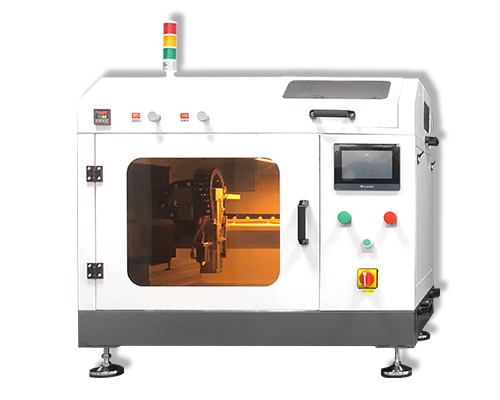
Ultrasonic spraying of carbon powder solution uses high-frequency ultrasonic vibration to atomize the dispersed carbon powder into micrometer sized uniform droplets, which are accurately deposited on the substrate surface to form a functional film. Its atomization mechanism can avoid the problem of droplet aggregation in traditional spraying. The dispersion stability of carbon powder solution (such as solid content 1-10 wt%) and parameters such as ultrasonic power (20-120 kHz) and spraying rate (5-50 μ L/min) directly affect the density and conductivity of the film layer. Compared to the scratch coating method, this technology has significant advantages in the preparation of energy materials: controllable film thickness (100-500 nm), low surface roughness (Ra<50 nm), and compatibility with composite powders such as carbon nanotubes and graphene. It is suitable for scenarios such as AEM electrolysis water electrodes and fuel cell catalytic layers, and can effectively improve electron transfer efficiency and exposure of reaction active sites.
About Cheersonic
Cheersonic is the leading developer and manufacturer of ultrasonic coating systems for applying precise, thin film coatings to protect, strengthen or smooth surfaces on parts and components for the microelectronics/electronics, alternative energy, medical and industrial markets, including specialized glass applications in construction and automotive.
Our coating solutions are environmentally-friendly, efficient and highly reliable, and enable dramatic reductions in overspray, savings in raw material, water and energy usage and provide improved process repeatability, transfer efficiency, high uniformity and reduced emissions.
Chinese Website: Cheersonic Provides Professional Coating Solutions