
Lattice-Distorted Platinum Wrinkled Nanoparticles
Lattice-Distorted Platinum Wrinkled Nanoparticles: A Summary of Research on Alkaline Hydrogen Electrocatalytic Performance
A study published in December 2025 focused on the lattice distortion phenomenon in wrinkled nanoparticles, successfully synthesizing lattice-distorted platinum (Pt) wrinkled nanoparticles (LD-Pt WNPs), significantly improving their hydrogen electrocatalytic performance in alkaline environments, providing important support for the development of hydrogen energy-related technologies.
Research Background
With the continuous growth of global energy demand and increasingly severe environmental pollution problems, the development of clean and renewable energy systems has become an urgent priority. Hydrogen energy, as an efficient and pollution-free energy carrier, is considered key to achieving carbon neutrality. Its preparation (dependent on the hydrogen evolution reaction HER) and utilization (dependent on the hydrogen oxidation reaction HOR) both require highly efficient catalysts.
Currently, platinum-based catalysts are the most efficient materials for HER and HOR, but a key bottleneck exists: their activity in alkaline media is much lower than in acidic environments, severely limiting their application in alkaline fuel cells, electrolyzers, and other equipment. Therefore, improving the catalytic performance of platinum-based catalysts under alkaline conditions has become a research hotspot in the field of hydrogen energy.
Defect engineering has proven to be an effective strategy for regulating catalyst performance—by introducing defects such as lattice distortion, vacancies, and grain boundaries, the electronic structure of the catalyst surface can be adjusted, the adsorption behavior of reaction intermediates optimized, and thus the catalytic reaction pathway improved. This study, based on this approach, designed and synthesized a novel platinum-based catalyst, overcoming the performance limitations under alkaline conditions.

Core Research Content
This study systematically developed and verified the performance of lattice-distorted platinum wrinkled nanoparticles through a complete process of “synthesis-transformation-characterization-testing-mechanism analysis,” mainly divided into five stages:
1. Synthesis and Characterization of Amorphous PtSe₂ Wrinkled Nanoparticles
First, amorphous platinum selenide (PtSe₂) wrinkled nanoparticles were prepared. Characterization results showed that the particles had a uniform wrinkled structure with an average particle size of approximately 83 nm; X-ray diffraction (XRD) patterns showed no diffraction peaks, confirming their amorphous state; energy dispersive spectroscopy (EDS) analysis showed that the atomic ratio of Pt to Se was approximately 34.5:65.5; elemental mapping and line scan tests further confirmed that Pt and Se were uniformly distributed in the particles, and the atoms were arranged in a disordered state.
2. Preparation of Lattice-Distorted Platinum Nanoparticles (LD-Pt WNPs)
The amorphous PtSe₂ was successfully transformed into crystalline platinum nanoparticles by removing Se from PtSe₂ through a simple heat treatment process. After the transformation, the average particle size was reduced to 48.2 nm, and the XRD pattern showed characteristic diffraction peaks of platinum (corresponding to the (111), (200), and (220) crystal planes of Pt). High-resolution transmission electron microscopy (HRTEM) revealed clear lattice fringes (0.23 nm corresponding to the (111) plane of Pt), along with obvious lattice distortion and defects, confirming the successful preparation of the target material.
3. Catalytic Performance Testing under Alkaline Conditions
Using a commercial Pt/C catalyst as a control, the HER and HOR performance of LD-Pt WNPs were tested in a 0.1M potassium hydroxide (KOH) solution:
– HER Performance: Achieving a current density of 10 mA·cm⁻² requires only 58.0 mV overpotential, far lower than the 86.5 mV of commercial Pt/C; the Tafel slope is 52 mV·dec⁻¹, indicating superior reaction kinetics.
– HOR Performance: At an overpotential of 50 mV, the mass activity reaches 968.5 mA·mg⁻¹, nine times that of commercial Pt/C; the exchange current density is 2.90 mA·cm⁻², twice that of Pt/C.
Furthermore, this material exhibits excellent stability; after 36 hours of continuous operation, there was no significant decrease in catalytic activity or structural damage; compared with other recently reported catalysts, its HER and HOR performance are both at a leading level.
4. DFT Calculations Reveal the Catalytic Mechanism
Density functional theory (DFT) calculations clarified the core principle behind the enhancement of catalytic performance by lattice distortion: lattice distortions (such as vacancy defects and line defects) can regulate the d-band center of platinum, optimize the adsorption free energy of reaction intermediates (H and OH), and significantly reduce the energy barriers of the Volmer step (water splitting) in HER and related reactions in HOR, fundamentally accelerating the catalytic reaction kinetics.
5. Summary of Research Conclusions
Lattice distortion is key to improving the alkaline hydrogen electrocatalytic performance of platinum-based catalysts. This study provides a novel approach for designing highly efficient platinum-based hydrogen electrocatalysts through defect engineering strategies.
Research Significance and Future Prospects
Research Significance
1. This research provides a highly efficient and stable platinum-based catalyst for the field of alkaline hydrogen electrocatalysis, which can directly promote the performance upgrade of alkaline fuel cells and water electrolysis hydrogen production equipment.
2. This research clarifies for the first time the regulatory role of lattice distortion on the electronic structure and reaction pathway of platinum-based catalysts, providing a new perspective of “defect optimization” for catalyst design. 3. Demonstrate the significant potential of defect engineering in optimizing the performance of noble metal catalysts, providing a reference for the development of other noble metal (e.g., palladium, iridium) or non-noble metal catalysts.
Future Prospects
1. Expand Material Systems: Apply lattice distortion strategies to other noble metals such as palladium (Pd) and iridium (Ir), or non-noble metal catalysts such as nickel and cobalt, to further reduce costs and improve applicability.
2. Optimize Synthesis Processes: Explore methods for more precise control of lattice distortion type and density to achieve targeted regulation of catalyst performance.
3. Advance Device Applications: Integrate LD-Pt WNPs into actual fuel cells or electrolyzers, evaluating their performance and lifespan under industrial-grade conditions.
4. Deepen Mechanism Research: Combine in-situ characterization techniques to observe the dynamic changes in lattice distortion during the reaction process in real time, further refining the understanding of catalytic mechanisms.
5. Develop Large-Scale Preparation Technologies: Overcome mass production process challenges, promoting the industrial application of this type of catalyst.
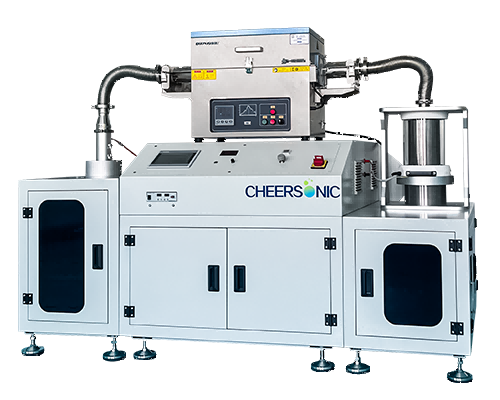
Ultrasonic Spray Pyrolysis for the Preparation of Nanocatalyst Particles
Ultrasonic spray pyrolysis is a highly efficient and green process for preparing nanocatalyst particles. It combines ultrasonic atomization and high-temperature pyrolysis technologies to achieve precise one-step preparation of catalyst particles, significantly optimizing traditional processes. This technology first atomizes the catalyst precursor solution into uniform micron-sized droplets using high-frequency ultrasound. These droplets are then carried by a carrier gas into a pyrolysis furnace, where they undergo rapid drying, thermal decomposition, and nucleation growth to ultimately form nanoscale catalyst particles.
Its advantages are significant: it allows for precise control of particle size, morphology, and composition, resulting in nanocatalysts with excellent dispersibility and uniform distribution of active components, fully exposing active sites and improving catalytic efficiency. Low-temperature atomization combined with controllable pyrolysis preserves the performance of thermosensitive active components, reduces precious metal waste, lowers production costs, and eliminates secondary pollution. This process is suitable for large-scale continuous production and is widely used in fuel cells, waste gas treatment, photocatalysis, and new energy fields, contributing to the efficient mass production and performance upgrades of high-end nanocatalysts.
About Cheersonic
Cheersonic is the leading developer and manufacturer of ultrasonic coating systems for applying precise, thin film coatings to protect, strengthen or smooth surfaces on parts and components for the microelectronics/electronics, alternative energy, medical and industrial markets, including specialized glass applications in construction and automotive.
Our coating solutions are environmentally-friendly, efficient and highly reliable, and enable dramatic reductions in overspray, savings in raw material, water and energy usage and provide improved process repeatability, transfer efficiency, high uniformity and reduced emissions.
Chinese Website: Cheersonic Provides Professional Coating Solutions
