
Key Tools for Laboratory MEA Preparation
Key Tools for Laboratory MEA Preparation – Ultrasonic Coating – Cheersonic
In laboratory research and development of membrane electrode assemblies (MEAs), core fuel cell components, coating uniformity and material utilization remain key challenges hindering performance optimization. Ultrasonic sprayers, with their unique atomization principle, are ideal for addressing this challenge, providing reliable technical support for precise MEA fabrication.
The core advantage of ultrasonic sprayers lies in their non-contact atomization technology. Using high-frequency vibration elements, the device generates ultrasonic waves, transforming the catalytic slurry and diffusion layer coating required for MEA fabrication into uniform, micron-sized droplets. This atomization method avoids the uneven pressure associated with traditional spray equipment, leading to coating thickness fluctuations and reduced material waste caused by paint splashing. It is ideal for small-batch, high-precision fabrication in laboratories.
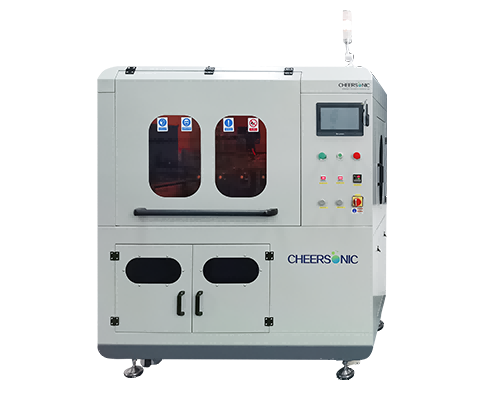
Ultrasonic spray coating is particularly advantageous in the preparation of MEA catalyst layers. As the core of the MEA reaction, the catalyst layer requires a thin and uniform structure to enhance reaction efficiency. By precisely controlling parameters such as ultrasonic frequency, spray rate, and distance, the equipment can evenly deposit the catalytic slurry onto the proton exchange membrane surface, forming a catalyst layer with controllable thickness. Experimental data shows that the thickness deviation of the catalyst layer prepared using ultrasonic spraying can be controlled within 5%, significantly outperforming traditional processes such as doctor blade coating and screen printing, laying the foundation for the consistent improvement of MEA performance.
Ultrasonic spray coating also plays a vital role in the preparation of MEA diffusion layers. The diffusion layer requires excellent air permeability and electrical conductivity, and the uniformity of its surface coating directly affects gas diffusion efficiency. By optimizing atomization parameters, the equipment ensures that the diffusion layer coating is evenly applied to the surface of a substrate such as carbon paper, forming a continuous and porous coating structure. This coating not only effectively improves gas diffusion performance but also strengthens the bond between the diffusion layer and the catalyst layer, reducing delamination during MEA assembly and operation.
With the continuous advancement of fuel cell technology, laboratories are increasingly demanding precision in MEA preparation. Ultrasonic spray coating, with its high efficiency, precision, and environmental friendliness, is becoming a key piece of equipment in MEA research and development. In the future, as the equipment’s automation and control capabilities improve and its multi-material adaptability strengthens, it will play a greater role in the development of new MEA materials and structural optimization, providing strong support for breakthroughs in fuel cell technology.
About Cheersonic
Cheersonic is the leading developer and manufacturer of ultrasonic coating systems for applying precise, thin film coatings to protect, strengthen or smooth surfaces on parts and components for the microelectronics/electronics, alternative energy, medical and industrial markets, including specialized glass applications in construction and automotive.
Our coating solutions are environmentally-friendly, efficient and highly reliable, and enable dramatic reductions in overspray, savings in raw material, water and energy usage and provide improved process repeatability, transfer efficiency, high uniformity and reduced emissions.
Chinese Website: Cheersonic Provides Professional Coating Solutions
