How is PI Coated onto a Glass Substrate?
How is PI coated onto a glass substrate? How is PI liquid converted into PI film? The following is a breakdown of the specific process:
1. Glass substrate cleaning: Generally, EUV cleaning is performed first, followed by brush cleaning, high-pressure water vapor spray cleaning, and finally A/K drying.
EUV cleaning: By irradiating the surface of a glass substrate with 172nm ultraviolet light, oxygen molecules can be converted into oxygen atoms and ozone molecules. At the same time, the organic matter on the substrate surface absorbs the energy of ultraviolet light and undergoes chemical bond breaking, breaking the carbon carbon and carbon hydrogen bonds, causing the organic molecules to recombine into carbon dioxide and water, thereby removing the organic matter on the surface of the glass substrate.
High pressure water vapor spray cleaning: By using a high-pressure water vapor spray (usually a mixture of carbon dioxide and pure water), small particles on the surface of the substrate are removed.
A/K drying: Using a tilted airflow to drive the moisture on the substrate surface to a corner of the board, in order to remove the water film on the substrate surface and achieve drying.

2. HP/CP treatment: Drying the substrate to remove moisture and cooling it. The drying temperature is usually around 100-110 ℃, while the cooling temperature is the ambient temperature in the workshop.
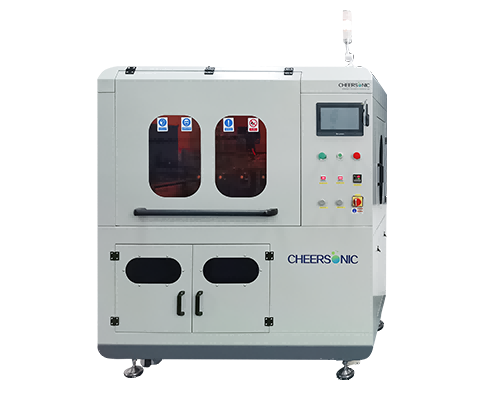
3. Coating: Ultrasonic coating method is used, with main parameters including coating walking speed (based on equipment and process debugging results), wet film thickness (generally calculated based on dry film thickness and solid content), and coating gap (high gap may pose a risk of film breakage, while low gap may cause macroscopic unevenness).
Before PI coating, the PI liquid needs to undergo defoaming treatment: the purpose is to remove bubbles from the raw materials, prevent the generation of a large number of bubbles during PI coating, and avoid bubble explosion during subsequent high-temperature baking processes. The usual defoaming time is 8-12 hours, and various pore size filters are used during the defoaming process to remove impurities from the raw materials.
4. HVCD treatment: heating and vacuum drying, used to remove most solvents. The pressure for vacuum drying is about 20Pa, and the heating temperature is 80-100 ℃ (NMP has a lower boiling point in vacuum).
5. Curing: Through imidization reaction, a stable PI film layer is formed by curing.
Maintain at 160-180 ℃ for 20 minutes: Remove the remaining 20%~30% NMP solvent from the PI film;
Maintain at 230-250 ℃ for 20 minutes: Conduct imidization reaction to convert polyamic acid into highly polymerized compound polyimide;
Maintain at 450-470 ℃ for 20 minutes: Perform high-temperature curing to make the polyimide polymer more orderly arranged, improve its mechanical properties and mechanical properties, and form a film with stable properties and excellent resistance.
The curing equipment adopts infrared heating method, with temperature fluctuation controlled at 450 ± 10 ℃. During the curing process, nitrogen gas is continuously introduced to remove NMP and the water vapor generated by curing. Before curing, a large amount of nitrogen should be introduced to release oxygen, and the oxygen content should be controlled below 100ppm to prevent yellowing of PI. The curing curve may vary slightly depending on the PI material used by different companies, and is usually operated according to the curve recommended by the material manufacturer. At present, PI curing is mostly done in an oven using infrared heating. After curing, the desired flexible PI substrate film layer is obtained.
About Cheersonic
Cheersonic is the leading developer and manufacturer of ultrasonic coating systems for applying precise, thin film coatings to protect, strengthen or smooth surfaces on parts and components for the microelectronics/electronics, alternative energy, medical and industrial markets, including specialized glass applications in construction and automotive.
Our coating solutions are environmentally-friendly, efficient and highly reliable, and enable dramatic reductions in overspray, savings in raw material, water and energy usage and provide improved process repeatability, transfer efficiency, high uniformity and reduced emissions.
Chinese Website: Cheersonic Provides Professional Coating Solutions