
Hot Pressing of Ultrasonic Sprayed MEA with Different Pt Loadings
Pt loading-dependent effects of hot pressing on ultrasonic-sprayed membrane electrodes for PEM fuel cells
Hydrogen energy, as a clean and low-carbon new energy carrier, is playing a vital role in the global energy transition. Proton exchange membrane fuel cells (PEMFCs) are one of the core devices for hydrogen energy utilization. They directly convert the chemical energy of hydrogen into electrical energy, offering advantages such as high energy efficiency, zero emissions, and low operating noise, making them widely applicable in transportation, distributed power generation, and other scenarios. The membrane electrode assembly (MEA) is the core component of this type of fuel cell, where electrochemical reactions, gas and charge transport within the cell all take place. Its fabrication process directly determines the cell’s output performance and lifespan.
Currently, the mainstream method for fabricating MEAs is catalyst-coated membranes (CCMs). This involves uniformly attaching a catalytic coating to the surface of the proton exchange membrane using methods such as ultrasonic spraying. Ultrasonic spraying, with its advantages of uniform coating, high raw material utilization, and good repeatability, has become a common method for preparing high-performance electrodes. However, the subsequent hot-pressing process after spraying is equally crucial. Hot pressing involves placing the electrode between high-temperature plates and pressing it under set temperature, pressure, and time conditions. The purpose is to strengthen the interfacial bonding between layers, reduce contact resistance, and optimize internal mass transfer channels. However, the actual effect of hot pressing remains controversial within the industry: some studies show that proper hot pressing can improve battery performance, while other experiments have found that improper hot pressing can damage electrode structure, leading to performance degradation. Especially now that low platinum loading is becoming the mainstream in the industry—reducing the amount of precious metal platinum is key to lowering fuel cell costs and promoting commercialization—the impact of hot pressing on electrodes with different platinum contents has lacked systematic research.
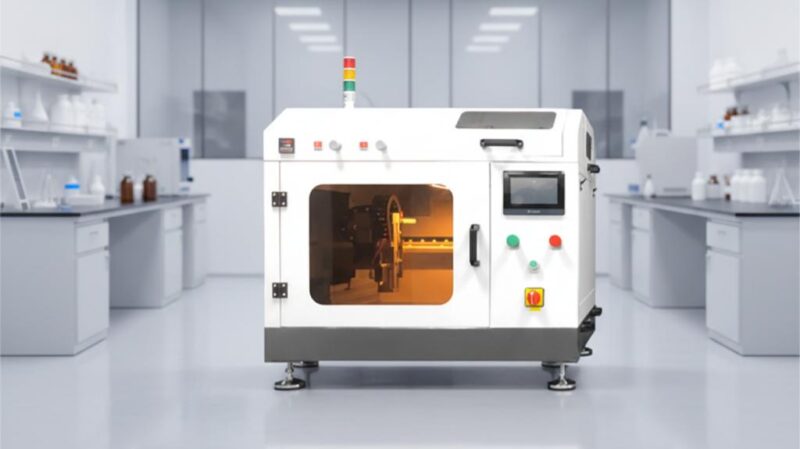
To address this, researchers conducted comparative experiments on two typical electrodes: one with conventional platinum loading and the other with low platinum loading. The experiments comprehensively explored the changes caused by the three major parameters of hot pressing: pressure, temperature, and time. They also analyzed the evolution of electrode microstructure and electrochemical performance, ultimately finding that the effect of hot pressing is closely related to the platinum loading of the electrode, with a clear critical boundary between the two.
For membrane electrodes with conventional platinum loading, appropriate hot pressing conditions can bring significant gains. Moderate pressure can compact the interface, reduce ohmic resistance and mass transport resistance; when the hot pressing temperature exceeds the glass transition temperature of the proton exchange membrane, the effective reaction area of the catalyst can increase by more than 40%. The optimal combination of hot-pressing parameters was selected through experiments, under which the peak power density of the battery could be increased by more than 12%. However, the hot-pressing time must be strictly controlled. If the pressing time reaches 10 minutes, the ionic polymers inside the electrode will undergo thermal decomposition, the proton transport channels will be blocked, and the battery performance will be significantly degraded.
Unlike conventional electrodes, low platinum loading electrodes are completely unsuitable for hot-pressing. The catalytic coating of these electrodes is thinner and has a more porous structure. Under the combined action of external force and high temperature, the pores inside the coating are prone to collapse. After the pore structure is damaged, the reactant gas cannot be smoothly transported to the catalytic active sites, and the catalyst utilization rate will decrease. Regardless of the hot-pressing parameters used, the overall battery performance will ultimately deteriorate.
Through multiple sets of gradient experiments, it was calculated that 0.24 mg·cm⁻² is the critical platinum loading at which the hot-pressing effect changes. When the platinum loading of the electrode is higher than this value, reasonable hot pressing can optimize the structure and improve performance; below this value, hot pressing will only have a negative effect. This conclusion clarifies the reasons for the contradictory viewpoints in previous studies: different experiments used different platinum loadings on the electrodes, naturally leading to different results where hot pressing was “beneficial” or “harmful.”
This research clarifies the applicable boundaries of the hot pressing process, providing practical process guidelines for the mass production of fuel cells. When producing traditional high-platinum electrodes, short-term hot pressing can be performed using matched temperature and pressure parameters to fully leverage the process advantages; however, for low-cost, lightweight low-platinum electrode products, the hot pressing process should be eliminated entirely to protect the electrode’s original porous structure.
Currently, cost reduction and efficiency improvement are the core directions for the industrialization of fuel cells. This achievement establishes the compatibility logic between ultrasonic spraying of membrane electrodes and subsequent hot pressing processes, retaining the advantages of mature processes while avoiding losses caused by process misuse. In the future, based on these process guidelines, the entire electrode preparation process can be further optimized, helping low-cost, long-life proton exchange membrane fuel cells to move towards large-scale application more quickly, laying a solid technological foundation for the development of the hydrogen energy industry.
About Cheersonic
Cheersonic is the leading developer and manufacturer of ultrasonic coating systems for applying precise, thin film coatings to protect, strengthen or smooth surfaces on parts and components for the microelectronics/electronics, alternative energy, medical and industrial markets, including specialized glass applications in construction and automotive.
Our coating solutions are environmentally-friendly, efficient and highly reliable, and enable dramatic reductions in overspray, savings in raw material, water and energy usage and provide improved process repeatability, transfer efficiency, high uniformity and reduced emissions.
Chinese Website: Cheersonic Provides Professional Coating Solutions