
Green Hydrogen Core Technology Explained
Green Hydrogen Core Technology Explained: Hydrogen Production via Water Electrolysis
In the wave of hydrogen energy industry development, green hydrogen, with its zero-carbon and clean characteristics, has become an important direction for energy transformation. Currently, there are various pathways to produce green hydrogen. Hydrogen production driven by renewable energy sources such as wind power, photovoltaics, and hydropower via water electrolysis is the most mature and widely applied mainstream solution. In addition, technologies such as photocatalytic water splitting, biomass conversion, and thermochemical water electrolysis are continuously under research and development.
The principle of hydrogen production via water electrolysis is not complicated; it relies on electricity to decompose water molecules into hydrogen and oxygen. When powered entirely by renewable energy, the production process produces no carbon emissions, making it truly green hydrogen energy. This technology uses readily available raw materials, has a clean and pollution-free production process, produces high-purity hydrogen, and boasts excellent theoretical conversion efficiency. However, it also has a significant drawback—high overall energy consumption, with electricity costs accounting for 60% to 80% of the total cost of hydrogen production, a key area that the industry urgently needs to overcome.

Currently, the mainstream water electrolysis hydrogen production technologies are mainly divided into four routes, each with different technical principles, advantages, and development challenges. Alkaline water electrolysis (ALK) is the longest-established industrially applied technology, relying on an alkaline electrolyte solution to complete the electrolysis reaction. This technology has a long history, with equipment lifespans reaching approximately 15 years. It can utilize non-precious metal catalysts, has a large hydrogen production capacity per unit, and relatively low overall cost. Domestic technology in this area is approaching international standards. However, alkaline electrolytes are corrosive, and traditional diaphragms pose environmental risks. Furthermore, the equipment’s load adjustment speed is relatively slow. The entire system is centered around an electrolyzer composed of bipolar plates, electrodes, and a diaphragm, supplemented by auxiliary equipment. The cost of the electrolysis components and auxiliary equipment is roughly equal.
Proton exchange membrane water electrolysis (PEM) is a rapidly developing and popular technology in recent years. It uses a solid proton exchange membrane as the electrolyte and pure water directly as the reaction feedstock. Its key advantages are high current density, high gas purity, and sensitive start-up, shutdown, and load response, making it perfectly suited for intermittent renewable energy sources such as wind and solar power. However, this technology operates in harsh environments, requiring precious metal catalysts such as platinum and iridium, as well as special membrane materials, which increases equipment costs and limits equipment lifespan. Currently, the hydrogen production capacity of a single unit in China still lags behind international top levels, and processing challenges remain with core membrane materials, with some materials relying on external supply.
The core of this system is an electrolyzer consisting of a proton exchange membrane, a catalyst layer, a gas diffusion layer, and bipolar plates, supplemented by auxiliary equipment. The electrolyzer accounts for approximately 45% of the overall cost, bipolar plates are the main cost item in the fuel cell stack, and the remaining 55% comes from system auxiliary equipment. In the preparation of the core component, the membrane electrode assembly (MEA), **ultrasonic spraying** is a highly valuable precision process that can uniformly and ultra-thinly spray precious metal catalysts onto designated areas, precisely controlling the coating morphology, significantly improving catalyst utilization efficiency, and reducing precious metal consumption, becoming an important means of cost reduction in PEM electrolysis technology.
Solid oxide water electrolysis (SOEC) is a cutting-edge high-temperature electrolysis technology that uses ceramic solid electrolytes and operates in the temperature range of 500℃ to 1000℃. Its theoretical conversion efficiency is near-maximum, and it can utilize non-precious metal catalysts. Its unique features are particularly noteworthy: it can simultaneously electrolyze water vapor and carbon dioxide to produce syngas, which can be further processed into aviation fuel, diesel, and other fuels, showing great promise in the field of carbon recycling. However, high-temperature operating conditions place extremely high demands on material performance; electrodes and sealing components are prone to aging and failure; and the equipment’s heating and cooling rates are slow, making it unsuitable for fluctuating power resources. Overall, the technology’s maturity is low, and large-scale commercialization has not yet been achieved.
Anion exchange membrane water electrolysis (AEM) is an emerging research direction. Relying on anion exchange membranes to conduct hydroxide ions, its design aims to combine the advantages of alkaline electrolysis and proton exchange membrane electrolysis: it can use low-cost non-precious metal catalysts such as nickel, cobalt, and iron, and features fast response, high gas purity, and good sealing performance, while avoiding the problem of carbonate clogging. Currently, this technology remains in the laboratory research and small-scale equipment demonstration stage, with problems such as insufficient anion conduction rate, poor membrane durability, and the need for optimization of electrode and catalytic system performance. Technical breakthroughs are mainly being pursued by various research teams.
From a global market perspective, alkaline water electrolysis equipment still dominates, accounting for approximately 60% of installed capacity; proton exchange membrane (PEM) water electrolysis equipment accounts for over 30%, with its market share steadily increasing; solid oxide and anion exchange membrane (EEM) electrolysis technologies currently have relatively small installed bases.
Looking to the future, each technology has a clear upgrade direction. Alkaline electrolysis technology needs to continuously improve current density and dynamic response capabilities, and develop environmentally friendly new membranes; proton exchange membrane electrolysis technology focuses on reducing the use of precious metals, overcoming key membrane material challenges, expanding single-cell capacity, and extending equipment lifespan. Advanced coating processes such as ultrasonic spraying will continue to help this route achieve cost reduction and efficiency improvement; solid oxide electrolysis needs to focus on breakthroughs in high-temperature material stability and sealing technology to improve equipment dynamic operation capabilities; anion exchange membrane electrolysis needs to develop high-performance, long-life membranes, optimize electrode and catalytic systems, and gradually promote the engineering implementation of the technology.
As the core support for green hydrogen production, water electrolysis hydrogen production technology is continuously iterating along the lines of diversification, low cost, and high performance. With continuous breakthroughs in new materials and processes, various electrolysis technologies will gradually fill the gaps, promoting the green hydrogen industry towards larger-scale commercial applications and providing solid support for the global green energy transition.
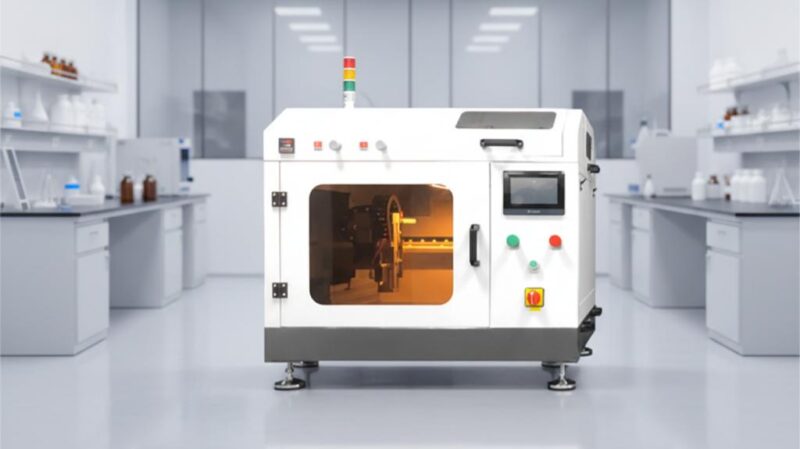
Ultrasonic spraying can be used in the above applications:
Proton Exchange Membrane Electrolysis (PEM)
This is the most core and mature application of ultrasonic spraying. The membrane electrode assembly (MEA) in this route relies on precious metal catalysts. Ultrasonic spraying can achieve ultra-thin and uniform coating of the catalyst layer, significantly improving catalyst utilization, reducing platinum/iridium usage, and directly lowering equipment costs. It is also a key process for optimizing PEM electrolyzer performance in the industry.
Alkaline Electrolysis (ALK)
Also applicable. Catalytic coatings can be prepared on the electrode surface, optimizing coating uniformity and improving electrolysis efficiency. When combined with novel environmentally friendly membrane solutions, it can also assist in the processing of functional coatings, further improving the overall performance of the equipment.
Anion Exchange Membrane Electrolysis (AEM)
Good adaptability. This technology currently focuses on optimizing the electrode structure and catalytic system. Ultrasonic spraying can accurately prepare multi-layered, thin catalytic coatings, adapting to the coating requirements of non-precious metal catalysts and helping to solve problems such as insufficient electrode kinetics. It is a commonly used process in the R&D and small-batch pilot production stages.
Solid oxide electrolysis (SOEC)
can also be used. For its ceramic-based electrodes, it allows for the fine spraying of functional and catalytic coatings, meeting the coating preparation requirements under high-temperature conditions, and is primarily used in laboratory research and development and sample preparation.
In summary, all four mainstream water electrolysis hydrogen production technologies can utilize ultrasonic spraying processes, with PEM electrolysis showing the highest level of industrialization and the most prominent application value.
About Cheersonic
Cheersonic is the leading developer and manufacturer of ultrasonic coating systems for applying precise, thin film coatings to protect, strengthen or smooth surfaces on parts and components for the microelectronics/electronics, alternative energy, medical and industrial markets, including specialized glass applications in construction and automotive.
Our coating solutions are environmentally-friendly, efficient and highly reliable, and enable dramatic reductions in overspray, savings in raw material, water and energy usage and provide improved process repeatability, transfer efficiency, high uniformity and reduced emissions.
Chinese Website: Cheersonic Provides Professional Coating Solutions
