Factors of AEM electrolysis of water in pure water environment
The prominent weakness of the anion exchange membrane electrolysis water system (AEMWE) fed with pure water is its low durability. Multiple experimental data have confirmed this characteristic: under a current density of 200 mA/cm ² and room temperature conditions, a system using spinel ferrite catalyst can increase the battery voltage from 1.6 V to 1.75 V in just 3 hours, although the rotating disk electrode (RDE) test shows that the oxygen evolution reaction (OER) activity of the catalyst can be stably maintained for 4100 hours; At a working condition of 200 mA/cm ² and 50 ℃, the system voltage catalyzed by iridium oxide surged from 1.75 V to 2.3 V within 35 hours, and after failure, it was found that the piperidine functionalized anion exchange membrane (AEM) did not show obvious degradation traces.
It is worth noting that under pure water supply conditions, there is no additional liquid electrolyte involved, and the corrosiveness of the system is significantly reduced. This means that the alkaline stability of MEA (membrane electrode assembly) is not a durability bottleneck. In depth research has shown that the ion membrane related issues caused by high operating voltage and high current density are the core sticking points that constrain the system’s lifespan. This article will focus on two key limiting factors – the detachment of ion membranes from catalyst surfaces and the poisoning of ionomers, and analyze their accelerated degradation mechanisms and mitigation pathways under harsh working conditions.
Ionic membrane detachment from catalyst surface: failure mechanism of interfacial stability
The failure of the binding between the ion membrane and the catalyst surface is the primary cause of AEMWE performance degradation. The ion exchange capacity (IEC, a core indicator for measuring the ion exchange capacity of ion exchange membranes) and operating temperature are key variables that affect this process. A certain study selected high IEC quaternized polystyrene ionomer to enhance system performance. Among them, TMA-70 ionomer (IEC=3.3 mequiv/g) can achieve a high current density of 2.4 A/cm ² under 2.0 V and 85 ℃ conditions. However, catalyst particle loss was detected at both the anode and cathode outlets during continuous operation, proving that high IEC ion membranes cannot stably anchor catalysts, resulting in a system lifespan of only 7 hours.
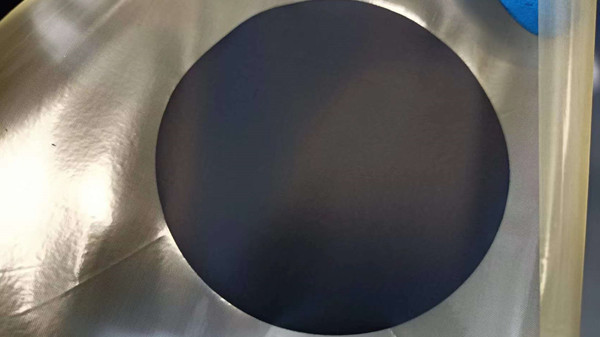
The effect of temperature on interface adhesion is also significant: reducing the working temperature to 60 ℃ increases the bonding strength of the ion membrane and prolongs the system durability to 12 hours; If low IEC TMA-53 ionomer (IEC=2.6 mequiv/g) is further selected, at 60 ℃, although the initial voltage increases by about 200 mV, the lifespan suddenly increases to 4100 hours and the degradation rate is significantly reduced – this clearly reveals the trade-off between AEMWE performance and durability.
The essential reason for the easy detachment of high IEC ionomers is closely related to their water absorption characteristics. High IEC means a high density of ionic groups and high water absorption in the hydrated state, leading to drastic changes in the size of the ionomer and directly weakening its adhesion on the catalyst surface. The pure water supply condition will exacerbate this problem: compared to traditional electrolyte systems, the catalyst electrolyte interface area in pure water environment is smaller, and gas release is more uneven under the same current density; At the same time, the gas permeability of alkyl quaternized ion membranes is much lower than that of KOH solutions. The gas generated during high current operation is difficult to quickly detach from the interface, and the mechanical force generated by bubble accumulation further destroys the binding between the ion membrane and the catalyst. Compared with proton exchange membrane electrolysis water system (PEMWE), the low permeability and high swelling of the hydrocarbon based membrane in AEMWE make it more prone to bubble induced ion membrane detachment. The experimental data confirms this rule: the system voltage remains stable for 100 hours at 100 mA/cm ², while it fails after only 40 hours at 300 mA/cm ²; The pure water AEMWE catalyzed by nickel iron hydroxide also showed the same trend.
Core strategy for alleviating ion membrane detachment
The current mitigation path revolves around “improving the stability of interface integration”, mainly including three technical directions:
– Optimizing operating parameters and selecting ionomers: Using low IEC ionomers and reducing operating temperatures is the most direct approach, but it comes at the cost of decreased performance – although low IEC increases binding strength, it reduces ion conductivity efficiency and leads to an increase in initial voltage.
– Developing new types of ionomer materials: The goal is to prepare balanced materials with “high IEC low water absorption”, with key synthesis strategies including introducing multi cationic groups, constructing polar interaction networks, and cross-linking structures. This type of material can suppress swelling while ensuring ion conductivity, but there are three major challenges: low water absorption may reduce conductivity and affect hydrogen production rate; Multi cationic groups may reduce chemical stability; The synthesis process is complex and costly.
– Strengthen interface structure design: The use of non-aqueous dispersants can increase the degree of chain entanglement of ionic polymers, improve the adhesion and mechanical strength of the membrane, and optimize the distribution of the ionic membrane in the electrode, making gas release more uniform; Reducing the size of catalyst nanoparticles can also make the gas evolution reaction distribution more dispersed and reduce local bubble impact.
Ionizing polymer poisoning: electrochemical oxidation damage on the catalyst surface
The electrochemical oxidation of phenyl groups in ion exchange membranes under OER potential is another core durability bottleneck of pure water AEMWE. The particularity of this process lies in the fact that although the AEMWE anode is prone to carbon corrosion due to its high OER potential and does not contain carbon components, the ionic polymer is difficult to completely remove the phenyl groups, which can contaminate the catalyst surface through electrochemical oxidation and lead to a decrease in activity.
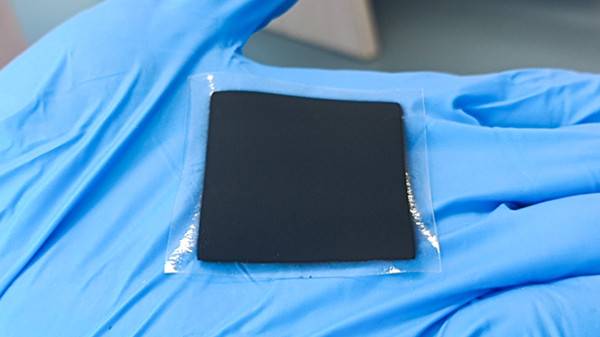
The mechanism of phenyl poisoning can be divided into three steps: firstly, the phenyl group in the ionomer tightly adsorbs onto the catalyst surface through the strong interaction between aromatic π electrons and the electron cloud of the catalyst metal atom – studies have shown that the adsorption energy of phenyl fragments in the ionic polymer skeleton on the platinum surface is even higher than that of pure benzene; Secondly, the adsorbed phenyl groups are oxidized to phenolic compounds at high potentials. Unlike carbon corrosion, which ultimately generates CO ₂, 1,4-substituted phenyl groups are difficult to completely oxidize and often remain in the form of phenols, 2-phenylphenols (pKa=9.6), 2,2 ‘- diphenols (pKa=7.6), and other compounds; Finally, the generated phenolic proton is deprotonated by the hydroxide ion of the quaternary ammonium group and stably exists in an alkaline medium, continuously occupying the active site of the catalyst.
The operating characteristics of AEMWE make its poisoning risk much higher than that of anion exchange membrane fuel cells (AEMFC): the anode working voltage of AEMWE is 1.4-2.2 V, while the cathode of AEMFC is only 0.6-1.0 V, and the higher potential significantly accelerates phenyl oxidation. Experimental results have shown that phenol compounds in benzyl trimethylammonium hydroxide (BTMAOH) solution undergo significant adsorption oxidation upon contact with iridium oxide catalyst at 2.1 V (vs RHE) for 100 hours; Even at oxygen reduction potentials above 0.6 V, phenyl oxidation occurs, which has adverse effects on the lifespan of AEMFC.
The adsorption energy of phenyl groups on the catalyst surface is the key factor determining the poisoning rate. Density functional theory (DFT) calculations show that the adsorption energy of BTMAOH phenyl groups parallel to the iridium oxide surface at 1.6 V is 1.2-2.2 eV, significantly higher than that of La ₀ ₈₅Sr₀. ₁₅ CoO3 perovskite catalyst; RDE testing further confirms that the oxidation rate of phenyl groups on the surface of iridium oxide is about three times that of perovskite. The durability difference of the corresponding system is extremely obvious: the voltage of AEMWE catalyzed by iridium oxide increases from 1.7 V to 2.1 V within 5 hours, while the voltage of perovskite catalytic system stabilizes at around 1.8 V within 100 hours.
Technical pathway for inhibiting ionomer poisoning
The core idea for alleviating benzene poisoning is to reduce the adsorption of benzene from the dual dimensions of “catalyst polymer”, including the following directions:
– Choose OER catalysts with low benzene adsorption energy: transition metals (platinum, palladium, iridium) have higher benzene adsorption energy, while alloy catalysts can reduce adsorption energy by adjusting the electronic structure of the d-band center – for example, the adsorption energy of BTMA group phenyl on Pt surface is -2.30 eV, and on Pt Ru alloy surface it drops to -1.30 eV; perovskite catalysts have the lowest benzene adsorption energy due to their surface characteristics, making them ideal for long-term operation, and their pH dependence is low, making them suitable for pure water conditions.
– Developing low adsorption energy polymer electrolytes: The polymer structure directly affects the benzene adsorption capacity. The benzene adsorption energy of quaternized polyolefins is lower than that of quaternized polyaromatic hydrocarbons, and the adsorption energy of non rotating phenyl groups (such as fluorene and carbazole) is lower than that of rotating phenyl groups (such as biphenyl). The three sets of MEA comparative experiments intuitively demonstrate this rule: using HTMA-DAPP containing biphenyl/triphenylene units as the AEM and ionomer system, the performance drops sharply within 5 hours; Using benzene free SES-TMA AEM combined with HTMA-DAPP ionomer, the performance slowly deteriorates within 80 hours; The combination of SES-TMA AEM and FLN55 ionomer containing fluorene structure (non rotatable phenyl group) maintained stable performance within 80 hours.
Summary and Challenge
The two major durability limiting factors of pure water AEMWE are directly related to the ionic binder: insufficient interfacial bonding force leading to the detachment of the ion membrane, benzene oxidation causing catalyst poisoning, and both pathways jointly accelerating system degradation. In addition, side reactions such as hydrogenation of ion membrane fragments and cation hydroxide water co adsorption can also lead to deactivation of hydrogen evolution reaction (HER) catalysts. Although the latter has not been fully studied at the single-cell level, the hydrogenation of benzene compounds on precious metal catalysts has been confirmed. High concentrations of hydroxide ions can also reduce the surface water supply of the catalyst, further affecting its activity.
The trade-off between performance and durability is currently the core contradiction: low IEC, low temperature and other means of improving durability will sacrifice output performance, while high activity catalysts and high IEC ionomers are prone to poisoning and detachment problems. How to break through this trade-off and achieve synergy between high activity and long lifespan is a key technological challenge for the commercialization of pure water AEMWE.
Analysis of AEMWE electrode technology prepared by ultrasonic spraying
Ultrasonic spraying technology, with its unique advantages, has become a key means of preparing alkaline anion exchange membrane water electrolysis (AEMWE) electrodes. The core principle is to atomize the electrode slurry into micrometer sized droplets through ultrasonic vibration, accurately deposit them on the surface of the membrane or current collector, and form a uniform and dense electrode coating.
Compared with traditional spraying, this technology has a narrow droplet size distribution (usually 5-50 μ m), which can effectively avoid particle agglomeration, evenly disperse catalysts (such as IrO ₂, NiFe based materials), and improve the exposure rate of active sites. At the same time, ultrasonic spraying has a low pressure (0.01-0.1MPa), which can reduce damage to the membrane material, and the coating thickness is controllable (1-100 μ m), suitable for different AEMWE structure requirements.
In process optimization, the core parameters are slurry viscosity (5-50mPa · s), spraying rate (5-20mL/h), and ultrasonic frequency (20-120kHz). Reasonable regulation can construct a porous electrode structure, promote electrolyte infiltration and gas escape, and reduce mass transfer resistance. The experiment shows that the electrode prepared by this technology can increase the current density of AEMWE by more than 30% at 1.8V, significantly enhancing the electrolysis performance and stability.
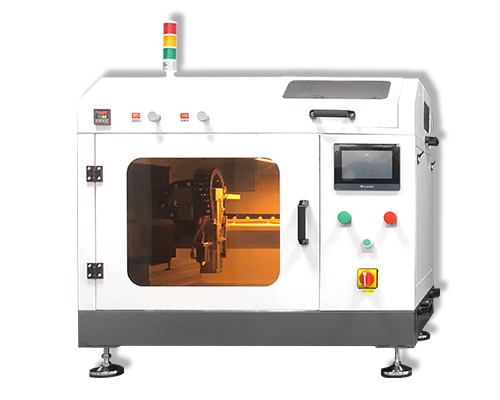
About Cheersonic
Cheersonic is the leading developer and manufacturer of ultrasonic coating systems for applying precise, thin film coatings to protect, strengthen or smooth surfaces on parts and components for the microelectronics/electronics, alternative energy, medical and industrial markets, including specialized glass applications in construction and automotive.
Our coating solutions are environmentally-friendly, efficient and highly reliable, and enable dramatic reductions in overspray, savings in raw material, water and energy usage and provide improved process repeatability, transfer efficiency, high uniformity and reduced emissions.
Chinese Website: Cheersonic Provides Professional Coating Solutions
