
Fabrication of Iridium and Ru-Ir-Ti Anodes by Ultrasonic Spraying
Research and Application of Iridium-Based and Ru-Ir-Ti Anodes Fabricated via Ultrasonic Spraying Technology
In the electrochemical industry, the performance of anode materials directly governs electrolysis efficiency, energy consumption and service life of equipment. Driven by continuous advances in coating fabrication technologies in recent years, ultrasonic spraying has evolved into a pivotal manufacturing process for high-performance iridium-based and ruthenium-iridium-titanium anodes owing to its inherent technical merits. Centered on this technology, this paper elaborates on its working principles, material properties and practical application values.
1. Overview of Ultrasonic Spraying Technology
Ultrasonic spraying is a coating fabrication technique that converts precursor solutions into micron-sized droplets using high-frequency acoustic energy and deposits such droplets uniformly onto substrate surfaces. Unlike conventional pneumatic spraying, the ultrasonic atomization process requires no pressurized carrier gas, delivers droplets with narrow particle size distribution and low kinetic energy, effectively eliminating material splashing and rebound. It is particularly suitable for manufacturing thin electrode coatings with controllable thickness and homogeneous morphology.
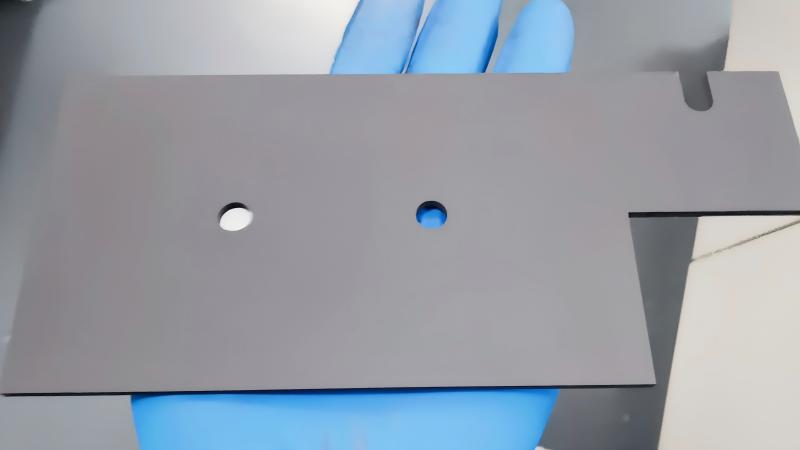
For titanium-based anodes, commercially pure titanium or titanium alloys are commonly adopted as substrates, which undergo acid etching or sandblasting pretreatment to enlarge specific surface area and form mechanical anchoring sites. Precursor solutions containing iridium, ruthenium, titanium and other metallic constituents (including chlorides, nitrates and organic coordination complexes) are delivered via ultrasonic nozzles onto titanium plates to form continuous wet liquid films. Subsequent thermal decomposition and oxidation convert metallic salts into corresponding oxide or mixed oxide coatings, yielding electrocatalytically active finished anodes.
2. Material Properties of Iridium-Based and Ru-Ir-Ti Anodes
2.1 Iridium-Based Anodes
Pure iridium oxide coatings as well as composite systems such as Ir-Ta and Ir-Sn are renowned for outstanding oxygen evolution electrocatalysis and superior corrosion resistance. Deployed in acidic electrolytic environments represented by sulfuric acid media, iridium-based anodes feature ultra-low oxygen evolution overpotential and exceptional structural stability, tolerating long-term high-current-density operation without obvious material dissolution. Their prominent electrochemical stability originates from dense, low-defect surface layers generated by iridium oxides under anodic polarization, which effectively passivate titanium substrates and restrain substrate corrosion.
2.2 Ruthenium-Iridium-Titanium Anodes
Ternary Ru-Ir-Ti composites serve as classic functional materials for chlorine evolution reactions and chlorate electrolysis. Ruthenium oxide boasts remarkable catalytic activity toward chlorine evolution yet suffers from insufficient standalone anticorrosion capability; iridium doping drastically improves coating chemical stability and anti-deactivation performance; titanium oxide addition optimizes coating microstructure, expands specific surface area and curtails raw material costs. Benefiting from the synergistic effect of three constituent oxides, Ru-Ir-Ti anodes deliver comprehensive superior performance across chlor-alkali production, on-site chlorine generation from seawater electrolysis and sodium hypochlorite synthesis.
3. Technical Advantages of Ultrasonic Spraying for Anode Coating Fabrication
Compared with traditional brushing, dip coating and atmospheric plasma spraying, ultrasonic spraying displays prominent strengths in preparing the aforesaid anode coatings:
- Superior coating uniformity: Ultrasonically atomized droplets range from 20 μm to 50 μm with controllable flight paths, forming wet coatings with thickness deviation below ±5% on large-format titanium substrates, avoiding stripe unevenness from brushing or edge over-deposition inherent to dip coating.
- Elevated noble metal utilization: Conventional manual coating wastes 20%~30% of precursor solution, while ultrasonic spraying achieves feedstock transfer efficiency exceeding 95%, cutting substantial production costs for high-cost precious metals including iridium and ruthenium.
- Tunable coating microstructure: Coating grain size, porosity and crack configuration can be precisely tailored by regulating spraying parameters (atomization power, carrier gas flow rate, substrate temperature) and thermal treatment schedules. Relevant researches verify ultrasonically deposited iridium-based coatings feature stacked nanoparticle architectures with ultra-large specific surface area and far denser electrochemically active sites than counterparts made via conventional processes.
- Excellent repeatability for mass industrialization: Automated ultrasonic spraying equipment enables nonstop 24-hour stable production with coating areal density fluctuation under 2%, well compatible with large-scale batch manufacturing.
4. Application Scenarios and Practical Operational Outcomes
Leveraging the aforementioned material and processing superiorities, ultrasonically coated iridium-based and Ru-Ir-Ti anodes have been widely industrialized in multiple sectors:
- Proton exchange membrane water electrolysis for green hydrogen production: Iridium-based oxygen-evolution anodes fabricated by ultrasonic spraying realize complete coating coverage on curved or microporous titanium substrates, lowering cell voltage and extending equipment maintenance intervals.
- Chlor-alkali industry: Replacing traditional graphite and lead dioxide anodes with Ru-Ir-Ti alternatives lifts current efficiency by 5%~8% and enhances chlorine purity, with service lifespan of coated anodes exceeding 8 years; ultrasonic spraying thoroughly solves inconsistent coating distribution on large-scale plate-type anodes.
- Wastewater remediation and electrochemical synthesis: Ir-Ta anodes deliver robust electro-oxidation capacity for industrial wastewater laden with organic pollutants and ammonia nitrogen, whereas Ru-Ir-Ti counterparts fit on-site sodium hypochlorite generating devices. Ultrasonic spraying guarantees steady catalytic performance of anodes coated on complex substrates such as mesh and porous panels.
- Cathodic protection and marine antifouling: Ru-Ir-Ti auxiliary anodes produced via ultrasonic spraying sustain stable long-term current output under high-chloride marine environments to mitigate corrosion of ship hulls and underwater pipelines in ocean engineering projects.
5. Future Technology Outlook
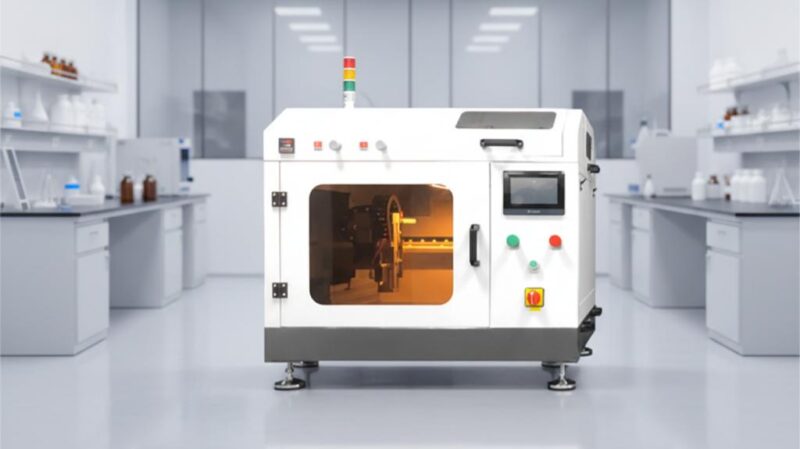
Despite the proven great application potential of ultrasonic spraying, further technological advancements can be implemented in the following directions: developing eco-friendly water-soluble precursor formulas to mitigate volatile organic solvent emissions; introducing machine learning to streamline parameter optimization and accelerate coating formulation screening; developing hybrid processes combined with atomic layer deposition and pulsed laser deposition to fabricate gradient or multi-layer composite coating structures. Driven by surging market demands from hydrogen production and high-end electrochemical equipment industries, ultrasonically manufactured high-performance iridium-based and Ru-Ir-Ti anodes are poised to capture broader application markets.
Conclusion
Ultrasonic spraying provides an efficient, cost-effective and environmentally friendly precision manufacturing route for iridium-based and Ru-Ir-Ti anode production. This processing technology not only maximizes the inherent electrocatalytic potential of precious metal materials, but also propels the electrochemical industry toward low energy consumption, prolonged service life and consistent product quality.
About Cheersonic
Cheersonic is the leading developer and manufacturer of ultrasonic coating systems for applying precise, thin film coatings to protect, strengthen or smooth surfaces on parts and components for the microelectronics/electronics, alternative energy, medical and industrial markets, including specialized glass applications in construction and automotive.
Our coating solutions are environmentally-friendly, efficient and highly reliable, and enable dramatic reductions in overspray, savings in raw material, water and energy usage and provide improved process repeatability, transfer efficiency, high uniformity and reduced emissions.
Chinese Website: Cheersonic Provides Professional Coating Solutions