Electrolyzer Technology Analysis
Electrolyzer Technology Analysis: Comparison of 3 Mainstream Green Hydrogen Production Solutions
Basic Working Principle of Water Electrolyzers
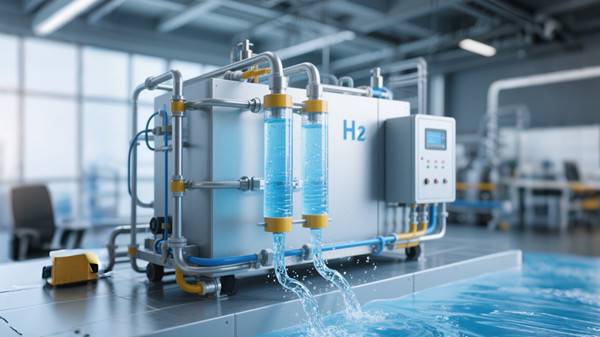
A water electrolyzer is the core equipment for green hydrogen production, which decomposes water into high-purity hydrogen and oxygen through DC power electrolysis. The core system of a standard electrolyzer consists of three key components: electrodes, diaphragms, and electrolyte circulation systems.
As the critical device for renewable energy hydrogen production matched with wind and solar energy storage systems, modern electrolyzers are designed to meet industry core demands including ultra-high-purity hydrogen output, low energy consumption, easy daily maintenance, and long service life. It is widely applied in large-scale renewable energy power storage, industrial hydrogen supply, and new energy green manufacturing scenarios.
Detailed Analysis of Three Mainstream Electrolyzer Technology Routes
1. Alkaline Electrolyzer (ALK) – Mature & Low-Cost Industrial Hydrogen Production Technology
Working Mechanism
The alkaline electrolyzer adopts high-concentration alkaline solutions such as KOH or NaOH as the conductive electrolyte to drive water splitting reactions. The complete electrolysis cycle is realized through the directional migration of hydroxide ions inside the diaphragm.
Cathode reaction: 4H₂O + 4e⁻ → 2H₂↑ + 4OH⁻
Anode reaction: 4OH⁻ → O₂↑ + 2H₂O + 4e⁻
Core Components & Functional Characteristics
Electrode: Adopts nickel-based materials, accounting for 28% of the total electrolyzer cost. It directly determines the current density and overall electrolysis efficiency of the equipment, being the key functional component affecting hydrogen production capacity.
Diaphragm: Professional anti-corrosion isolation material, which effectively prevents gas penetration and mixing, and maintains stable operation in long-term alkaline liquid environments.
Sealing Gasket: Made of special rubber and other insulating and corrosion-resistant materials, ensuring the air tightness of the electrolysis system and avoiding gas leakage risks.
Technical Advantages & Application Scenarios
ALK alkaline electrolyzer features ultra-high technical maturity, stable operation, and low overall equipment and maintenance costs. It is the most mainstream solution for large-scale, centralized industrial green hydrogen production projects at present.
2. Proton Exchange Membrane Electrolyzer (PEM) – High-Efficiency Dynamic Hydrogen Production Technology
Structural Features
The PEM electrolyzer adopts a modular stacked structure of single electrolytic cells. The core component is the membrane electrode assembly (MEA), composed of proton exchange membrane and catalytic layers, matched with gas diffusion layers and conductive bipolar plates to form a complete electrolysis unit.
Electrolysis Reaction Principle
Different from alkaline electrolyzers, PEM technology relies on directional proton penetration and conduction to complete water splitting, adapting to efficient dynamic power supply conditions.
Anode reaction: H₂O → 2H⁺ + ½O₂↑ + 2e⁻
Cathode reaction: 2H⁺ + 2e⁻ → H₂↑
Key Material & Process Innovation
Catalytic Layer: Uses platinum-iridium based precious metal catalysts with strong acid corrosion resistance to ensure efficient and continuous electrolysis reaction.
Preparation Process: Ultrasonic spraying technology is applied to precisely control the thickness of the catalytic layer, significantly improving the utilization rate of active substances and reducing catalytic loss.
Bipolar Plate: Adopts titanium-based composite materials, integrating gas-liquid separation and high-efficiency conductive functions to optimize system operation efficiency.
Technical Advantages & Application Scenarios
The PEM electrolyzer has fast dynamic response speed and high energy conversion efficiency (70%-77%). It can adapt to the fluctuating power characteristics of wind power and photovoltaic power generation, and is very suitable for distributed and dynamic renewable energy hydrogen production scenarios.
3. Solid Oxide Electrolyzer (SOEC) – Ultra-High Efficiency Next-Generation Hydrogen Production Technology
High-Temperature Electrolysis Working Principle
SOEC is a cutting-edge high-temperature electrolysis technology with an operating temperature range of 700-1000℃. It relies on high-temperature steam electrolysis and directional migration of oxygen ions in ceramic electrolytes to realize water splitting and hydrogen production.
Cathode reaction: 2H₂O + 4e⁻ → 2H₂↑ + 2O²⁻
Anode reaction: 2O²⁻ → O₂↑ + 4e⁻
System Integration Design
Waste Heat Recovery System: Recycles high-temperature outlet gas heat to preheat inlet water and steam, effectively reducing overall system energy consumption.
Steam Treatment Module: Adopts superheated steam to participate in electrolysis reactions, further improving electrolysis efficiency and hydrogen production purity.
Technical Potential & Development Challenges
SOEC currently has the highest theoretical energy conversion efficiency in the industry (90%-100%), with extremely low comprehensive energy consumption for hydrogen production. The core development challenge lies in breaking through the high-temperature stability and attenuation resistance of ceramic materials to realize large-scale commercial application.
Future Development Trends of Electrolyzer Hydrogen Production Technology
ALK Alkaline Electrolyzer Upgrade: The industry focuses on optimizing diaphragm material performance, reducing electrolysis power consumption, and maintaining cost advantages while improving overall system efficiency, consolidating its advantages in large-scale industrial hydrogen production.
PEM Electrolyzer Cost Breakthrough: Relying on innovative processes such as ultrasonic spraying, the dosage of precious metal catalysts is reduced, breaking the high-cost bottleneck of PEM equipment, and promoting its large-scale popularization in new energy hydrogen production.
SOEC Next-Generation Technology Iteration: Focus on developing high-temperature anti-attenuation ceramic electrolyte materials, optimizing waste heat integrated utilization systems, and accelerating the commercial landing of ultra-high-efficiency hydrogen production technology.
Ultrasonic Coating Technologies for Electrolyzers
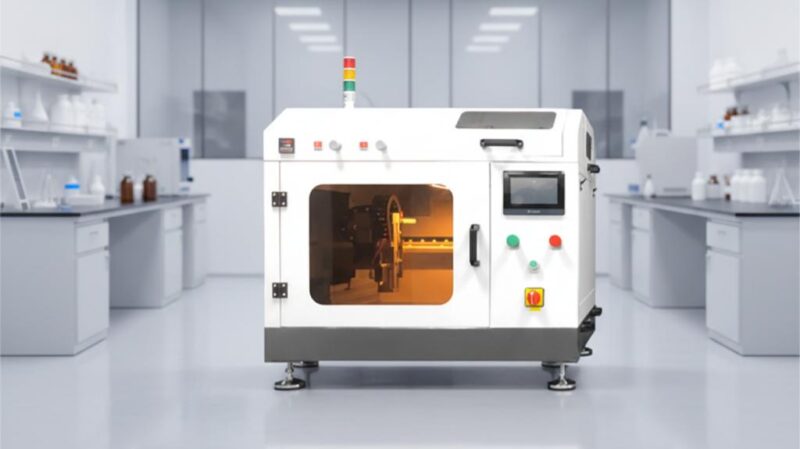
Cheersonic ultrasonic spray platforms deliver high-quality catalyst coatings and thin film layers for advanced electrolyzer manufacturing. Our ultrasonic coating systems apply controlled coating solutions onto electrolyzer substrates including electrodes, proton exchange membranes, gas diffusion layers (GDL), and other MEA-related components. With precise nozzle control and programmable flow rate, ultrasonic spray enables repeatable catalyst deposition using a catalyst deposition machine designed for material science-driven electrochemical performance in both bench top development and high-volume PEM electrolyzer production.
About Cheersonic
Cheersonic is the leading developer and manufacturer of ultrasonic coating systems for applying precise, thin film coatings to protect, strengthen or smooth surfaces on parts and components for the microelectronics/electronics, alternative energy, medical and industrial markets, including specialized glass applications in construction and automotive.
Our coating solutions are environmentally-friendly, efficient and highly reliable, and enable dramatic reductions in overspray, savings in raw material, water and energy usage and provide improved process repeatability, transfer efficiency, high uniformity and reduced emissions.
Chinese Website: Cheersonic Provides Professional Coating Solutions
