
Diaphragm for Hydrogen Production From Electrolytic Water
Diaphragm for Hydrogen Production From Electrolytic Water – Cheersonic
Key material for hydrogen production from electrolytic water: diaphragm
In the alkaline electrolytic cell, the cathode produces H2 and the anode produces O2. If they are not separated, H2 and O2 will be mixed. This will not only fail to produce H2, but also bring potential safety hazards. This requires the strict separation of H2 and O2 with a diaphragm.
The quality of diaphragm is directly related to the purity of H2 and O2 and power consumption. Therefore, diaphragm has become a research hotspot.
1. Working principle of diaphragm
From the above analysis, we can get two main functions of the diaphragm in the alkaline water electrolysis hydrogen production cell:
(1) Allow free movement of ions in the circuit within the cell. In the internal circuit, potassium ion and hydroxide exist in solution. Therefore, the compatibility between the membrane and electrolyte (hydrophilic property of the membrane, ionic conductivity) greatly affects the internal resistance of the electrolytic cell. On the other hand, the stronger the hydrophobicity of the diaphragm, the hydrogen and oxygen generated by the cathode and anode will gather on both sides of the diaphragm, which is not only bad for ion transmission, but also reduces the purity of the gas at the outlet of the chamber.
(2) Isolate hydrogen and oxygen generated by the electro catalytic process. The diaphragm separates the cathode chamber from the anode chamber and flows out of the electrolytic cell through their respective flow channels to realize the separation of hydrogen and oxygen. Therefore, the airtightness of the diaphragm is very important, which has a great impact on the purity of the outlet gas; At the same time, due to the fluctuation of the differential pressure between cathode and anode during operation, the airtightness of the diaphragm also greatly affects the safe operation of the electrolytic cell.
Of course, the diaphragm also needs to have certain chemical stability and physical stability to meet the requirements during assembly and operation.
2. Development status of diaphragm
In the early days, asbestos was used as a membrane material, but its swelling in alkaline electrolyte and its harm to human body made it gradually eliminated.
At present, the membrane widely used in the industry is a new composite membrane based on polyphenylene sulfide (PPS) fabric. Among them, PPS fabric as a substrate can provide a certain physical support, and PPS fabric has excellent heat resistance, high mechanical strength, and excellent electrical properties. However, the hydrophilicity of PPS fabric is too weak. If only PPS fabric is used as the diaphragm, the internal resistance of the electrolytic cell will be too large. Therefore, it is necessary to modify PPS fabric to enhance its hydrophilicity.
At present, there are two main methods for modifying PPS fabric:
One is to chemically treat PPS and branch hydrophilic functional groups (- SO3H, – C=O, etc.) on the molecular chain of polyphenylene sulfide. However, in the subsequent application process, it is found that the functional groups of the branches are not stable and the durability of the membrane is not good enough. This method is gradually eliminated from the market.
Another method is to coat the surface of PPS fabric with functional coating to improve its hydrophilicity, forming a composite membrane similar to sandwich structure, which is also the mainstream product in the current market.
3. Structure and Performance of Composite Diaphragm
Exploring the relationship between the structure and performance of the diaphragm is crucial for us to understand the reason for the high performance of the composite diaphragm and the subsequent improvement of the composite diaphragm. So let’s go deep into the structure of the composite diaphragm.
From a macro perspective, the composite diaphragm is composed of coating slurry on both sides of the PPS substrate. Take Agfa’s ZIRFON product as an example, the surface coating slurry contains zirconia and polymers, among which zirconia and other inorganic oxide nanoparticles are the main substances to improve its hydrophilicity. The mechanism for improving its hydrophilicity may be that oxygen ions in zirconia form hydrogen bonds with water in the electrolyte. Therefore, the main purpose of surface coating is to improve the hydrophilicity of the membrane, improve the compatibility of the membrane and electrolyte, and reduce the internal resistance of the electrolytic cell. At the same time, due to the direct interaction between the surface slurry and PPS, the composite membrane will generally show higher physical stability than the PPS substrate.
From the microscopic point of view, the composite membrane has a very important feature – porous. The role of the pore is to provide a transmission channel for the anion and cation in the electrolyte, reduce the internal resistance of the cell and isolate hydrogen and oxygen at the same time, so the size (pore size) and number (porosity) of the pore are crucial. If the pore diameter is too large, the airtightness of the diaphragm will be affected, and if the pore diameter is too small, the ion transmission will be hindered. The same is true for the porosity. Therefore, it is very important to effectively design and control the pores. The pore diameter and porosity of the diaphragm should reach an optimal value to ensure the high air tightness and low internal resistance of the diaphragm. Therefore, the optimization of pore structure may be the focus of diaphragm research.
For the composite diaphragm, the thickness is also an important parameter. The thickness affects the physical strength of the diaphragm and the internal resistance of the electrolytic cell. At present, the thickness of the commercially available diaphragm is about 500 um.
Cheersonic ultrasonic coating systems are used in a number of electrolysis coating applications. The high uniformity of catalyst layers and even dispersion of suspended particles results in very high efficiency electrolyzer coatings, either single or double sided.
In hydrogen fuel cell production, PEM electrolyzer coating systems are ideal for spraying carbon-based catalyst inks onto electrolyte membranes. These systems are fully automated, capable of dual side coating, and enable different catalyst formulations to be applied to each side of the membrane. Durability and repeatability of the coating are proven superior to other coating methods, often providing higher efficiencies with extended lifetimes of the coated PEM.
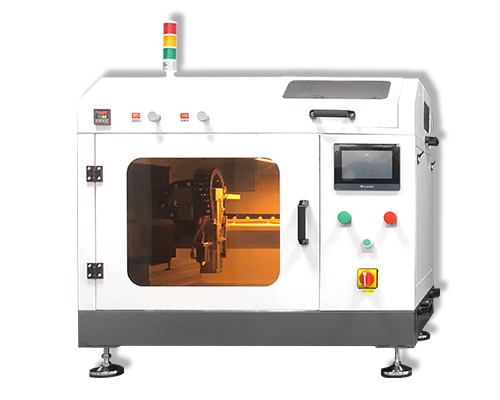
Our coating solutions are environmentally-friendly, efficient and highly reliable, and enable dramatic reductions in overspray, savings in raw material, water and energy usage and provide improved process repeatability, transfer efficiency, high uniformity and reduced emissions.