Ceramic Separator Coating Thickness Effect on Lithium Battery Performance
Ceramic separator is the core component that ensures the high safety of lithium batteries, and its core function comes from the ceramic coating on the surface of the base film, which is usually composed of inorganic particles such as alumina (Al ₂ O3) and boehmite. The current mainstream ceramic coating thickness in the industry is concentrated in the range of 1-6 μ m. Although there may seem to be slight differences in thickness, they are actually directional control of multiple physical and chemical processes inside the battery.
Thermal stability control
Improving the thermal stability of the diaphragm is one of the core functions of the ceramic layer. The thickness of the ceramic layer achieves a balance between the thermal closed cell response and thermal shrinkage suppression of the base film by adjusting the “thermal capacity” and “structural support force”, which together determine the thermal runaway protection capability of the battery.
From the analysis of thermal inertness characteristics, the ceramic layer is composed of inorganic particles (with alumina melting point of about 2050 ℃), and its thermal stability is much better than that of the base film material – polyethylene (PE) melting point of about 135 ℃ and polypropylene (PP) melting point of about 160 ℃. As the thickness of the ceramic layer increases, the overall thermal capacity of the diaphragm also increases. From the perspective of its mechanism of action, the thermal conductivity efficiency of ceramic particles is lower than that of base film polymer materials. A thicker ceramic layer can construct a “thermal resistance barrier” to slow down the rapid conduction of external heat to the base film and avoid premature melting of the base film due to local overheating.
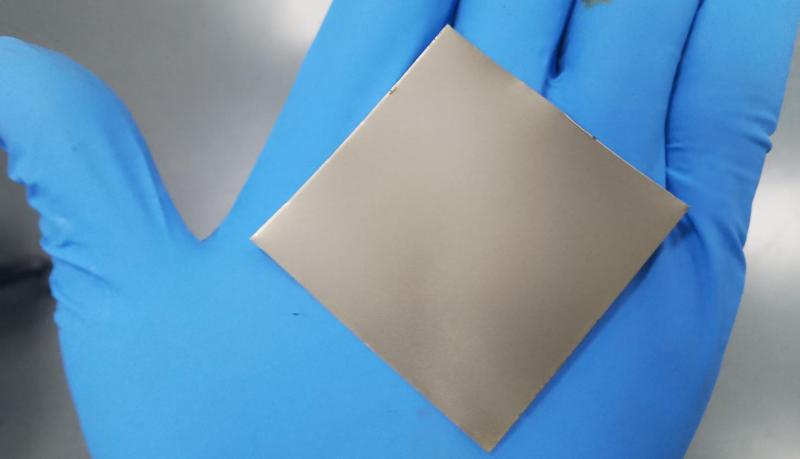
The thicker the ceramic layer, the more significant the support effect: on the one hand, thicker coatings cover the base film more comprehensively, reducing the shrinkage of “uncovered areas”; On the other hand, with more layers of particle accumulation, the rigid network formed is denser and can withstand greater thermal shrinkage stress.
Security performance enhancement
The ceramic layer is equivalent to the “reinforced skeleton” of the mechanical strength of the diaphragm. By increasing the thickness, the ceramic layer can enhance the puncture resistance and tensile resistance of the diaphragm, thereby resisting the mechanical impact during battery cycling and avoiding micro short circuits caused by the rupture of the base film.
The “stress dispersion” effect of ceramic layers is the key reason for improving puncture resistance. Sharp foreign objects such as burrs on the polarizer and active substance particles are prone to puncture the diaphragm during circulation, while the rigid particles in the ceramic layer can disperse the puncture force to a larger area; When the thickness of the ceramic layer increases, its “buffer zone” will expand, and the puncture force needs to break through more particle barriers to contact the basement membrane, significantly reducing the probability of the basement membrane being pierced. From a mechanistic perspective, the hardness of ceramic particles is much higher than that of the base film. The “multi-layer particle protective barrier” constructed by thicker coatings can dissipate puncture energy through compression and friction between particles, greatly reducing the force transmitted to the base film.
Ion transport efficiency balance
The ceramic layer itself does not participate in ion transport, but its thickness can have a double-edged sword effect on ion transport efficiency by changing the “ion migration path” and “electrolyte infiltration state”. It is necessary to find a balance between transport resistance and infiltration effect.
From the perspective of ion migration resistance, the particle gaps in the ceramic layer are the main channels for ion transport. Increasing the thickness will make the ion migration path longer – lithium ions need to pass through more particle gaps to reach the base film, which directly causes an increase in ohmic impedance.
From the perspective of electrolyte infiltration effect, the hydrophilicity of the ceramic layer (such as hydroxyl OH on the surface of alumina) can optimize the contact state between the electrolyte and the separator. As the thickness increases, the hydrophilic area expands, and the infiltration speed and depth of the electrolyte accelerate. This’ infiltration optimization ‘can partially offset the impact of increased ion migration resistance.
Interface stability guarantee
The long-term stability of the diaphragm electrode interface is the key to determining the battery cycle life, and the thickness of the ceramic layer can enhance the interface bonding force, suppress side reactions, and slow down the rate of interface failure.
The “physical interlocking” effect of ceramic layers is the core mechanism for enhancing interfacial bonding strength. The rough structure formed on the surface of the ceramic layer due to particle accumulation (presenting a concave convex shape) can form an interlocking structure with the active substances and conductive agents on the electrode surface; As the thickness increases, the depth and area of this interlocking will increase, and the interface bonding force will also be enhanced. From the perspective of the mechanism of action, the rough surface of the thicker ceramic layer can “lock in” the small protrusions on the electrode surface, reducing the risk of interface delamination caused by electrode expansion during cycling; At the same time, the mechanical friction between ceramic particles and electrode active materials can suppress the relative sliding between the diaphragm and the electrode, maintaining the stability of interface contact.
Summary
The influence of ceramic layer thickness on battery performance is essentially a comprehensive regulation of thermal stability, mechanical strength, ion transport efficiency, and interfacial interactions: thicker coatings can enhance the safety and stability of batteries, while thinner coatings can optimize ion transport efficiency and energy density. There is no absolute “optimal” thickness, only choices that meet the requirements of “scene adaptation” exist.
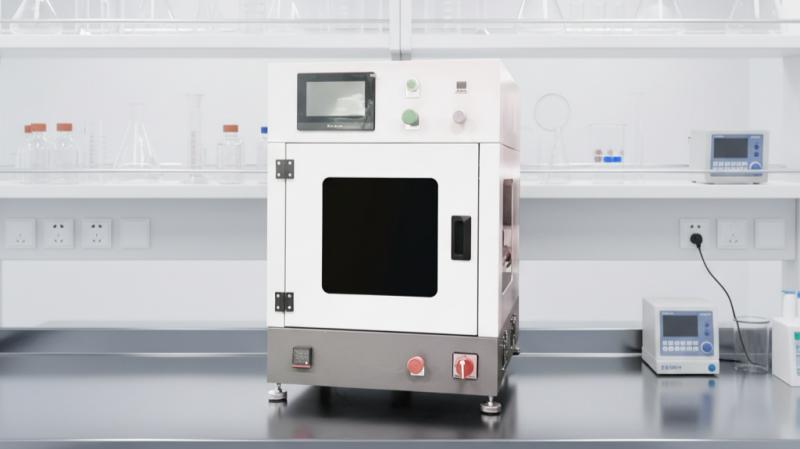
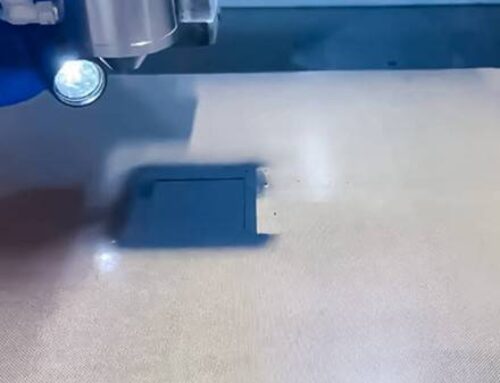
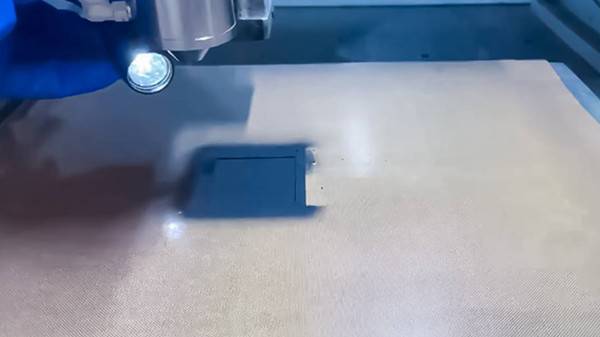
Ultrasonic spraying technology is a key process for preparing high-performance lithium battery ceramic separator coatings. The principle is to use high-frequency ultrasonic vibration to break ceramic slurry (such as alumina and boehmite particles dispersed in a mixed system of solvent and binder) into extremely fine and uniform atomized droplets, which are then accurately and controllably deposited on the surface of polymer membrane substrate through a spraying system.
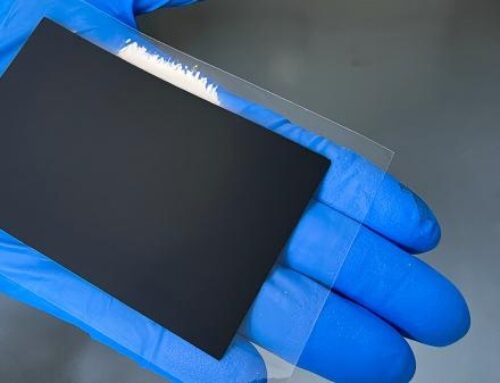
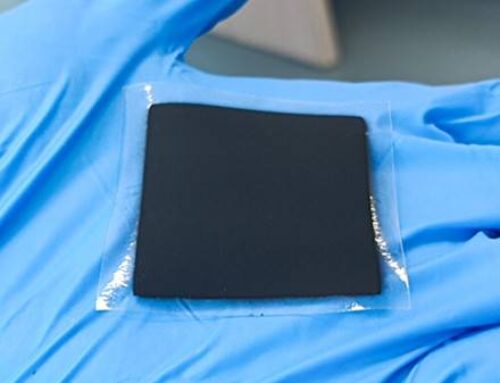
The core advantage of this technology lies in its excellent uniformity and controllability. Compared with traditional coating methods, ultrasonic spraying can form ceramic coatings with consistent thickness, no pinholes, and no agglomeration, effectively avoiding defects such as thick edges or scratches. This uniform ceramic layer not only significantly improves the thermal stability of the diaphragm, preventing internal short circuits caused by high-temperature shrinkage, but also enhances the mechanical strength, electrolyte wettability, and ion conductivity of the diaphragm.
In addition, the “soft landing” characteristic of ultrasonic spraying causes minimal damage to the substrate and has a high utilization rate of the slurry, making it suitable for large-scale continuous production. By precisely adjusting the slurry parameters and spraying parameters, precise control of ceramic layer thickness and surface density can be easily achieved, providing key material guarantees for the preparation of safe and long-life high-performance lithium batteries.
About Cheersonic
Cheersonic is the leading developer and manufacturer of ultrasonic coating systems for applying precise, thin film coatings to protect, strengthen or smooth surfaces on parts and components for the microelectronics/electronics, alternative energy, medical and industrial markets, including specialized glass applications in construction and automotive.
Our coating solutions are environmentally-friendly, efficient and highly reliable, and enable dramatic reductions in overspray, savings in raw material, water and energy usage and provide improved process repeatability, transfer efficiency, high uniformity and reduced emissions.
If you have any technical questions, customization demands, or procurement inquiries about ultrasonic atomization nozzles, feel free to contact our professional sales and technical team for detailed parameters, customized solutions, and industry application support.
Email: market2@cheersonic.com