
Ceramic Based High-temperature and Corrosion-resistant Coating
Ceramic Based High-temperature and Corrosion-resistant Coating – Ultrasonic Coating – Cheersonic
In recent years, with the continuous improvement of performance requirements for materials in extreme environments in the industrial and high-end equipment fields, high-temperature and corrosion-resistant coating technology has become an increasingly hot research topic. Among numerous material systems, ceramic based multilayer coatings have received widespread attention due to their excellent thermal stability, good mechanical strength, and outstanding corrosion resistance. Especially in ultra-high temperature and strong corrosion conditions, such as hot end components of aircraft engines, gas turbine blades, high-temperature reactors, etc., such coatings play a key protective role, significantly extending the service life of the substrate material and improving the reliability of equipment operation.
Currently, scientists are working on developing new multi-layer coating systems aimed at further expanding their operating temperature range and enhancing their durability in complex environments. Early research has successfully synthesized ceramic coatings based on hafnium, zirconium, cerium, and yttrium oxides using magnetron sputtering technology, and achieved good deposition effects and basic properties. As research deepens, the focus of work gradually shifts towards more challenging high entropy carbide systems, which have become an emerging research direction in the field of ultra-high temperature coatings due to their unique composition, structure, and performance advantages.

Ultra high temperature ceramics represented by hafnium carbide (HfC) and zirconium carbide (ZrC) have extremely high melting points, excellent high-temperature strength, good thermal shock resistance, and chemical inertness, and are considered key materials for applications in extreme thermomechanical and chemical environments. However, such materials face severe challenges in high-temperature aerobic environments: when the temperature exceeds 500 ° C, severe oxidation occurs, leading to rapid material failure, cracking, peeling, and even structural collapse of the protective layer, severely limiting their practical engineering applications.
Alloying has been widely attempted as an effective method to improve its antioxidant properties. The traditional method involves introducing alloying elements to form a continuous, dense, and self-healing oxide layer on the surface of the material, thereby blocking further internal diffusion of oxygen. However, while many alloying elements enhance the antioxidant capacity, they also have adverse effects on the high-temperature strength, hardness, and thermal stability of carbides themselves, leading to a decrease in the overall performance of the material. In this context, the design concept of high entropy alloys provides new ideas for solving this problem.
High entropy carbides utilize a multi principal component alloying strategy to form a single solid solution phase structure through entropy stabilization. This type of material not only integrates the advantages of each component to produce the so-called “cocktail effect”, but also exhibits higher phase stability thermodynamically, significantly suppressing the formation and expansion of defects at high temperatures. At the same time, it can regulate functional properties such as thermal conductivity, erosion resistance, and corrosion resistance. More importantly, the high entropy effect of the system helps maintain structural integrity over a wide temperature range and significantly enhances antioxidant capacity.
In this research context, the scientific team has turned their attention to a new type of high entropy carbide coating system, which uses hafnium carbide and zirconium carbide as refractory substrates, and further introduces alloy elements such as aluminum, chromium, and tantalum. The addition of aluminum and chromium helps to form a dense Al ₂ O3 or Cr ₂ O3 protective film during high-temperature oxidation, effectively blocking oxygen diffusion into the material; The introduction of tantalum helps to enhance the toughness and high-temperature stability of the material, and alleviate cracking problems caused by thermal expansion mismatch. It is worth mentioning that although previous studies have focused more on the alloying effects of elements such as tantalum, niobium, and titanium on ZrC/HfC, research on the combination addition of aluminum and chromium is still relatively limited, and such combinations have shown good potential in promoting the formation of protective oxide films.
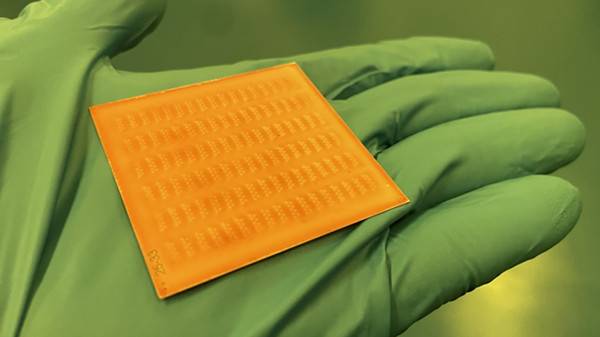
In the study, the team used magnetron sputtering technology to deposit the high entropy carbide coating on the substrate surface, and systematically conducted high-temperature oxidation experiments at temperatures up to 1100 ° C. Through characterization methods such as X-ray diffraction (XRD), scanning electron microscopy (SEM), and energy dispersive spectroscopy (EDS), the phase composition, microstructure, and element distribution of the coating before and after oxidation were analyzed in detail. The experimental results indicate that the co addition of aluminum, chromium, and tantalum effectively suppresses phase separation and promotes the formation of a uniform and dense high entropy solid solution coating. In high-temperature oxidation environments, the coating system exhibits excellent oxidation resistance, with a significantly lower oxidation rate than unalloyed hafnium carbide/zirconium carbide materials, and an increase in oxidation resistance of up to 20 times; Compared to alloying coatings that only add aluminum or chromium, it also shows a performance improvement of about 7 times.
In addition to excellent oxidation resistance, this high entropy coating also demonstrates potential as an intermediate layer between traditional thermal barrier coatings (such as yttria stabilized zirconia, YSZ) and nickel chromium alloy heat-resistant substrates. Under thermal cycling conditions, the multi-layer coating system exhibits excellent anti peeling ability and interface stability, effectively alleviating stress concentration caused by mismatched thermal expansion coefficients and further expanding the applicability of the coating in thermo mechanical coupling environments.
At present, the research has been further expanded to the design and performance exploration of dual phase oxide carbide high entropy systems. Scientists are systematically evaluating the thermal and mechanical properties of this type of material over a wider temperature range, as well as the interaction mechanisms between its components, in order to achieve long-lasting and high reliability applications of coating materials in ultra-high temperature, strong corrosion, and complex stress environments.
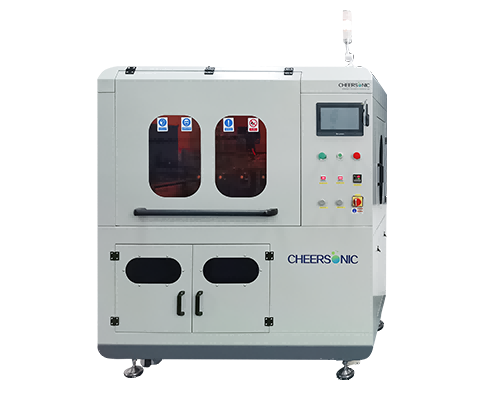
In addition, advanced coating preparation processes such as ultrasonic spraying technology have also been introduced for the development of ceramic based high-temperature and corrosion-resistant coatings. This technology is becoming an important development direction for high-performance coating deposition due to its advantages of good spray uniformity, high coating bonding strength, and ability to handle complex curved workpieces. Combining the design concept of high entropy materials, ultrasonic spraying technology is expected to further promote the engineering application of multi-layer and multi-component coatings in extreme environments.
In summary, the research team has made significant progress in improving the oxidation resistance and comprehensive performance of ultra-high temperature carbide coatings through the design of high entropy alloys and advanced deposition techniques. This type of material not only has important theoretical significance, but also lays a solid foundation for the practical application of the next generation of ultra-high temperature protective coatings.
About Cheersonic
Cheersonic is the leading developer and manufacturer of ultrasonic coating systems for applying precise, thin film coatings to protect, strengthen or smooth surfaces on parts and components for the microelectronics/electronics, alternative energy, medical and industrial markets, including specialized glass applications in construction and automotive.
Our coating solutions are environmentally-friendly, efficient and highly reliable, and enable dramatic reductions in overspray, savings in raw material, water and energy usage and provide improved process repeatability, transfer efficiency, high uniformity and reduced emissions.
Chinese Website: Cheersonic Provides Professional Coating Solutions
