About Anion Exchange Membrane Spraying
About Anion Exchange Membrane Spraying – Ultrasonic Coating – Cheersonic
Here are some relevant knowledge about AEM film spraying:
Introduction to anion exchange membrane:
Definition: Anion exchange membrane is an ion conducting membrane that plays a key role in energy conversion devices such as electrolyzed water and fuel cells. It allows anion exchange membranes (such as hydroxide ions) to pass through while preventing the passage of cations and gases, thereby achieving specific chemical reactions and energy conversion processes.
Characteristics: It has high ion conductivity, good chemical stability, and mechanical stability. These characteristics are crucial for ensuring the efficient operation and long lifespan of energy conversion devices.
The purpose of anion exchange membrane spraying is to:
Forming a uniform coating: By spraying, catalysts or other functional materials are uniformly coated on the surface or inside of the anion exchange membrane to improve its performance. For example, in the process of electrolyzing water, spraying catalysts can accelerate the decomposition reaction of water; In fuel cells, spraying appropriate materials can improve the ion conductivity of the membrane and the catalytic activity of the electrode.
Building a multi-layer structure: A composite anion exchange membrane with multiple layers can be prepared, each layer having different functions and characteristics. For example, the bottom layer can provide mechanical support, the middle layer can enhance ion conductivity, and the outer layer can provide good chemical stability and anti pollution performance.
Materials for anion exchange membrane spraying:
Catalyst: For the application of AEM membranes in electrolysis of water or fuel cells, catalysts are common spray materials. Precious metal catalysts (such as platinum, iridium, etc.) have high catalytic activity but high cost; Non precious metal catalysts (such as transition metal oxides, sulfides, etc.) have lower costs and also exhibit good catalytic performance under certain conditions.
Ionic polymer: Ionic polymers can improve the ion conductivity of membranes and have good compatibility with anion exchange membranes. Common ionic polymers include polystyrene sulfonic acid, polyether sulfone, etc.
Other functional materials: According to specific application requirements, other functional materials such as anti pollution agents, enhancers, etc. can also be sprayed to improve the comprehensive performance of AEM films.
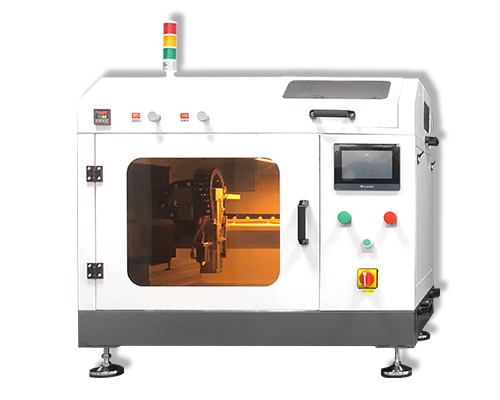
Ultrasonic spraying provides an efficient solution for AEM catalyst coating, which atomizes the slurry into uniform droplets of 10-50 μ m through 20-120kHz high-frequency vibration, and accurately deposits them on the membrane or GDL/PTL substrate. The coating uniformity exceeds 95%, the thickness can be controlled between 20nm-100 μ m, and the raw material utilization rate reaches over 90%. Mild spraying avoids membrane damage, dense coating improves ion conductivity efficiency, reduces interface resistance, adapts to non precious metal catalysts, and provides support for the large-scale production of AEMWE.
About Cheersonic
Cheersonic is the leading developer and manufacturer of ultrasonic coating systems for applying precise, thin film coatings to protect, strengthen or smooth surfaces on parts and components for the microelectronics/electronics, alternative energy, medical and industrial markets, including specialized glass applications in construction and automotive.
Our coating solutions are environmentally-friendly, efficient and highly reliable, and enable dramatic reductions in overspray, savings in raw material, water and energy usage and provide improved process repeatability, transfer efficiency, high uniformity and reduced emissions.
Chinese Website: Cheersonic Provides Professional Coating Solutions