Electrolyzed Water Hydrogen Production Technology
Electrolyzed Water Hydrogen Production Technology – Cheersonic
As a new secondary energy carrier, hydrogen energy has the advantages of wide sources, high energy density, clean and pollution-free, etc. The development and utilization of hydrogen energy has become a hot issue in the field of scientific research and industry.
Hydrogen production by electrolysis of water has the advantages of simple process and high purity of hydrogen. At present, there are three main hydrogen production technologies by electrolysis of water. Among them, alkaline electrolysis technology is the most mature, but it has low efficiency, strong corrosion and potential safety hazards. Proton exchange membrane electrolysis can adapt to fluctuating power sources, but the equipment cost is relatively high. In contrast, the solid oxide electrolytic cell operates at a high temperature of 800-950 °C, which can effectively reduce power consumption and improve energy conversion efficiency.
In the context of the current energy structure transformation, the combination of SOEC water electrolysis hydrogen production and primary energy surplus electricity can not only realize the conversion and storage of surplus electricity, but also prepare clean fuels, which has broad application prospects. However, SOEC electrolysis still has technical difficulties in terms of key materials and attenuation mechanism, and it also faces the problem of high cost. In the process of industrialization promotion, in addition to overcoming technical difficulties, it is also necessary to pay attention to whether the cost of material and system development can be accepted by the market. However, there are currently few studies on the economics of high-temperature SOEC hydrogen production technology.
Cheersonic ultrasonic coating systems are used in a number of electrolysis coating applications. The high uniformity of catalyst layers and even dispersion of suspended particles results in very high efficiency electrolyzer coatings, either single or double sided.
In hydrogen fuel cell production, PEM electrolyzer coating systems are ideal for spraying carbon-based catalyst inks onto electrolyte membranes. These systems are fully automated, capable of dual side coating, and enable different catalyst formulations to be applied to each side of the membrane. Durability and repeatability of the coating are proven superior to other coating methods, often providing higher efficiencies with extended lifetimes of the coated PEM.
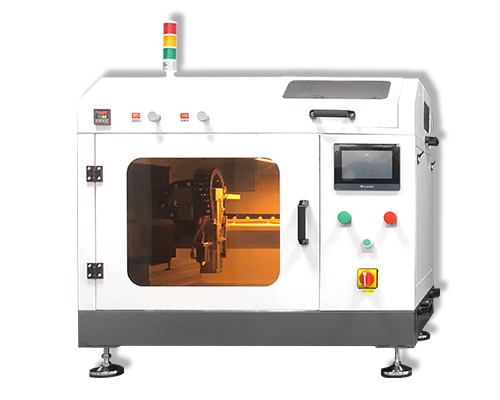
Our coating solutions are environmentally-friendly, efficient and highly reliable, and enable dramatic reductions in overspray, savings in raw material, water and energy usage and provide improved process repeatability, transfer efficiency, high uniformity and reduced emissions.