
How to Evaluate Carbon Capture?
How to Evaluate Carbon Capture? Electrolyzer Coating Systems – Cheersonic
Carbon capture and storage, (carbon capture and storage, CCS), refers to the technology of collecting and burying carbon dioxide to avoid entering the atmosphere and causing the greenhouse effect. This category of technology is designed to capture carbon dioxide to slow global warming—from power plants, industrial sites, or even directly from the air, and store it permanently underground. At present, there are at least three different carbon capture and storage systems that can be applied in power plants; pre-combustion, post-combustion, and oxy-fuel combustion, most of which have been proven to be feasible, but so far, the various stages of CCS The technology is only used in small-scale pilot projects in power plants. Experts are divided on the technical viability and economics of commercial-scale CCS, but everyone agrees that CCS technology cannot be cheap, and that about 40% of the power generation’s energy generation may end up in ccs equipment. Operation and transport of recovered carbon dioxide. It is estimated that it will cost around £1 billion to replace the CCS equipment in the UK’s existing ageing power plants.
Once the carbon dioxide has been recharged, it needs to be liquefied and transported, sometimes hundreds of miles, before it can be buried in a suitable geological formation, whether deep underground in a saline formation or an abandoned oil field well. The process of storing captured carbon dioxide in wells in abandoned oil fields is called enhanced oil recovery, and pumping carbon dioxide into oil fields can obtain residual and difficult-to-recover oil. At this stage, CCS research and development still faces problems such as technical efficiency limitations of large-scale units and low cost-effectiveness. In recent years, the progress of CCS development in various countries has also been slow. In 2007, the European Union proposed the goal of building 12 CCS plants by 2020, which has now been reduced to 5; although the United States expects 2 CCS plants to start operating in 2014, it is still mainly through the US government to provide a large number of subsidies. If it can be achieved, it shows that the CCS technology is not yet economically viable for commercialization in the short term.
Ultrasonic coating equipment can be used in carbon capture electrolysis applications, which apply catalysts to membranes used to separate and capture CO2 before entering the atmosphere. CO2 is separated from other gases in waste gas streams produced in industrial processes, such as coal and natural gas-fired power plants or steel and cement plants; designed to reduce carbon emissions to combat global warming.
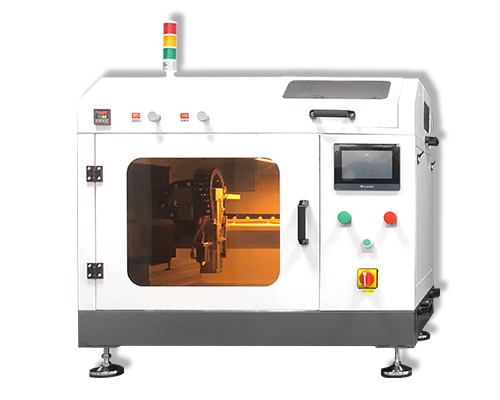
Our coating solutions are environmentally-friendly, efficient and highly reliable, and enable dramatic reductions in overspray, savings in raw material, water and energy usage and provide improved process repeatability, transfer efficiency, high uniformity and reduced emissions.
