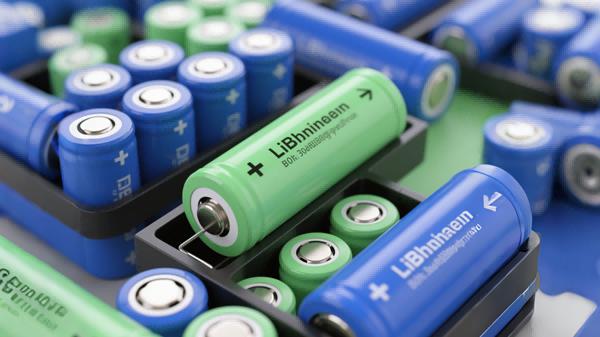
2D Material Coatings on Copper Foil for Lithium Batteries
Why Apply 2D Material Coatings to Copper Foil in Lithium Batteries? Applications of Graphene, Graphene Oxide, and MXene
1. What Is the Role of Copper Foil in Lithium Batteries?
Copper foil is commonly used as the negative electrode current collector in lithium-ion batteries.
In a typical lithium-ion battery structure, the anode active material is coated onto the copper foil. The copper foil collects and conducts electrons while providing mechanical support for the electrode coating.
Although copper foil is not the primary lithium-storage active material, its surface condition can influence electrode adhesion, interfacial contact, and manufacturing quality.
With the development of silicon-based anodes, lithium metal batteries, and other advanced battery materials, researchers have become increasingly interested in functional surface modification of copper foil.
One approach worth investigating is the deposition of thin films of two-dimensional (2D) materials onto copper foil surfaces.
2. What Are Two-Dimensional Materials?
Two-dimensional materials are generally materials with layered structures and nanoscale thickness characteristics.
These materials may exist as single-layer, few-layer, or multilayer nanosheets.
Commonly investigated 2D materials in battery research include graphene, graphene oxide, reduced graphene oxide, MXene, and certain transition metal dichalcogenides.
2.1 Graphene
Graphene is a two-dimensional material composed of carbon atoms.
Its electronic transport and mechanical properties make it a candidate for conductive composites and electrode interface research.
However, the conductivity of an actual graphene coating depends on nanosheet quality, defects, dispersants, and the conductive network formed after drying.
2.2 Graphene Oxide (GO)
Graphene oxide contains oxygen-containing functional groups on its surface. Compared with many unfunctionalized graphene materials, it can generally form aqueous dispersions more readily.
GO can be investigated for surface wettability modification, interfacial interactions, and composite functional layers.
However, the electrical conductivity of GO is generally different from that of high-quality graphene.
If the objective is to produce a highly conductive coating, reduction treatment or conductive composite formulations may need to be investigated.
2.3 MXene
MXenes are a family of two-dimensional transition metal carbides, nitrides, and carbonitrides.
Certain MXenes exhibit favorable electronic conductivity and can form aqueous dispersions.
However, some MXenes are susceptible to oxidation or structural changes in oxygen-containing aqueous environments.
Therefore, dispersion storage, spraying conditions, and drying processes require particular attention.
2.4 Other Two-Dimensional Materials
Other layered materials, such as molybdenum disulfide (MoS₂), may also be investigated for battery electrodes and functional interfaces.
Different 2D materials have different electrical, chemical, and electrochemical properties. A single coating formulation cannot be assumed to work for every material.
3. What Are the Potential Applications of 2D Material Coatings on Copper Foil?
3.1 Conductive Interface Modification of Anode Current Collectors
Introducing a thin conductive layer between copper foil and the anode active material may modify electronic contact between the two materials.
For certain anode systems, researchers aim to reduce interfacial contact resistance and improve the continuity of the electrode structure.
However, these effects must be verified through actual electrode testing.
3.2 Copper Foil Modification for Silicon-Based Anodes
Silicon-based anodes undergo substantial volume changes during charging and discharging.
These changes may affect the stability of the interface between the anode active layer and the copper foil.
2D material coatings can be investigated to modify interfacial contact, adhesion, and mechanical response.
However, 2D materials do not automatically solve the expansion challenges of silicon-based anodes. The final results also depend on the binder, active material, and overall electrode structure.
3.3 Copper Current Collector Modification for Lithium Metal Batteries
In certain lithium metal battery studies, copper foil can serve as a substrate for lithium deposition.
By modifying the surface chemistry and structure of copper foil, researchers aim to influence lithium nucleation and deposition behavior.
Certain 2D materials may provide different surface interaction sites or influence local current distribution.
Whether these modifications improve lithium deposition uniformity must be determined through Coulombic efficiency measurements, deposition morphology analysis, and cycling tests.
3.4 Functional Protective Interfacial Layers
2D materials may also be investigated as functional interfacial layers on copper foil.
Their potential roles may involve surface wettability, interfacial side reactions, and contact between different materials.
It is important to recognize that aqueous coating processes may themselves alter the oxidation state of the copper surface. Any proposed protective effect must therefore be confirmed through controlled comparative experiments.
4. Why Do Customers Prefer Water-Based 2D Material Dispersions?
Water-based dispersion systems may offer advantages in formulation handling, lower risks associated with certain organic solvents, and compatibility with the surface chemistry of specific materials.
However, many so-called 2D material “aqueous solutions” are actually suspensions of solid nanosheets dispersed in water rather than true molecular solutions.
Their processing characteristics are influenced by solid content, nanosheet size, dispersants, pH, ionic strength, and storage conditions.
For copper foil coating, water wettability, drying behavior, and residual components must also be considered.
Therefore, using water as the dispersion medium does not eliminate material compatibility challenges.
5. Why Do 2D Material Coatings on Copper Foil Require Precision Coating Technology?
For functional interfacial layers, customers may not require the relatively thick coatings typically used for conventional anode slurries.
Instead, the objective may be to create a thin and uniform 2D material layer while minimizing additional mass and thickness.
Such applications may require control of:
- Dry coating mass per unit area.
- Coating thickness and uniformity.
- Distribution of 2D material nanosheets.
- Copper foil surface coverage.
- Coating adhesion.
- Electrical and electrochemical properties after drying.
Doctor blade coating, slot-die coating, and spray coating may all be considered candidate processes.
For low-solid-content dispersions and relatively thin functional coatings, ultrasonic spray coating is another process worth investigating.
6. Applications of Ultrasonic Spray Coating Equipment
Ultrasonic spray coating uses an ultrasonic nozzle to atomize a liquid into droplets, which are then directed toward the copper foil surface by a controlled gas flow.
For 2D material aqueous dispersions suitable for atomization, multiple thin-layer spray passes can be investigated to build up the target coating.
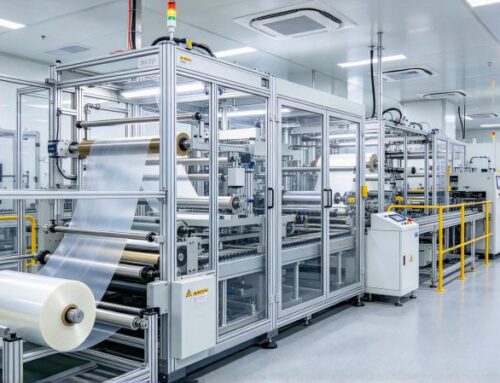
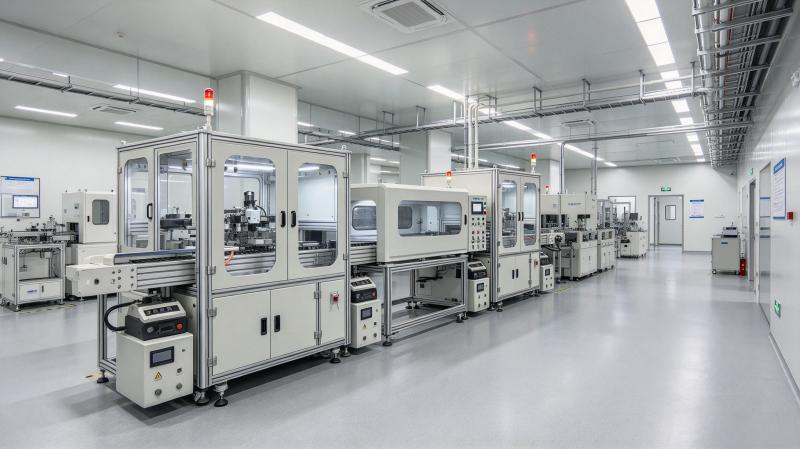
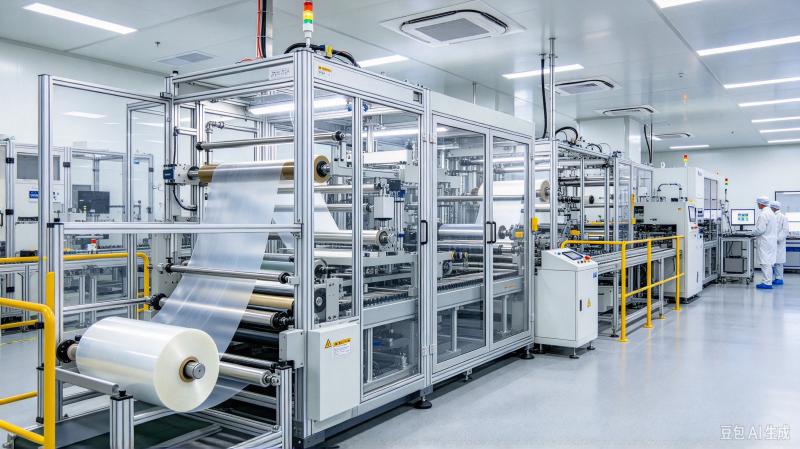
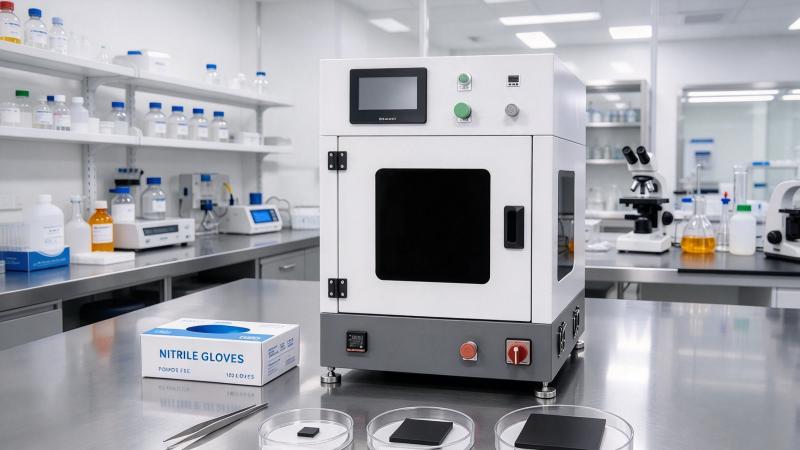
The equipment can be integrated with precision liquid delivery, a programmable motion platform, a copper foil holding mechanism, and a controlled drying system.
If continuous production is required in the future, integration with a roll-to-roll copper foil transport system can also be evaluated.
However, ultrasonic spray coating does not guarantee that every 2D material dispersion can pass through the nozzle reliably, nor does it guarantee improved battery performance.
Conclusion
2D material coatings on copper foil represent a research direction combining advanced battery materials, interface engineering, and precision coating technology.
Graphene, GO, MXene, and other 2D materials may play different roles in anode current collector modification, silicon-based anode interfaces, and lithium metal deposition research.
For companies developing 2D material coatings on copper foil, ultrasonic spray coating equipment offers a manufacturing approach worth evaluating through sample testing.
Cheersonic can discuss 2D material aqueous dispersions, copper foil dimensions, target coating requirements, and sample coating trials with customers to assess process feasibility.
For more information about coating equipment solutions, visit: