Ultrasonic Catalyst Deposition of Conductive Slurry Films on FTO, Porous Titanium Felt and Gas Diffusion Paper
One Coating Platform, Three Very Different Substrates
Conductive slurry deposition is relevant to electrode development, electrochemical catalysis, and functional thin-film research. Ultrasonic spray coating offers a way to meter a liquid dispersion and distribute it over a defined area. Researchers may wish to coat fluorine-doped tin oxide (FTO), porous titanium felt, and gas diffusion paper using a common platform. These substrates, however, have very different surface energies, roughness, porosities, and thermal constraints.
For catalyst deposition, the goal is not necessarily the same on each substrate. An FTO electrode may require a thin, visually uniform functional layer. Titanium felt may need coating on accessible fiber surfaces without sealing its pore network. Gas diffusion paper may need controlled deposition near its surface while preserving gas transport. Defining the desired layer location and function is the first step toward a useful process.
How Conductive Slurry Properties Affect Spray Results
Solids, binders, and dispersion stability
A conductive slurry may contain carbon-based materials, metal or metal-oxide particles, catalyst powders, a binder, and a solvent system. These components serve different roles. Conductive additives can form electronic pathways, catalytic solids provide active sites where relevant, and binders help retain the deposited material. The composition should be chosen for the electrochemical application rather than solely for ease of spraying.
Particle size and agglomeration affect atomization, nozzle reliability, and coating texture. Viscosity and surface tension affect liquid delivery and droplet wetting. Solids concentration influences the amount of dry material deposited per pass. Document each property, and verify that the slurry remains stable over the coating period. Aggressive dispersion methods can change some carbon structures or binder systems, so preparation should be qualified experimentally.
Solvent choice and safety
Water, alcohols, and other compatible carriers may be considered, subject to binder solubility, substrate compatibility, and drying requirements. A solvent that wets FTO effectively may penetrate porous carbon paper too deeply. Flammable solvents require appropriate ventilation, electrical safety measures, and control of ignition sources. Aerosolized catalyst or conductive powders may create additional exposure and contamination concerns.
Coating FTO: Prioritize Surface Coverage
The role of the conductive glass
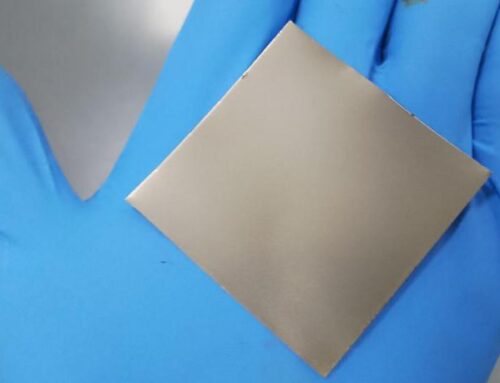
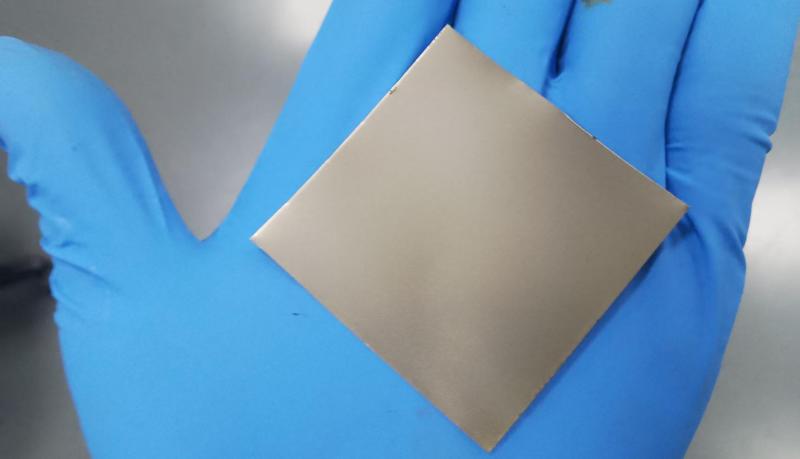
FTO is a transparent conductive oxide coating on glass. It is used in various electrode and thin-film research configurations. A spray-applied conductive or catalyst slurry may be deposited on its conductive face, but the layer must be matched to the intended optical and electrical requirements. An opaque catalyst film is not suitable when optical transmission must be preserved.
Before coating, identify the conductive side, clean the surface with a compatible method, and assess wetting. A flat fixture and programmed raster motion can help create repeatable coverage. Thin sequential passes may reduce droplet pooling and edge accumulation. Drying temperature should respect both the glass assembly and the deposited material.
What to measure on FTO
Assess coating continuity, surface defects, thickness or mass loading, adhesion, and electrical behavior. Sheet resistance or other electrical tests should be interpreted in light of the FTO substrate itself; measuring the combined stack does not automatically reveal the conductivity of the deposited film alone. If the layer is catalytic, use an appropriate electrochemical test to evaluate its actual activity.
Coating Porous Titanium Felt: Preserve the Pore Structure
Surface coverage versus infiltration
Porous titanium felt presents a three-dimensional fiber network rather than a flat plane. Spray droplets may contact the outer fibers, wick into internal pores, or bridge neighboring fibers. Which behavior is desirable depends on the intended electrode architecture. A visually uniform top surface does not prove uniform coating throughout the felt thickness.
Fixture design, spray direction, wetting, and repeated passes should be selected to control penetration. For some projects, coating from both sides may improve access to the structure; for others, one-sided deposition is deliberate. The correct approach depends on whether the catalyst should remain near a particular interface or distribute through the porous network.
Checking titanium felt coatings
Measure deposited mass, inspect accessible fibers, and evaluate whether pore blockage occurs. Cross-sectional microscopy or elemental mapping may be needed to determine penetration depth. Pressure drop, permeability, electrical contact, and electrochemical testing may be relevant to the final device. Avoid claiming uniform internal coverage based only on a photograph of the external surface.
Coating Gas Diffusion Paper: Balance Wetting and Transport
Why the paper structure matters
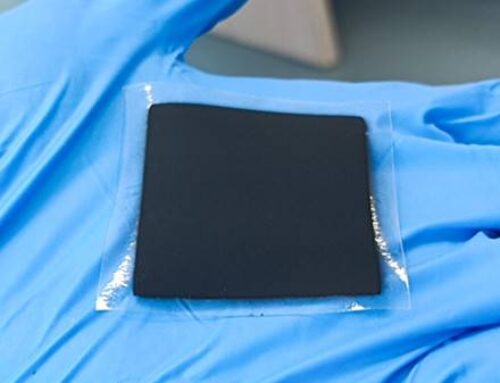
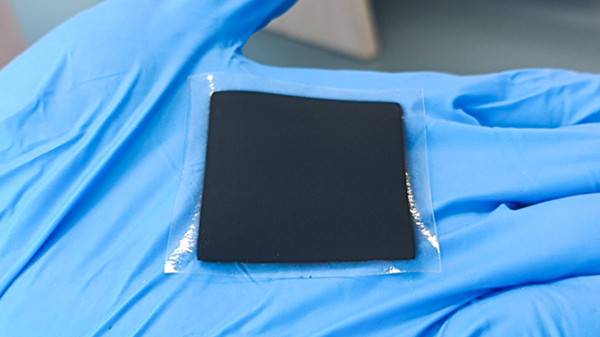
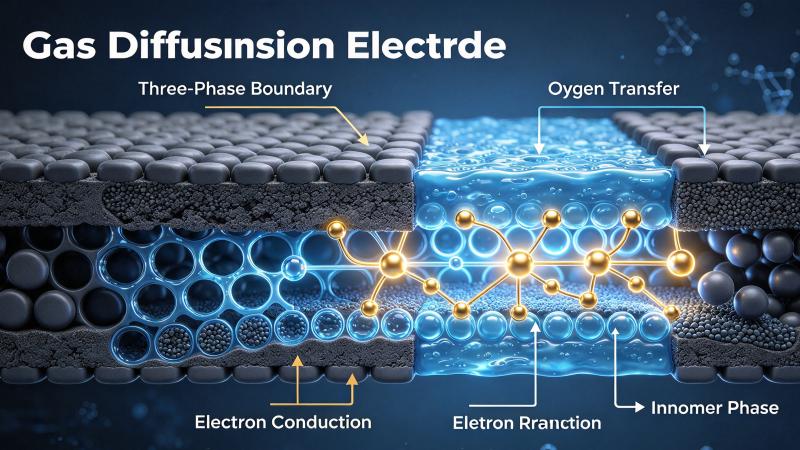
Gas diffusion paper is commonly a porous carbon-based structure, sometimes modified with a microporous layer or hydrophobic treatment. It supports gas access and electronic conduction in various electrochemical assemblies. Its surface condition can change substantially between suppliers and grades, so wetting and solvent uptake should be measured for the actual material used.
A conductive slurry that penetrates too deeply may alter pore accessibility, while a layer that remains entirely on the surface may have adhesion or contact challenges. Carefully controlled low-wetness passes, appropriate drying, and an ink compatible with the paper treatment can help researchers investigate this balance. The process window is application-specific.
Relevant quality controls
Examine coating mass per area, visible coverage, thickness distribution, adhesion, electrical resistance, and any changes in gas transport. When a microporous layer is present, inspect whether the deposited material is concentrated above it or penetrates through defects. Performance must be tested under the intended cell conditions rather than inferred from a dry coating.
Building a Practical Ultrasonic Spray Coating Test Plan
Define separate success criteria for each substrate
A useful trial plan starts with a shared slurry specification and three substrate-specific objectives. For FTO, define coverage and allowable thickness variation. For titanium felt, define acceptable penetration and pore retention. For gas diffusion paper, define the required surface loading and transport behavior. These criteria make comparisons meaningful and avoid treating different substrate structures as equivalent.
Use controlled passes and measure transfer efficiency
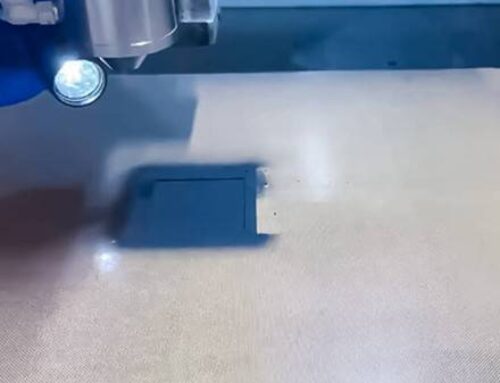
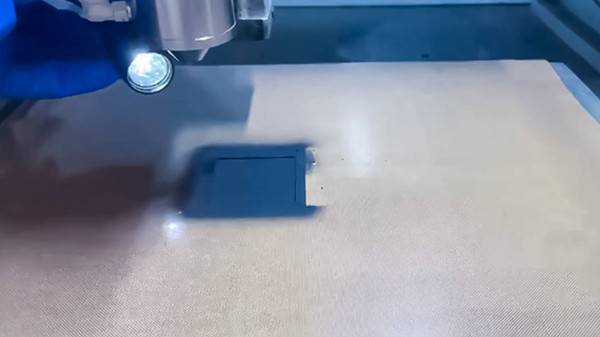
An ultrasonic nozzle, precision pump, motion stage, suitable fixtures, and controlled drying can support repeatable experiments. Record nozzle position, spray footprint, flow rate, scan pattern, overlap, substrate temperature, and drying intervals. A multi-pass approach can be useful, but the number of passes should follow measured deposition and layer behavior rather than an arbitrary preset.
Calculate target dry solids from coating area and desired mass loading. Correct for the actual fraction of solids in the slurry and experimentally measured deposition efficiency. Porous substrates complicate weighing because they can retain solvent or moisture; condition samples consistently before comparing mass changes. Use witness samples or analytical techniques when gravimetric results are uncertain.
Investigate defects before scale-up
Typical issues include slurry sedimentation, spray streaks, coffee-ring patterns, fiber bridging, deep infiltration, poor adhesion, and drying cracks. Change one factor at a time where possible, then confirm promising settings with repeated samples. If electrical or electrochemical performance matters, link each test result to its exact coating record.
Catalyst Deposition Is a Materials-and-Process Problem
Ultrasonic spraying can provide controllable liquid delivery across flat and porous electrodes, but the final film depends on substrate preparation, ink formulation, drying, and subsequent processing. Uniformity should be defined with an appropriate measurement: area coverage for a flat substrate, distribution through a porous structure, or local catalyst mass per area. No single visual metric describes all three.
The practical objective is to develop a repeatable coating process that preserves the function of the substrate while depositing the required material. Establishing this requires trial coatings, measurements, and application-specific validation.
Contact Cheersonic for a Conductive Slurry Coating Trial
If you are planning catalyst deposition or conductive slurry coating on FTO, porous titanium felt, or gas diffusion paper, contact Cheersonic with your substrate dimensions, ink composition, coating target, and test requirements. The team can discuss a sample coating trial to investigate wetting, coverage, and deposition control. Visit Cheersonic ultrasonic coating equipment solutions to explore the coating platform and request a discussion of your project.