
What Is an Electrode?
An electrode is an electrically conductive material or component that forms an interface between an electronic circuit and another medium, such as an electrolyte, semiconductor, gas, or biological tissue. In electrochemistry, electrodes enable charge transfer between electrons in a solid conductor and ions or electroactive species in the surrounding medium. Depending on the system, an electrode may support a chemical reaction, measure an electrical response, or help convert chemical energy and electrical energy.
For research laboratories, understanding electrode function is essential when developing batteries, fuel cells, electrolyzers, electrochemical sensors, corrosion tests, electrosynthesis methods, and catalyst-coated electrodes. Electrode material, geometry, surface condition, and preparation can all influence experimental results and reproducibility.
How Does an Electrode Work?
In an electrochemical system, an electrode contacts an ion-conducting medium called an electrolyte. Electrons move through the electrode and external circuit, while ions move through the electrolyte. At the electrode–electrolyte interface, an electrochemical reaction may transfer electrons between the solid surface and chemical species in the medium.
Two fundamental processes describe many electrode reactions:
- Oxidation: a species loses electrons.
- Reduction: a species gains electrons.
The electrode surface is where these electron-transfer reactions occur. The reaction rate and measured current can depend on applied potential, active surface area, temperature, electrolyte composition, mass transport, and the chemical state of the electrode surface. Some electrodes are designed to participate directly in a reaction; others provide a comparatively stable interface for electron transfer or measurement.

Anode vs. Cathode: What Is the Difference?
The terms anode and cathode describe the reaction taking place, not a permanently fixed positive or negative polarity. Oxidation occurs at the anode, and reduction occurs at the cathode. Their electrical signs depend on whether the system is generating electrical energy or being driven by an external power supply.
| Term | Electrode reaction | Typical role |
|---|---|---|
| Anode | Oxidation | Electrons are released by the oxidation process. |
| Cathode | Reduction | Electrons are consumed by the reduction process. |
In a galvanic cell operating spontaneously, the anode is generally negative and the cathode positive. In a conventional electrolytic cell driven by an external power supply, the anode is positive and the cathode negative. Identifying electrodes by their reactions avoids confusion when comparing different electrochemical systems.
What Are the Main Types of Electrodes in a Research Lab?
1. Working electrode
The working electrode is the electrode at which the reaction or response under investigation takes place. Researchers choose its material and surface geometry according to the experiment, such as catalyst screening, redox analysis, corrosion studies, or sensor development. Common choices include carbon-based materials, metals, conductive oxides, and modified surfaces.
2. Reference electrode
A reference electrode provides a stable, known potential against which the working-electrode potential can be measured. It is important in controlled-potential experiments because potential values are meaningful only when the reference scale and measurement setup are clearly defined. Reference electrodes require suitable storage, maintenance, and checking according to the experiment and manufacturer guidance.
3. Counter or auxiliary electrode
The counter electrode, also called the auxiliary electrode, completes the electrical circuit in many three-electrode measurements. It carries the current needed to control the working electrode. Its area and material should be appropriate for the current range and electrolyte, and it should be positioned to minimize unwanted interference with the working-electrode measurement.
4. Battery and fuel-cell electrodes
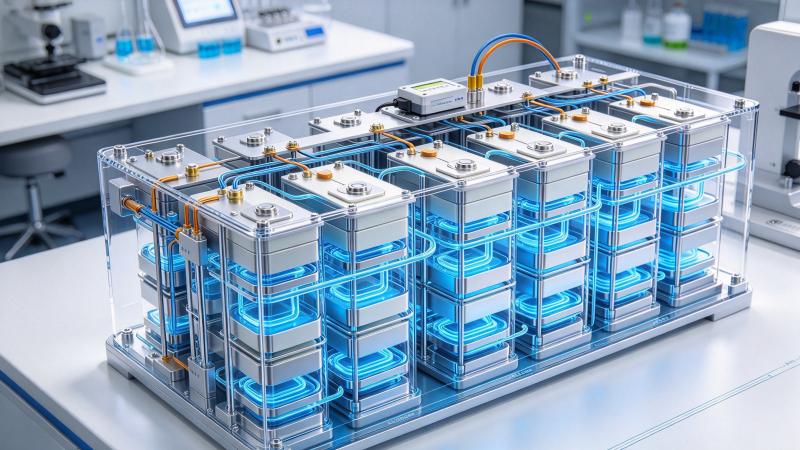
In batteries and fuel cells, electrodes are functional structures that may contain active materials, conductive additives, binders, porous supports, and current collectors. Their architecture affects electron conduction, ion transport, reaction-site accessibility, and durability. In these systems, an electrode is often a composite rather than a single piece of conductive metal.
5. Modified and catalyst-coated electrodes
A modified electrode has a surface deliberately changed by adding a catalyst, polymer, protective layer, recognition element, or other functional material. Such modifications can alter selectivity, catalytic activity, stability, wetting, or resistance. For porous electrodes and membrane-electrode structures, coating distribution and adhesion can be as important as the nominal material composition.
Common Electrode Materials and How to Select Them
Electrode materials should be selected for the research objective and operating environment rather than conductivity alone. Common material groups include:
- Metals: used where electrical conductivity, mechanical strength, and suitable chemical compatibility are required.
- Carbon materials: including graphite and glassy carbon, often used in electroanalysis and catalyst research.
- Conductive oxides: useful in selected electrochemical, optical, and energy-related applications.
- Semiconductors and conductive polymers: used when electronic structure, surface functionality, or sensing behavior is part of the research question.
- Composite materials: combine active phases with conductive networks, binders, or porous supports to meet application-specific requirements.
Before choosing an electrode, consider the potential window, electrolyte compatibility, corrosion or dissolution risk, conductivity, surface area, mechanical stability, cost, and the possibility of contaminating the sample. Also define whether the experiment requires a polished, porous, roughened, activated, or coated surface.
Why Electrode Surface Preparation Matters
Surface preparation can change the number and accessibility of active sites, interfacial resistance, wetting behavior, and the repeatability of measurements. Residual oils, polishing debris, oxide films, adsorbed species, or inconsistent pretreatment may cause variation between nominally identical samples.
A reproducible workflow should specify the cleaning method, polishing or activation procedure, exposed geometric area, drying conditions, storage time, and any electrochemical conditioning steps. Use a consistent procedure across replicates and document any changes. If the electrode is coated, record the ink or suspension formulation, substrate preparation, deposited mass or loading, drying conditions, and coating area.
Electrode Coatings: Thickness, Uniformity, and Adhesion
Functional coatings are frequently used to introduce catalytic activity, protect a substrate, improve selectivity, or create a defined interface. In research on fuel cells, water electrolysis, batteries, and carbon dioxide conversion, catalyst layers may be deposited onto porous substrates, conductive plates, or ion-conducting membranes.
Several coating characteristics can influence performance:
- Loading and thickness: too little active material may limit available reaction sites, while excessive loading can increase material use or hinder transport.
- Uniformity: local variations may create uneven current distribution or inconsistent reaction conditions.
- Porosity and wetting: the structure must support the transport of relevant ions, gases, liquids, and reaction products.
- Adhesion and cohesion: a layer that cracks, delaminates, or sheds particles may lose performance during operation.
- Electrical contact: poor contact between the coating and substrate can increase resistance and complicate data interpretation.
Coating quality should be evaluated using suitable physical characterization alongside electrochemical testing. Depending on the project, useful checks may include microscopy, thickness or mass-loading measurements, adhesion assessment, and measurements such as cyclic voltammetry, linear sweep voltammetry, or electrochemical impedance spectroscopy. No coating method guarantees a particular performance result without validation under the intended operating conditions.
How Are Electrodes Evaluated in Electrochemical Experiments?
Researchers select techniques according to the property they need to investigate. Cyclic voltammetry (CV) can help examine redox behavior and electrochemical windows. Linear sweep voltammetry (LSV) is often used to study current response as potential changes. Chronoamperometry tracks current over time at a controlled potential, while electrochemical impedance spectroscopy (EIS) probes frequency-dependent response to investigate interfacial and transport processes.
For reliable comparisons, report the electrode material, geometric area, preparation protocol, electrolyte composition, temperature, reference-electrode scale, scan rate or applied potential, and data-processing methods. Where relevant, distinguish geometric current density from estimates based on electrochemically active surface area. Replicates and appropriate controls help identify variability caused by sample preparation or cell configuration.
Common Electrode Problems in Laboratory Research
- Unstable baseline or drifting potential: check the reference electrode, electrical connections, contamination, equilibration, and environmental stability.
- Unexpectedly low current: review electrode area, electrical contact, surface condition, mass transport, and electrolyte conductivity.
- Poor repeatability: standardize pretreatment, coating loading, drying, storage, and test conditions.
- Coating cracks or delamination: investigate substrate cleanliness, formulation, layer thickness, drying rate, and adhesion.
- Apparent performance loss: distinguish material degradation from changes in wetting, fouling, contact resistance, or cell setup.
Change one variable at a time where practical and keep a record of sample history. This makes it easier to identify whether the main limitation comes from the electrode material, the coating process, or the measurement method.
Frequently Asked Questions
What is the main function of an electrode?
An electrode provides an electrically conductive interface between an external circuit and a medium. In electrochemical systems, it enables electron transfer and may serve as the site of a chemical reaction or electrical measurement.
What is the difference between an electrode and an electrolyte?
An electrode conducts electrons, while an electrolyte conducts ions. Both are needed in many electrochemical systems to complete the charge-transfer pathways.
Are the anode and cathode always negative and positive, respectively?
No. The anode is where oxidation occurs and the cathode is where reduction occurs. Their polarities depend on the type and operating mode of the electrochemical system.
Why does electrode coating uniformity matter?
Coating uniformity can affect active-material distribution, transport, electrical contact, and local reaction conditions. Its impact should be assessed with physical characterization and electrochemical measurements.
How can researchers improve electrode reproducibility?
Use a documented preparation protocol, define the exposed area, control material loading and drying conditions, keep measurement parameters consistent, and include replicates and controls.
Explore More Electrochemistry Research
Continue with What Is Electrochemistry? for foundational concepts and What Is an Electrochemical Cell? for cell components and configurations. You can also visit the Electrochemistry Knowledge Center for related research topics.
