CO₂-to-Methanol: Process and Catalyst Frontiers
Carbon Footprint Classification and Low-Carbon Transition
Driven by the global carbon neutrality agenda, methanol synthesis from carbon dioxide is evolving rapidly, with increasingly mature process designs and emerging catalytic materials. Based on the sourcing of carbon and hydrogen, methanol products are generally categorized into four tiers—brown, gray, blue, and green—with progressively declining lifecycle carbon emissions. Brown and gray methanol are produced from coal or natural gas via gasification or steam reforming to syngas, followed by catalytic synthesis, accompanied by substantial CO₂ emissions, and remain the dominant routes in traditional coal and petrochemical industries.
In contrast, CO₂ hydrogenation to methanol couples captured CO₂ with low-carbon hydrogen sources—either electrolytic hydrogen from renewable energy or natural gas reforming integrated with carbon capture—fundamentally reducing the process carbon footprint. Among these, “green methanol” produced from “green hydrogen” combined with biogenic or direct air capture (DAC) CO₂ approaches near-zero lifecycle emissions and is widely recognized as the most promising low-carbon fuel and chemical feedstock, with CO₂ hydrogenation at the core of this value chain.
Process Routes: Direct vs. Indirect Synthesis
Current industrial practice favors one-step direct synthesis: CO₂ and hydrogen are compressed and fed into a synthesis reactor, where methanol is produced directly over a catalyst, followed by crude separation and distillation. The core reaction is: CO₂ + 3H₂ → CH₃OH + H₂O. This route offers a compact flow sheet and higher energy efficiency, making it the preferred choice for pilot and demonstration projects.

The two-step (indirect) route first reduces CO₂ to CO via the reverse water-gas shift (RWGS) reaction: CO₂ + H₂ → CO + H₂O. The resulting CO is combined with H₂ to form syngas, which is then converted to methanol using conventional syngas-to-methanol technology. While the RWGS reaction is kinetically manageable, the indirect route suffers from a lengthy process flow, lower overall energy efficiency, and challenges in large-scale plant amplification, limiting its commercial deployment.
Catalytic Systems: The Trilemma of Activity, Selectivity, and Stability
The CO₂ molecule is thermodynamically stable, making C=O bond activation difficult at low temperatures. Meanwhile, the hydrogenation network is complex, with byproducts such as CO, methane, dimethyl ether, and higher alkanes readily formed, eroding methanol selectivity and single-pass yield. Therefore, developing catalytic materials that combine high activity, high methanol selectivity, and long-term stability is the key to industrializing CO₂-to-methanol technology.
Major catalytic systems under investigation include:
- Copper-based composite oxide catalysts (e.g., Cu/ZnO/Al₂O₃ and modified variants)
- Noble metal and alloy catalysts (Pd-, Pt-, Au-based)
- Metal oxide and solid-solution catalysts
- Novel nanostructured catalysts (MOF-derived, zeolite-supported, single-atom catalysts)
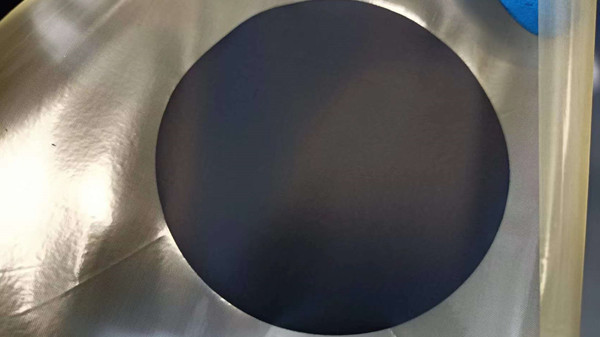
Ultrasonic spray technology demonstrates unique advantages in catalyst preparation. By atomizing precursor solutions into micron-sized droplets through high-frequency ultrasonic vibration, it enables uniform deposition of active components on support surfaces with precise control over particle size and dispersion, thereby increasing specific surface area and exposing more active sites, ultimately improving CO₂ conversion and methanol selectivity. This technology is particularly well suited for thin-film and structured catalyst fabrication.
Energy Storage: Methanol as a Long-Duration Chemical Energy Carrier
Methanol is liquid at ambient temperature, offers high volumetric energy density, leverages mature storage and transportation infrastructure, and poses manageable safety risks—making it a highly competitive long-duration chemical energy storage medium. Measured by the round-trip efficiency of the “power-to-methanol-to-power” chain, methanol storage underperforms pumped hydro and electrochemical batteries (which can reach 70%–98%), but its volumetric energy storage capacity far exceeds batteries (up to 30 times that of lithium-ion batteries). This characteristic positions CO₂-based e-methanol for cross-seasonal, large-scale, long-duration storage rather than short-term frequency regulation or small distributed applications.
Ultrasonic Spray Coating in Carbon-Neutral Electrode Catalyst Layer Fabrication
Within the carbon-neutral technology landscape, the quality of electrode catalyst layers directly determines the energy conversion efficiency of core devices such as water electrolyzers, CO₂ electrolysers, and fuel cells. Ultrasonic spray coaters, with their unique atomization mechanism, are emerging as critical equipment for electrode catalyst layer preparation.
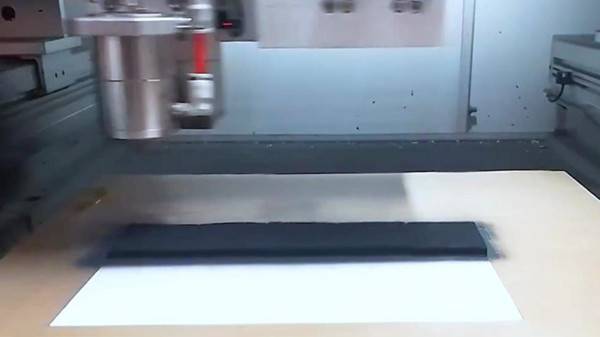
In operation, an ultrasonic spray coater converts high-frequency electrical energy into mechanical vibration via a piezoelectric transducer, atomizing the catalyst slurry into uniform micron-sized droplets at the nozzle, which are then deposited onto electrode substrates—such as carbon paper, carbon cloth, metal foam, or proton exchange membranes—under carrier gas flow. Compared with conventional screen printing, doctor blading, or air spraying, ultrasonic spraying offers several technical advantages:
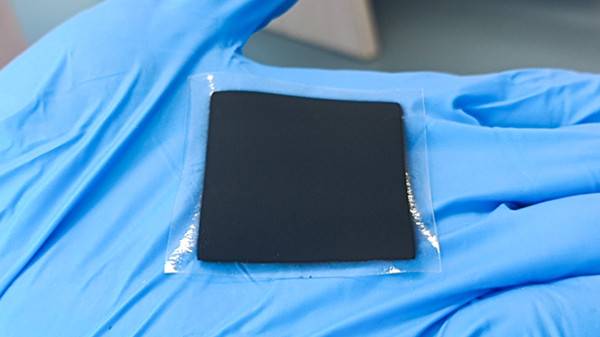
First, uniform coating with controllable thickness. Ultrasonic atomization produces droplets with a narrow size distribution (typically 20–100 μm), forming a pinhole-free catalyst film of uniform thickness on the substrate, avoiding uneven current distribution caused by local thickness variations.
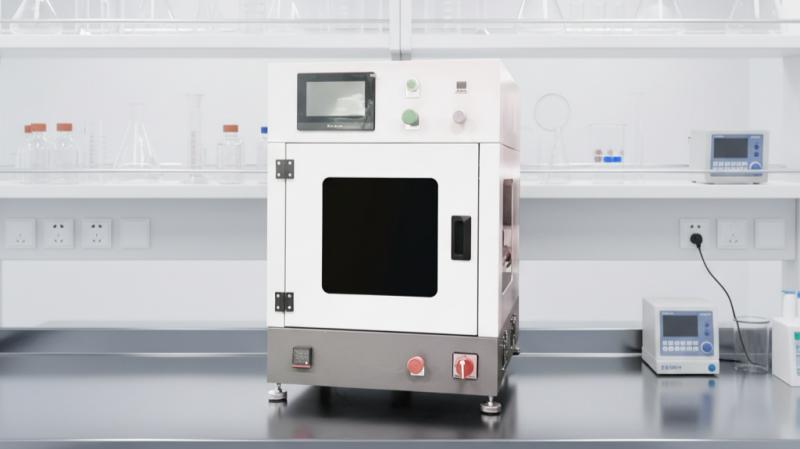
Second, high noble metal utilization. For scarce noble metal catalysts such as Pt, Pd, and Ir, ultrasonic spraying achieves highly dispersed deposition at low loadings, reduces particle agglomeration, and significantly enhances mass activity and atomic utilization, thereby lowering electrode costs.
Third, mild process with broad compatibility. Substrate temperature is controllable during spraying, making it suitable for thermally sensitive polymer electrolyte membranes. It also accommodates aqueous, alcoholic, and ionic-liquid-based slurry systems, meeting the fabrication requirements of PEM electrolyzers, AEM electrolyzers, CO₂ electrolysers, and fuel cells.
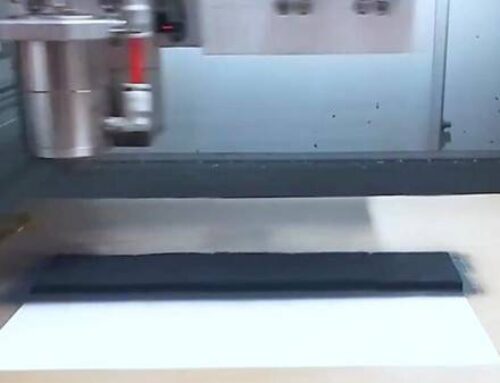
Fourth, scalable and continuous production. Ultrasonic nozzles can be configured in multi-nozzle arrays and integrated with roll-to-roll (R2R) transport systems for continuous fabrication of large-area electrodes, aligning with industrial mass-production needs.
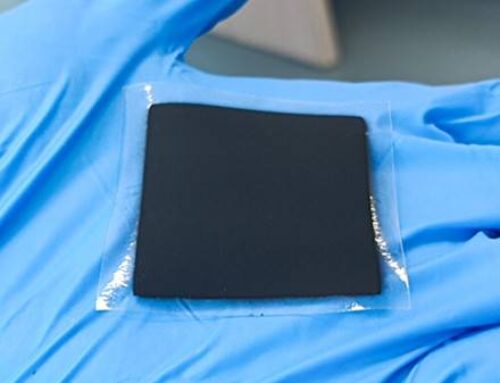
In the upstream green hydrogen production chain for CO₂-to-methanol, membrane electrode assemblies (MEAs) of PEM electrolyzers fabricated by ultrasonic spraying can achieve catalyst loadings below 0.1 mg/cm² while maintaining excellent performance, providing equipment support for low-cost, large-scale green hydrogen supply. As ultrasonic spray process parameters and catalyst formulations continue to advance synergistically, this technology will play an increasingly vital role in carbon-neutral electrode manufacturing.
About Cheersonic
Cheersonic is the leading developer and manufacturer of ultrasonic coating systems for applying precise, thin film coatings to protect, strengthen or smooth surfaces on parts and components for the microelectronics/electronics, alternative energy, medical and industrial markets, including specialized glass applications in construction and automotive.
Our coating solutions are environmentally-friendly, efficient and highly reliable, and enable dramatic reductions in overspray, savings in raw material, water and energy usage and provide improved process repeatability, transfer efficiency, high uniformity and reduced emissions.
If you have any technical questions, customization demands, or procurement inquiries about ultrasonic atomization nozzles, feel free to contact our professional sales and technical team for detailed parameters, customized solutions, and industry application support.
Email: market2@cheersonic.com