
Ultrasonic Spray Coating for SU-8 Photoresist
Ultrasonic Spray Coating for SU-8 Photoresist: An Innovative Solution Breaking Through Traditional Coating Bottlenecks
SU-8 photoresist is a negative near-ultraviolet photoresist based on an epoxy resin system. Its molecular structure contains eight epoxy groups, which undergo a cross-linking reaction under ultraviolet irradiation to form a stable network structure. With its extremely low light absorption in the near-ultraviolet 365–400 nm wavelength range, excellent mechanical strength, and outstanding chemical corrosion resistance and thermal stability, SU-8 has become an ideal material for fabricating high aspect ratio microstructures in MEMS, microfluidic chips, and advanced packaging. However, to fully realize the performance potential of SU-8, uniform and defect-free photoresist coating is the first and most crucial step.
The Dilemma of Traditional Spin Coating Methods
For a long time, the coating of SU-8 photoresist has mainly relied on spin coating. This method uses high-speed rotation to uniformly spread the photoresist, which performs reasonably well on planar substrates, but its limitations become apparent when facing increasingly complex three-dimensional microstructures. For deep trenches, vias, or microstructures with high aspect ratios, the photoresist during spin coating can easily form an excessively thin coating on the sidewalls due to centrifugal force and surface tension, creating voids at the bottom and leading to unstable device performance. Simultaneously, spin coating also forms “edge resist” at the substrate edges, severely affecting the accuracy of subsequent photolithography patterns. Even more regrettably, the photoresist utilization rate of spin coating is only 20%–40%, with over 80% of the material being wasted during high-speed rotation.
Ultrasonic Spray Coating: Principles and Breakthroughs
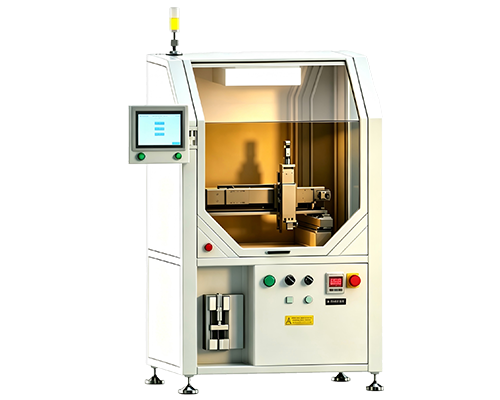
Ultrasonic spray coating technology offers a completely new solution to these problems. Its core principle is to atomize SU-8 photoresist into micron-sized, uniform droplets with an extremely narrow particle size distribution using high-frequency ultrasonic vibration (typically 60–120 kHz). These tiny droplets are gently deposited on the substrate surface under the guidance of a low-pressure carrier gas, completing the coating without the need for centrifugal force.
This fundamental difference in principle brings several key advantages:
First, superior three-dimensional encapsulation. Ultrasonic microdroplets can penetrate from multiple angles into the bottom and sidewall dead corners of deep trenches, vias, and irregularly shaped structures, achieving omnidirectional and uniform coverage. For deep trenches and V-groove structures with high aspect ratios (>10:1), step coverage can exceed 92%. Studies show that ultrasonic spraying significantly outperforms traditional spin coating processes in terms of encapsulation and uniformity on three-dimensional microstructure surfaces. Particularly noteworthy is that specialized products such as the SU-8 MicroSpray have achieved coating uniformity of 9μm ± 3% on 100mm wafers (with a coefficient of variation of only 2.6%), demonstrating remarkable precision.
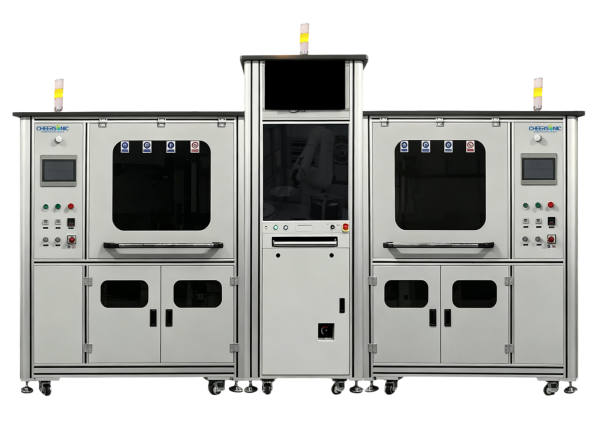
Secondly, coating thickness is precisely controllable. By precisely adjusting ultrasonic power, liquid flow rate (0.01–10 ml/min), spraying speed, and nozzle movement path, ultrasonic spraying can achieve thickness control across a wide range from nanometers to tens of micrometers. Thin coatings (5–20 μm) are suitable for conventional high-precision photolithography processes, while thick coatings (20–50 μm) are specifically designed for deep trench structures and high aspect ratio applications. The layered, superimposed spraying process ensures consistent film thickness across the entire area, effectively avoiding the “coffee ring” edge effect commonly seen in spin coating.
Third, non-contact processing protects fragile structures. Ultrasonic spraying is a completely non-contact process; the nozzle has no physical contact with the substrate, preventing damage to fragile structures such as MEMS cantilever beams, microbridges, and thin films, and avoiding the fragmentation of thin-film substrates. The low-speed, gentle spray characteristics also prevent over-coating, further ensuring coating quality.
Fourth, significantly improved material utilization. Ultrasonic spraying uses directional, precise deposition, achieving a material utilization rate exceeding 95%, nearly three times higher than spin coating. This translates to significant cost savings for the expensive SU-8 photoresist.
Practical Process and Typical Applications
In practical operation, taking SU-8 MicroSpray as an example, the standard process flow is as follows: After cleaning the substrate, spray 6–9 times in cross directions at a spraying distance of approximately 3 inches. Then, allow it to stand at 20°C for 5–10 minutes to dissipate microbubbles, followed by soft baking at 95°C for 10 minutes, UV exposure (approximately 250–400 mJ/cm²), post-exposure baking for 3 minutes, and finally development in SU-8 developer for 5 minutes. The entire process is compatible with standard photolithography processes and requires no additional complex equipment.
Currently, ultrasonic spraying of SU-8 photoresist is widely used in MEMS devices, microfluidic chips, optoelectronic devices, and advanced packaging. Whether it’s structured wafers with deep trenches, curved lenses, or irregularly shaped substrates with through-holes, ultrasonic spraying can provide a uniform and reliable photoresist coating.
Conclusion
Ultrasonic spraying technology is not intended to completely replace spin coating—in conventional photolithography on planar standard substrates, spin coating remains efficient and economical. However, as the processing objects move from two-dimensional to three-dimensional, and from simple to complex, and as SU-8 needs to be precisely coated on deep trenches, micropores and irregular structures, ultrasonic spraying, with its excellent coverage, uniformity, material utilization and process flexibility, is becoming a key technology to break through the bottleneck of traditional coating and to drive the continuous evolution of micro-nano manufacturing towards higher precision, more complex structures and lower costs.
About Cheersonic
Cheersonic is the leading developer and manufacturer of ultrasonic coating systems for applying precise, thin film coatings to protect, strengthen or smooth surfaces on parts and components for the microelectronics/electronics, alternative energy, medical and industrial markets, including specialized glass applications in construction and automotive.
Our coating solutions are environmentally-friendly, efficient and highly reliable, and enable dramatic reductions in overspray, savings in raw material, water and energy usage and provide improved process repeatability, transfer efficiency, high uniformity and reduced emissions.
Chinese Website: Cheersonic Provides Professional Coating Solutions
