Sodium-Ion Battery Research Progress
Sodium-Ion Battery Research Progress: Material Breakthroughs and Commercial Application Prospects
Driven by global energy transition, net-zero carbon goals and the booming demand for low-cost electrochemical energy storage, sodium-ion batteries (SIBs) have evolved rapidly from laboratory R&D to large-scale industrialization. As a cost-effective, resource-abundant alternative to mainstream lithium-ion batteries (LIBs), sodium-ion batteries have become a critical complementary battery technology, with unmatched application potential in grid-scale energy storage, low-speed electric vehicles, stationary backup power and special transportation scenarios worldwide.
Cathode and anode electrode materials determine the core electrochemical performance, cycle life and energy density of sodium-ion batteries, which remain the core bottleneck restricting large-scale commercial deployment. Meanwhile, ultrasonic spray coating, an advanced precision thin-film fabrication technology, has emerged as a cutting-edge electrode manufacturing process. Featuring uniform material deposition, controllable coating thickness and high material utilization, ultrasonic spray coating is widely researched to optimize electrode fabrication, modify electrode interfaces, and improve the consistency and stability of high-performance sodium-ion battery electrodes, including functional catalyst and active material coating.
Core Electrode Material Research Advances for Modern Sodium-Ion Batteries
Current global sodium-ion battery R&D focuses on two mainstream electrode material systems: layered oxide cathode materials for high energy density, and hard carbon anode materials for stable sodium storage. Global academic teams and battery manufacturers focus on material structure optimization, interface modification and manufacturing process upgrading to solve longstanding electrochemical defects, while adopting ultrasonic spray coating to lower industrial production barriers.

1. High-Performance Layered Oxide Cathode Materials
Latest Research Development
Layered sodium transition metal oxides, mainly categorized as O3-type and P2-type crystal structures, are regarded as the most promising high-energy cathode candidates for commercial sodium-ion batteries. Global frontier research classifies these oxides into monobasic to hexabasic material systems, and verifies three mainstream optimization paths: elemental composition regulation, trace ion doping, and bulk structure engineering.
Interface surface modification is the most efficient way to improve cathode stability, and ultrasonic spray coating stands out among coating technologies. Different from traditional blade coating and dip coating, ultrasonic spray coating can deposit uniform, ultra-thin functional protective coatings on layered oxide cathode surfaces efficiently, avoiding local coating agglomeration and material damage, which greatly improves cathode interface stability.
Existing Challenges & Optimized Solutions
Layered oxide cathodes face common industrial pain points: irreversible crystal phase transition during charge-discharge cycles, rapid electrochemical capacity fading, and intrinsic structural instability, which shorten battery service life and raise application risks.
To tackle these drawbacks, researchers have validated targeted solutions: precise precursor dispersion control, multi-element collaborative regulation, and systematic interface engineering. In industrial pre-treatment, ultrasonic spray coating enables homogeneous dispersion of cathode precursors and precise microscopic component control, lowering material batch inconsistency. These technical upgrades lay a solid foundation for developing high-energy-density, long-cycle layered oxide cathodes for commercial sodium-ion batteries.
2. Advanced Hard Carbon Anode Materials
Latest Research Development
Hard carbon is the most recognized commercial anode material for sodium-ion batteries, thanks to its adjustable interlayer spacing, excellent sodium ion embedding capacity and low production cost. Recent global review studies adopt interdisciplinary research methods combining experimental testing, computational simulation and big data analysis to accelerate hard carbon industrialization.
Key research directions include: screening low-cost, high-yield biomass and chemical precursors, optimizing low-carbon manufacturing processes, revealing the correlation between microstructural evolution and sodium storage mechanisms, and building structure-electrochemical performance relationship models. Besides, multiple modification strategies including pore structure regulation, surface functionalization and heteroatom doping are tested to boost reversible specific capacity and initial Coulombic efficiency of hard carbon anodes.
R&D Goals and Industrial Application Outlook
The core goal of hard carbon anode research is to clarify the internal correlation among precursor selection, fabrication process, microstructure and final battery performance, and build a universal theoretical design system for customized hard carbon materials.
In terms of manufacturing upgrading, ultrasonic spray coating is prioritized to fabricate ultra-uniform hard carbon thin-film electrodes. This technology solves the problems of uneven active material distribution and poor electrode consistency caused by traditional coating methods, helping mass-produce high-stability hard carbon electrodes and accelerate the large-scale commercialization of hard carbon-based sodium-ion batteries.
Comprehensive Conclusion & Future Industry Outlook
The industrialization speed of sodium-ion batteries is highly dependent on iterative innovation of cathode and anode core materials. At present, layered oxide cathodes have achieved groundbreaking theoretical and industrial progress in energy density improvement, matching the demand for high-capacity sodium-ion battery products; targeted optimization of hard carbon anodes is advancing steadily via multi-dimensional modification and process upgrading, solving core sodium storage efficiency problems.
As a precision intelligent manufacturing technology, ultrasonic spray coating plays an irreplaceable role in modern sodium-ion battery production. It optimizes material dispersion accuracy, realizes standardized functional coating, enhances electrode electrochemical stability, and reduces mass production failure rates, providing reliable technical support for high-performance, low-cost sodium-ion battery manufacturing.
The coordinated breakthrough of layered oxide cathode and modified hard carbon anode materials, combined with the popularization of advanced electrode manufacturing technologies represented by ultrasonic spray coating, will further expand the application boundary of sodium-ion batteries. In the next 3-5 years, sodium-ion batteries will become mainstream solutions for grid energy storage, distributed power supply and low-speed new energy transportation, empowering the global low-carbon energy transformation.
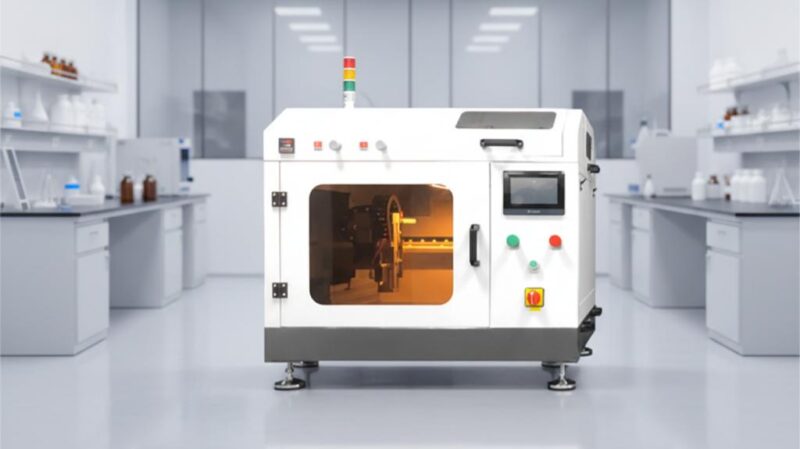
Cheersonic’s ultrasonic spray systems enable precision deposition of Advanced Battery Coatings for next-generation energy storage technologies — including lithium-ion (Li-ion) batteries, solid-state batteries, sodium-ion platforms, and emerging aluminum-ion battery (AIB) research. Our ultrasonic atomization process delivers exceptionally uniform, thin film coating layers across electrodes and separators, supporting breakthroughs in cell performance, battery safety, durability, and long cycle life.
Cheersonic systems are designed for precision thin-film and alternative-material coating, including light, low-solids composite slurries, rather than conventional high-solids thick slurry processes. Our technology excels in R&D and emerging production where coating uniformity, low waste, porosity control, and micron-level thickness repeatability are essential.
About Cheersonic
Cheersonic is the leading developer and manufacturer of ultrasonic coating systems for applying precise, thin film coatings to protect, strengthen or smooth surfaces on parts and components for the microelectronics/electronics, alternative energy, medical and industrial markets, including specialized glass applications in construction and automotive.
Our coating solutions are environmentally-friendly, efficient and highly reliable, and enable dramatic reductions in overspray, savings in raw material, water and energy usage and provide improved process repeatability, transfer efficiency, high uniformity and reduced emissions.
Chinese Website: Cheersonic Provides Professional Coating Solutions
