
Key Degradation Mechanisms in PEM Water Electrolysis Summary
In PEM water electrolysis technology, degradation at the anode (oxygen evolution side) is a critical bottleneck limiting electrolyzer lifespan and cost control. The two most pivotal degradation mechanisms are the dissolution of the platinum-coated titanium diffusion layer and the oxidation and dissolution of the iridium-based catalyst. The following section details these two mechanisms, their interrelationships, and potential mitigation strategies.
I. Dissolution Mechanism of Platinum-Coated Titanium Diffusion Layers
1. Application Context
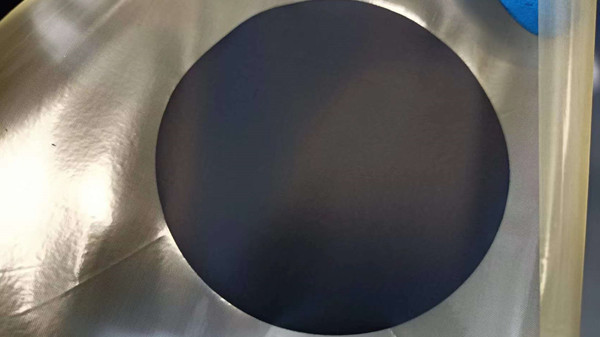
The anodic porous transport layer in PEM electrolyzers is typically made of titanium. However, titanium is prone to forming an insulating titanium oxide passivation layer in high-potential environments and possesses inherently high contact resistance. Consequently, an ultra-thin layer of platinum is applied to the titanium surface to simultaneously reduce contact resistance and prevent titanium passivation.
2. Degradation Environment
The anode operates under extremely harsh conditions: potentials ranging from 1.6 to 2.0 V vs. RHE, combined with strong acidity (consistent with the PEM environment), high oxidizing potential (presence of nascent oxygen), and elevated temperatures (50–80°C). These conditions create an environment conducive to platinum dissolution.
3. Dissolution Process
Although platinum is thermodynamically considered an “inert” metal, in the aforementioned high-potential environment, platinum atoms lose electrons and dissolve into the water as ions—a process characteristic of electrochemical corrosion. The dissolution rate increases exponentially with rising anode potential.
4. Direct Consequences
– Performance Degradation: The platinum coating gradually thins due to dissolution—or may even disappear locally—exposing the underlying titanium substrate. The exposed titanium rapidly oxidizes to form high-resistance titanium dioxide (TiO₂), causing a sharp rise in contact resistance between the anode and the catalyst layer, ultimately leading to increased electrolyzer voltage and energy consumption.
– Catalyst Contamination: Dissolved platinum ions migrate with the electrolyte toward the PEM membrane or the cathode side, where they are reduced back into platinum nanoparticles in the cathode’s reducing environment (low potential). These particles deposit in non-target areas, potentially clogging proton transport channels or altering the structure and properties of the reaction interface, thereby further affecting electrolysis efficiency.
5. Key Influencing Factors
– High-potential excursions: During electrolyzer start-up/shutdown, load changes, or fluctuations in cell voltage, the anode potential may exceed 2.0 V, significantly accelerating platinum dissolution.
– Potential cycling: Frequent potential fluctuations (such as redox cycling caused by power regulation) are more destructive than constant potential; they readily trigger platinum particle agglomeration, further accelerating the dissolution rate.
– Localized “polarity reversal”: If hydrogen starvation occurs on the hydrogen side, the anode may momentarily experience extremely high potentials exceeding 3 V, causing catastrophic corrosion of the platinum coating and a rapid loss of functionality.
II. Oxidation and Dissolution Mechanisms of Iridium-Based Catalysts
1. Application Background
Currently, iridium and its oxides are the only oxygen evolution reaction (OER) catalysts capable of long-term stable operation in the extreme environment of a PEM anode; however, their degradation remains a major limiting factor for extending electrolyzer lifespan.
2. Oxidation and Dissolution Processes
At the potentials required for the OER, metallic iridium rapidly oxidizes to form oxides with various valence states (commonly denoted as IrOₓ, where x ranges from 2 to 4). This oxide layer serves as the active phase for the OER, and the oxidation process proceeds dynamically.
3. Primary Degradation Pathways
– Over-oxidation forming soluble species: Under excessively high anode potentials or at localized “hot spots,” the otherwise stable iridium dioxide (IrO₂) undergoes further oxidation into species with higher valence states. These species exhibit significantly higher solubility in acidic aqueous solutions, leading to the loss of iridium-based active material from the electrode surface.
– Structural Amorphization and Particle Agglomeration: During prolonged electrochemical cycling, IrO₂ catalysts—initially highly crystalline—gradually become structurally disordered (i.e., amorphized) and undergo particle agglomeration. Furthermore, the generation and evolution of oxygen exert physical erosion and stress on the fragile oxide structure, exacerbating the mechanical detachment of the active layer; this ultimately leads to a reduction in the catalyst’s electrochemically active surface area and a decline in specific activity.
4. Key Influencing Factors
– Operating Potential: The current density of the OER is directly related to the overpotential; higher operating voltages accelerate the rates of iridium oxidation and dissolution.
– Acidic Environment: The strongly acidic environment of the PEM membrane promotes the formation and stabilization of soluble iridium species, further aggravating the loss of active material.
– Catalyst Design: Alloying or forming mixed oxides of iridium with metals such as ruthenium, tin, or titanium—or supporting iridium on stable materials like antimony-doped tin oxide (ATO)—can alter iridium’s electronic structure and enhance its resistance to oxidative dissolution; this is currently a major area of research in the field.
III. Interconnection of the Two Degradation Mechanisms and Mitigation Strategies
1. Interaction Between Mechanisms
Platinum dissolution and iridium degradation do not occur independently: on one hand, platinum ions dissolved from the diffusion layer may migrate to and deposit on the surface of the iridium-based catalyst, altering its surface properties and affecting its activity and stability; on the other hand, the degradation of the iridium-based catalyst layer alters the local current and potential distribution at the anode, thereby affecting the electrochemical environment of the platinum coating and indirectly accelerating platinum dissolution.
2. Key Mitigation Strategies and Research Frontiers
Degradation Site: Anode diffusion layer
Material: Platinum coating
Direct Consequences: Sharp increase in contact resistance, performance degradation, contamination of the membrane-electrode assembly (MEA)
Mitigation Strategies: Develop novel corrosion-resistant coatings (e.g., gold-based, nitrides, carbides); optimize operating strategies to avoid high potentials and potential cycling stress
Degradation Site: Anode catalyst layer
Material: Iridium/Iridium oxide
Direct Consequences: Loss of active material, reduction in electrochemically active surface area
Mitigation Strategies: Develop low-iridium or iridium-free catalysts; design iridium alloys or core-shell structured catalysts; employ stable supports for the iridium active phase
Currently, academia and industry are addressing these issues primarily through two approaches: first, utilizing advanced in-situ characterization techniques—such as in-situ X-ray absorption spectroscopy and electrochemical mass spectrometry—to monitor dynamic changes during degradation in real time, thereby providing precise data to support mechanistic studies; and second, developing more corrosion-resistant anode component materials (e.g., replacing platinum coatings with low-cost, corrosion-resistant alternatives) and OER catalysts with ultra-low or zero iridium content, aiming to overcome the cost and durability bottlenecks of PEM water electrolysis at the material level.
PEM Fuel Cell and Proton Exchange Membrane Electrode Coatings
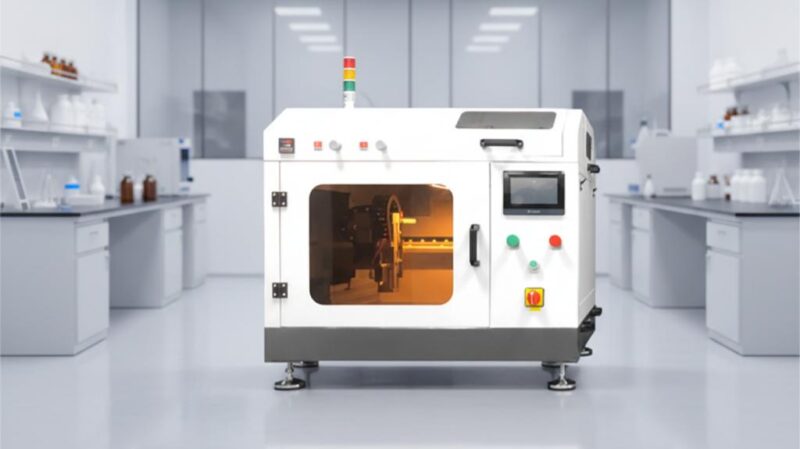
In PEM fuel cells, performance depends on consistent catalyst layers and ionomer distribution on the proton exchange membrane, gas diffusion layers (GDLs), and electrodes. CHEERSONIC fuel cell coating machines provide precise spray catalyst deposition for:
- Anode and cathode catalyst layers on PEM electrodes
- Precious-metal catalyst coatings with controlled loading for cost-effective manufacturing
- Uniform coatings on sensitive PEM substrates without damaging the membrane
Ultrasonic spray supports controlled film build and morphology tuning so catalyst layers can be engineered for optimal porosity and transport. This enables high-performing PEM coatings that remain flexible and resist cracking during handling and operation, improving long-term durability.
About Cheersonic
Cheersonic is the leading developer and manufacturer of ultrasonic coating systems for applying precise, thin film coatings to protect, strengthen or smooth surfaces on parts and components for the microelectronics/electronics, alternative energy, medical and industrial markets, including specialized glass applications in construction and automotive.
Our coating solutions are environmentally-friendly, efficient and highly reliable, and enable dramatic reductions in overspray, savings in raw material, water and energy usage and provide improved process repeatability, transfer efficiency, high uniformity and reduced emissions.
Chinese Website: Cheersonic Provides Professional Coating Solutions