Ultrasonic Spraying for Anion Exchange Membranes
Ultrasonic Spraying for Anion Exchange Membranes: Synergistic Optimization of Solution and Substrate
Anion exchange membranes, as core components of energy devices such as fuel cells and water electrolyzers, directly determine device performance through their ion transport efficiency and mechanical stability. Ultrasonic spraying technology, with its advantages of uniform droplet distribution and controllable membrane thickness, has become a key method for preparing high-performance anion exchange membranes. In this process, the formulation design of the spraying solution and the performance matching of the substrate are crucial elements for achieving synergistic effects between the membrane material’s structure and function.
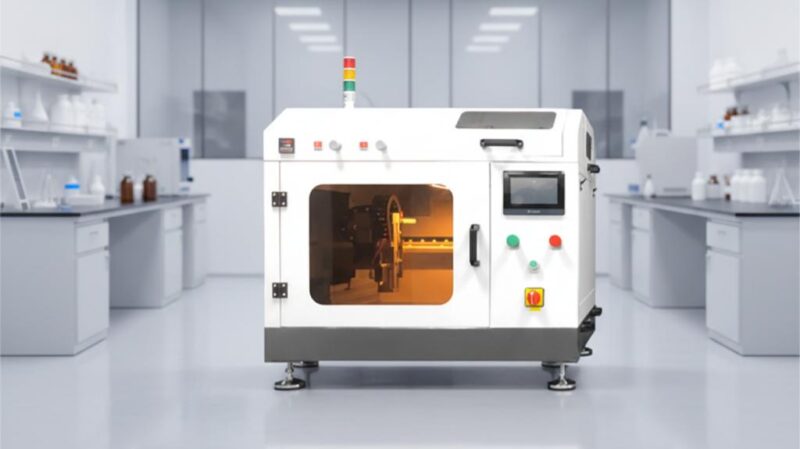
The compositional control of the spraying solution is fundamental to membrane performance. The selection of the polymer matrix must balance ion transport and chemical stability, typically using polyolefin derivatives containing quaternary ammonium salts, imidazolium, or other cationic groups. These materials provide sufficient ion transport sites and resist corrosion in alkaline environments. To optimize the film-forming properties of the solution, the polymer and functionalized reagents must be dissolved in a mixed solvent in a specific ratio. Commonly used alcohol-amide mixtures can effectively adjust the solution viscosity—when the viscosity is controlled within the range of 5-20 mPa·s, droplet aggregation can be avoided while ensuring a continuous, pinhole-free membrane layer. Furthermore, solution stability is crucial. By controlling the solid content between 8% and 15% and adding a small amount of dispersant, solute sedimentation can be prevented, ensuring consistency in the spraying process.
The properties of the substrate directly affect the mechanical support and interfacial bonding of the membrane. An ideal substrate needs excellent mechanical strength and chemical inertness. Currently, widely used substrates include polytetrafluoroethylene (PTFE) microporous membranes and polyethylene nonwoven fabrics. PTFE, with its acid and alkali resistance and high-temperature resistance, is suitable for harsh working conditions, but its surface hydrophilicity needs to be improved through plasma treatment to ensure uniform spread of the spray solution. Polyethylene nonwoven fabrics have a cost advantage, but their porosity needs to be controlled between 40% and 60%. Too high a porosity can lead to solution permeation, while too low a porosity affects the membrane’s permeability. The thickness of the substrate is also critical; thin substrates of 20-50 μm are typically chosen to reduce ion transport resistance while ensuring the overall strength of the membrane.
The synergistic matching of the solution and substrate is the core technology of ultrasonic spraying. When the surface tension of the spraying solution matches the surface energy of the substrate, a complete and spreadable film can be formed, avoiding pinhole defects. For example, the surface energy of the substrate after plasma treatment is increased to over 35 mN/m, which is well-matched with the adjusted surface tension of the solution (30-40 mN/m), significantly improving interfacial adhesion. During the spraying process, the atomization effect of the solution and the movement speed of the substrate need to be precisely matched. Typically, the droplet size is controlled at 10-50 μm, and the substrate linear velocity is set at 0.5-1 m/min, which can produce a film with uniform thickness (deviation less than 5%).
Through the synergistic optimization of the solution and substrate, the anion exchange membrane prepared by ultrasonic spraying exhibits excellent performance: ion conductivity can reach 0.08-0.12 S/cm, tensile strength exceeds 20 MPa, and performance degradation is less than 10% after 1000 hours of continuous operation under alkaline conditions. In the future, with the development of new functional polymers and modified substrates, this technology will further promote breakthroughs in the application of anion exchange membranes in the field of energy storage and conversion, providing core material support for the development of efficient and clean energy devices.
About Cheersonic
Cheersonic is the leading developer and manufacturer of ultrasonic coating systems for applying precise, thin film coatings to protect, strengthen or smooth surfaces on parts and components for the microelectronics/electronics, alternative energy, medical and industrial markets, including specialized glass applications in construction and automotive.
Our coating solutions are environmentally-friendly, efficient and highly reliable, and enable dramatic reductions in overspray, savings in raw material, water and energy usage and provide improved process repeatability, transfer efficiency, high uniformity and reduced emissions.
Chinese Website: Cheersonic Provides Professional Coating Solutions
