
Analysis of MIP Packaging Coatings for Light-Emitting Chips
Main Coating Materials
High-Transmittance Silicone Coating
– Main Components: High-transmittance silicone such as polydimethylsiloxane (PDMS), refractive index ≥1.5
– Application Location: Main encapsulation layer on the chip surface, directly covering the light-emitting surface
– Features: Transmittance >95%, high temperature resistance (up to 200℃), anti-aging, good insulation
Black Opacifying Coating (Black Glue)
– Main Components: Epoxy resin with added carbon black and other occlusive materials
– Application Location: Pixel gaps, around the chip, or panel surface
– Features: High occlusivity, low reflectivity, high hardness after curing
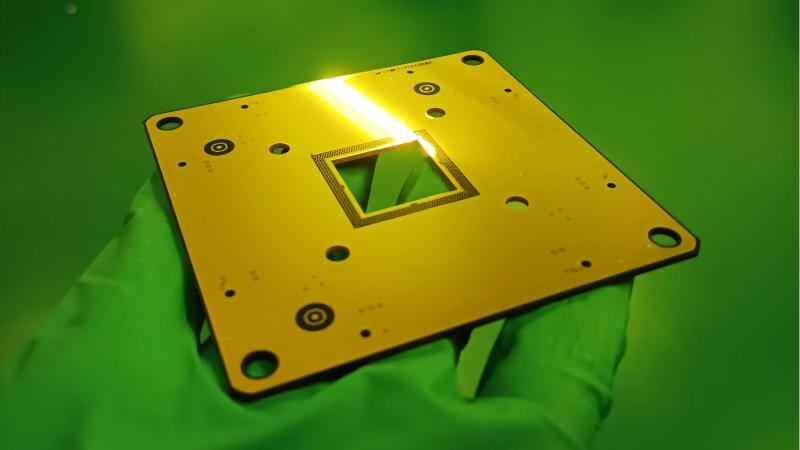
Quantum Dot/Phosphor Coating
– Main Components: Quantum dot material or phosphor particles (such as KSF phosphor) + silicone matrix
– Application Location: Above the blue LED chip or within the encapsulation glue
– Features: Achieves high color gamut (NTSC 110%+), high color purity
Nanocomposite Coating (High-End MIP)
– Main Components: Multilayer nanomaterials (such as TiO₂, SiO₂, etc.) composite
– Application Location: Outermost layer of the panel
– Features: Thickness <1μm, combining high hardness and high light transmittance
Core Functions of the Coating
Optical Performance Optimization
– Enhanced Light Efficiency: High-transmittance silicone reduces light loss, and refractive index matching improves light extraction efficiency
– Enhanced Contrast Ratio: Black glue filling suppresses light crosstalk, enhancing contrast ratio (up to 1,000,000:1)
– Color Gamut Expansion: Quantum dot coating expands the color gamut from NTSC 72% to 110%+, covering the full DCI-P3 color gamut
– Viewing Angle and Uniformity: Special optical coating enables viewing angles of 170°–180° and brightness uniformity >99%
Physical Protection Function
– Environmental Protection: GOB or multilayer coatings provide waterproof, moisture-proof, dustproof, and corrosion-resistant properties
– Mechanical Protection: The silicone layer buffers external forces, resists impact and collision, and extends lifespan to 100,000 hours
– Blue Light Filtering: Some coatings can filter harmful blue light from 415–450nm, protecting your eyes.
Improved Display Quality
– Enhanced Black Levels: The nano-black coating increases blackness by 3 times, achieving a black ratio of 99%, resulting in purer dark scenes.
– Anti-Glare/Low Reflection: The surface coating reduces ambient light reflection, improving HDR performance.
– Moiré Pattern Suppression: A special coating reduces moiré patterns, resulting in a more refined image.
Typical MIP Packaging Coating Structure Examples
– Basic MIP: Chip → High-Transmittance Silicone (Main Packaging Layer) → Black Adhesive (Pixel Separation)
– High-End MIP: Chip → High Thermal Conductivity Adhesive (Bottom Layer) → High-Transmittance Silicone (Optical Layer) → Quantum Dot Coating (Color Conversion) → Multi-Layer Nanocomposite Coating (Surface Protection)
Summary
MIP packaging achieves breakthroughs in optical performance, physical protection, and image quality enhancement through the synergistic effect of multi-layer composite coatings, enabling Micro/Mini… LED displays boast advantages such as high brightness, high contrast, wide color gamut, and long lifespan, making them suitable for high-end displays, virtual reality photography, automotive displays, AR/VR, and other applications. Continuous innovation in coating materials and processes is one of the key factors driving the commercialization of MIP technology.
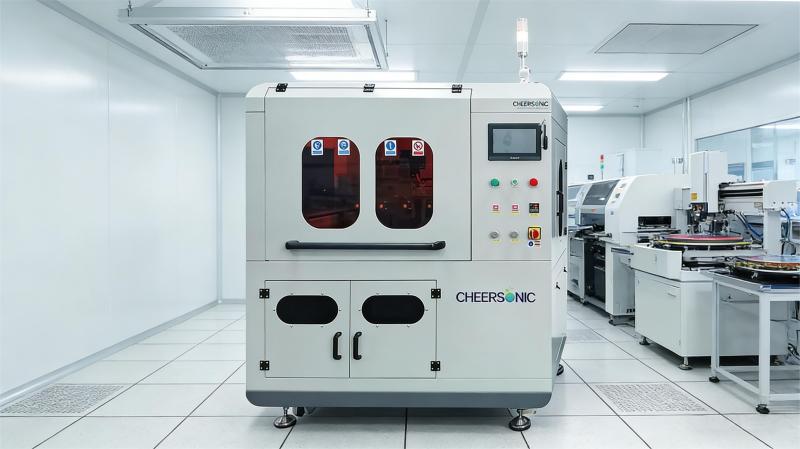
Ultrasonic spraying for MIP packaging uses high-frequency vibration (20–200kHz) to atomize coating materials such as silicone, quantum dots, or phosphors into uniform microdroplets, precisely spraying them onto the chip surface to form a highly transparent and uniform coating. Its advantages include precisely controllable thickness (submicron to hundreds of micrometers), material utilization >90%, low spatter, and excellent coverage of microstructures, improving optical uniformity and reliability, making it suitable for precision packaging in high-end displays.
About Cheersonic
Cheersonic is the leading developer and manufacturer of ultrasonic coating systems for applying precise, thin film coatings to protect, strengthen or smooth surfaces on parts and components for the microelectronics/electronics, alternative energy, medical and industrial markets, including specialized glass applications in construction and automotive.
Our coating solutions are environmentally-friendly, efficient and highly reliable, and enable dramatic reductions in overspray, savings in raw material, water and energy usage and provide improved process repeatability, transfer efficiency, high uniformity and reduced emissions.
Chinese Website: Cheersonic Provides Professional Coating Solutions
